


Neonatal pain-related stress, functional cortical activity and visual-perceptual abilities in school-age children born at extremely low gestational age
- PMID: 23711638
- PMCID: PMC3778166
- DOI: 10.1016/j.pain.2013.04.009
Neonatal pain-related stress, functional cortical activity and visual-perceptual abilities in school-age children born at extremely low gestational age
Abstract
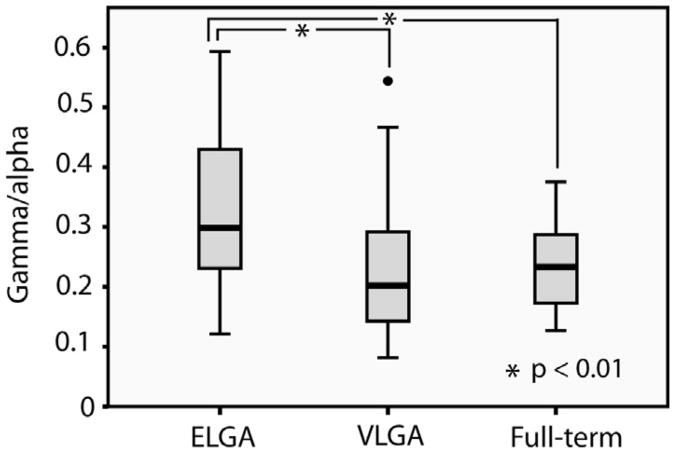
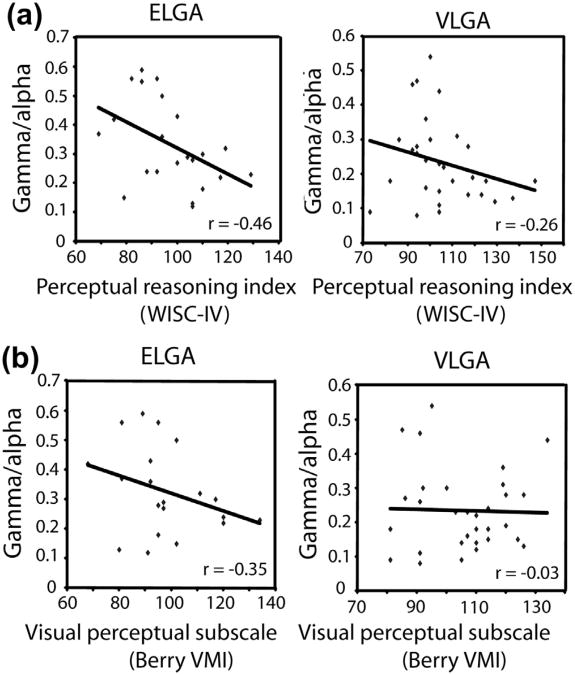
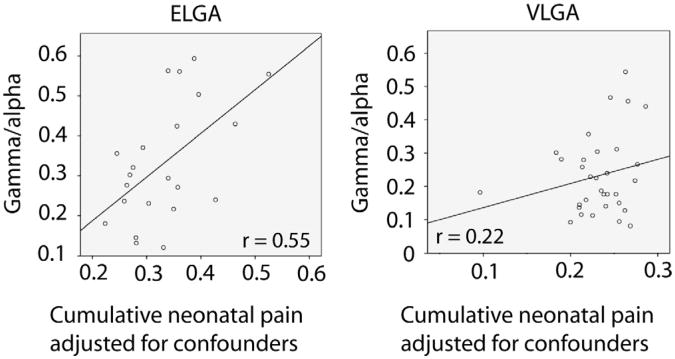
Children born very prematurely (< or =32 weeks) often exhibit visual-perceptual difficulties at school-age, even in the absence of major neurological impairment. The alterations in functional brain activity that give rise to such problems, as well as the relationship between adverse neonatal experience and neurodevelopment, remain poorly understood. Repeated procedural pain-related stress during neonatal intensive care has been proposed to contribute to altered neurocognitive development in these children. Due to critical periods in the development of thalamocortical systems, the immature brain of infants born at extremely low gestational age (ELGA; < or =28 weeks) may have heightened vulnerability to neonatal pain. In a cohort of school-age children followed since birth we assessed relations between functional brain activity measured using magnetoencephalogragy (MEG), visual-perceptual abilities and cumulative neonatal pain. We demonstrated alterations in the spectral structure of spontaneous cortical oscillatory activity in ELGA children at school-age. Cumulative neonatal pain-related stress was associated with changes in background cortical rhythmicity in these children, and these alterations in spontaneous brain oscillations were negatively correlated with visual-perceptual abilities at school-age, and were not driven by potentially confounding neonatal variables. These findings provide the first evidence linking neonatal pain-related stress, the development of functional brain activity, and school-age cognitive outcome in these vulnerable children.
Keywords: Child development; Cognition; Cognitive outcome; Development; Magnetoencephalography; Neonatal pain; Neural oscillation; Pain; Perception; Prematurity; Preterm; Resting-state; Spontaneous brain activity; Visual perception.
Copyright © 2013 International Association for the Study of Pain. Published by Elsevier B.V. All rights reserved.
Conflict of interest statement
Figures
Comment in
-
Repetitive neonatal pain and neurocognitive abilities in ex-preterm children.Pain. 2013 Oct;154(10):1899-1901. doi: 10.1016/j.pain.2013.06.027. Epub 2013 Jun 20. Pain. 2013. PMID: 23792285 No abstract available.
References
-
- Ahn H, Prichep L, John ER, Baird M, Trepetin M, Kaye H. Developmental equations reflect brain dysfunctions. Science. 1980;210:1255–8. - PubMed
-
- Allen MC. Neurodevelopmental outcomes of preterm infants. Curr Opin Neurobiol. 2008;21:123–8. - PubMed
-
- Anjari M, Srinivasan L, Allsop JM, Hajnal JV, Rutherford MA, Edwards AD, Counsell SJ. Diffusion tensor imaging with tract-based spatial statistics reveals local white matter abnormalities in preterm infants. NeuroImage. 2007;35:1021–7. - PubMed
-
- Atkinson J, Braddick O. Visual and visuocognitive development in children born very prematurely. Prog Brain Res. 2007;164:123–49. - PubMed
-
- Beery KE, Buktenica NA, Beery NA. Berry-Buktenica Developmental Test of Visual-Motor Integration. 5th. Minneapolis, MN: Psychological Corporation; 2004.
Publication types
MeSH terms
Grants and funding
LinkOut - more resources
Full Text Sources
Other Literature Sources
Medical
