. 2013 Oct;18(10):1077-89.
doi: 10.1038/mp.2013.71. Epub 2013 May 28.

Disruption of the non-canonical Wnt gene PRICKLE2 leads to autism-like behaviors with evidence for hippocampal synaptic dysfunction

Affiliations

Disruption of the non-canonical Wnt gene PRICKLE2 leads to autism-like behaviors with evidence for hippocampal synaptic dysfunction

L P Sowers et al. Mol Psychiatry. 2013 Oct.

Erratum in

  • Mol Psychiatry. 2014 Jun;19(6):742. Manak, R J [corrected to Manak, J R]

Abstract

Autism spectrum disorders (ASDs) have been suggested to arise from abnormalities in the canonical and non-canonical Wnt signaling pathways. However, a direct connection between a human variant in a Wnt pathway gene and ASD-relevant brain pathology has not been established. Prickle2 (Pk2) is a post-synaptic non-canonical Wnt signaling protein shown to interact with post-synaptic density 95 (PSD-95). Here, we show that mice with disruption in Prickle2 display behavioral abnormalities including altered social interaction, learning abnormalities and behavioral inflexibility. Prickle2 disruption in mouse hippocampal neurons led to reductions in dendrite branching, synapse number and PSD size. Consistent with these findings, Prickle2 null neurons show decreased frequency and size of spontaneous miniature synaptic currents. These behavioral and physiological abnormalities in Prickle2 disrupted mice are consistent with ASD-like phenotypes present in other mouse models of ASDs. In 384 individuals with autism, we identified two with distinct, heterozygous, rare, non-synonymous PRICKLE2 variants (p.E8Q and p.V153I) that were shared by their affected siblings and inherited paternally. Unlike wild-type PRICKLE2, the PRICKLE2 variants found in ASD patients exhibit deficits in morphological and electrophysiological assays. These data suggest that these PRICKLE2 variants cause a critical loss of PRICKLE2 function. The data presented here provide new insight into the biological roles of Prickle2, its behavioral importance, and suggest disruptions in non-canonical Wnt genes such as PRICKLE2 may contribute to synaptic abnormalities underlying ASDs.


Figures
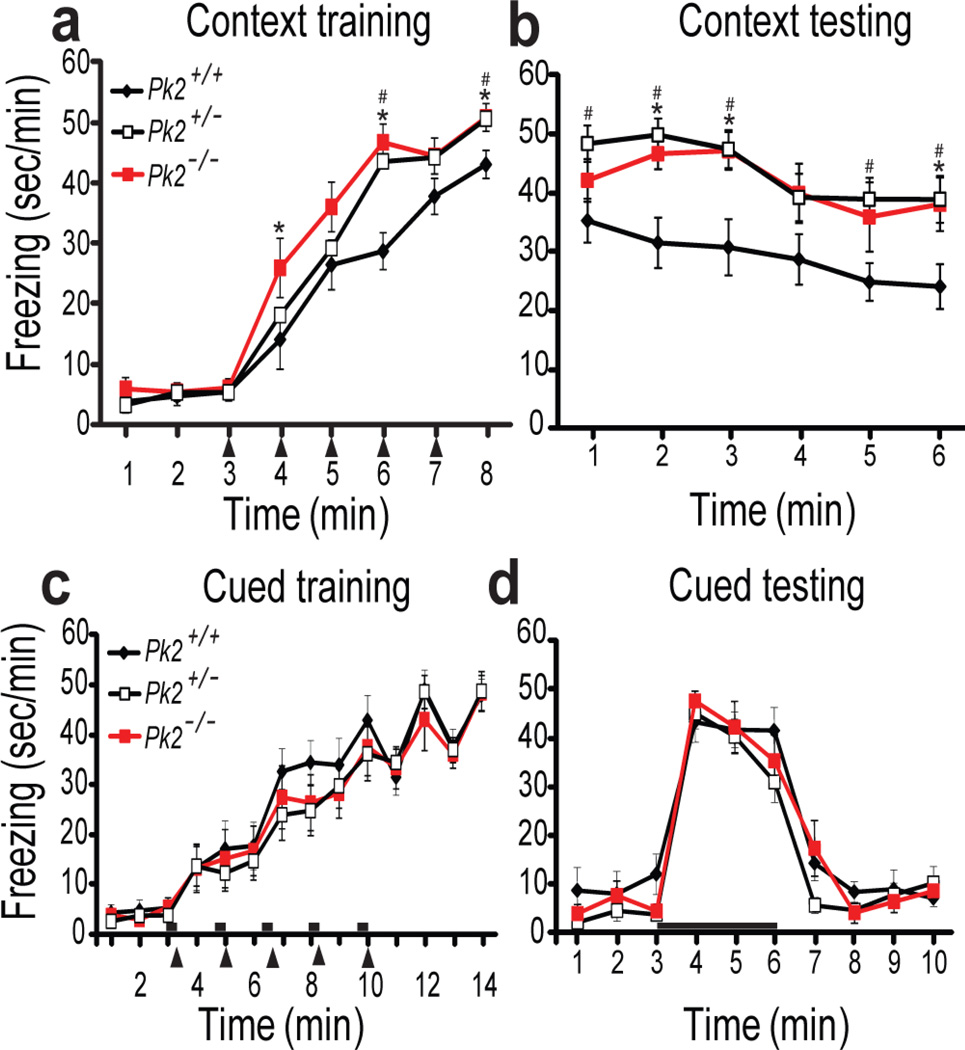
Figure 1
Figure 1. Prickle2−/− and Prickle2+/− mice show increased contextual fear memory and normal cued fear memory
(a,b)Prickle2+/+ (Pk2+/+),Prickle2+/− (Pk2+/−), Prickle2−/− (Pk2−/−); Context fear conditioning. Training (a) and testing (b). During training, repeated measures ANOVA revealed a significant genotype X time interaction Pk2−/− p = 0.004, and a genotype interaction for Pk2+/− p=0.019. During testing, repeated measures ANOVA revealed a genotype X time interaction for Pk2−/− p=0.001 and Pk2+/− p=0.001. (Pk2+/+, n=14; Pk2+/−, n=15; Pk2−/−, n=13). (c,d) Cued fear conditioning during training (c) and testing with tone (d) showed no significant difference, p>0.05 (Pk2+/+, n=10; Pk2+/−, n=12; Pk2−/−, n=10). Black arrowheads = shock and black bars = tones. Error bars represent ± S.E.M. *= p<0.05 for Pk2−/− vs. Pk2+/+, # = p<0.05 for Pk2+/− vs. Pk2+/+
Figure 2
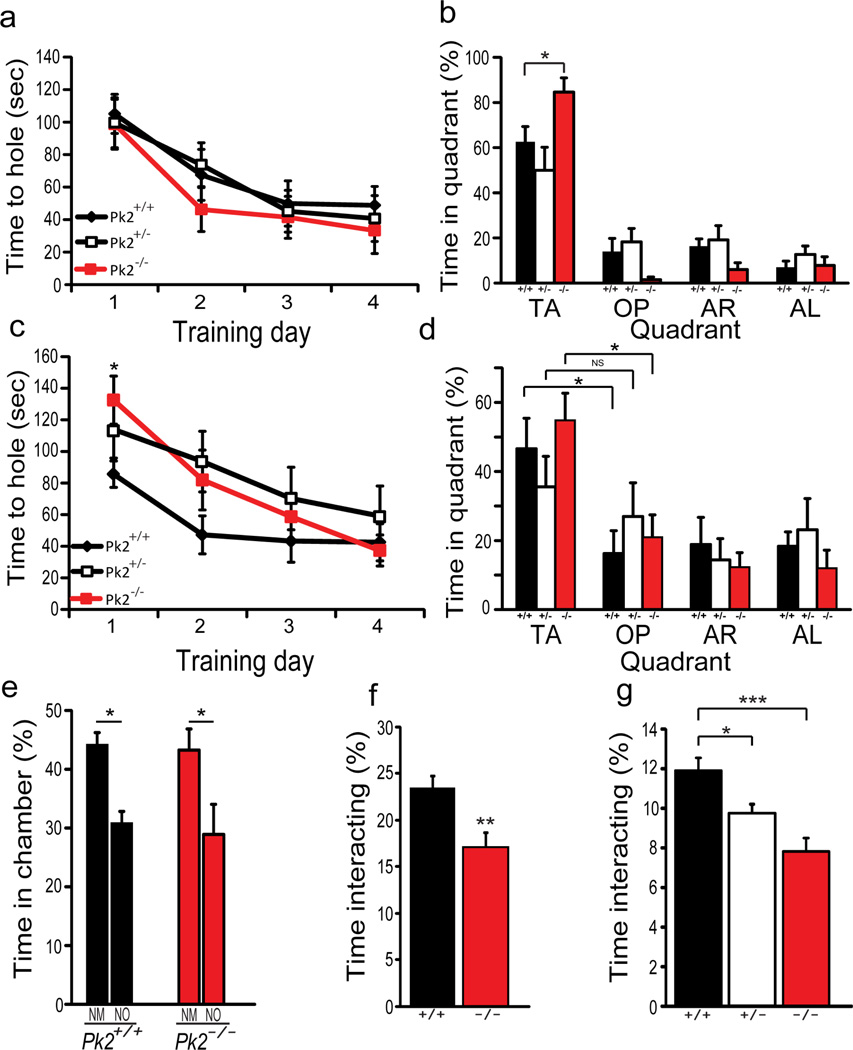
Figure 2. Prickle2−/− mice show increased spatial memory, delayed reversal learning, and abnormal social behavior
(a–b) Barnes maze. Acquisition of escape hole (a). Pk2−/− and Pk2+/− mice acquire the escape hole normally. Probe test (b) TA: target area, OP: opposite area, AR: area right, AL: area left, Pk2+/+ (+/+), Pk2+/− (+/−), Pk2−/−(−/−)Pk2−/− (*p=0.022) mice spent significantly more time in the TA vs. Pk2+/+ littermates, while Pk2+/− were normal. (Pk2+/+, n=13, Pk2+/−, n=11, Pk2−/−, n=11). (c,d) Reversal learning. Training (c) repeated measure ANOVA revealed a significant difference in Pk2−/− (p=0.011) but not Pk2+/− mice. Probe trial (d), Pk2+/− mice show no preference for new TA suggesting abnormal reversal learning whereas Pk2+/+ and Pk2−/− showed preference for the new TA*p<0.05. (Pk2+/+, n=13; Pk2+/−, n=11; Pk2−/−, n=11). (e,f) Three chamber social assay for Pk2+/+ and Pk2−/− mice. Percent time spent in each chamber (e) NM = novel mouse, NO = novel object. Percentage of time the testing mouse interacted with the conspecific mouse (f). Students t-test (**p=0.008, Pk2+/+, n=10; Pk2−/−, n=11). (g) Freely moving social assay. T-test revealed a significant difference in interaction. (**p=0.04, ***p=0.0006, Pk2+/+, n=11; Pk2+/−, n=11; Pk2−/−, n=10). Error bars represent ± S.E.M.
Figure 3
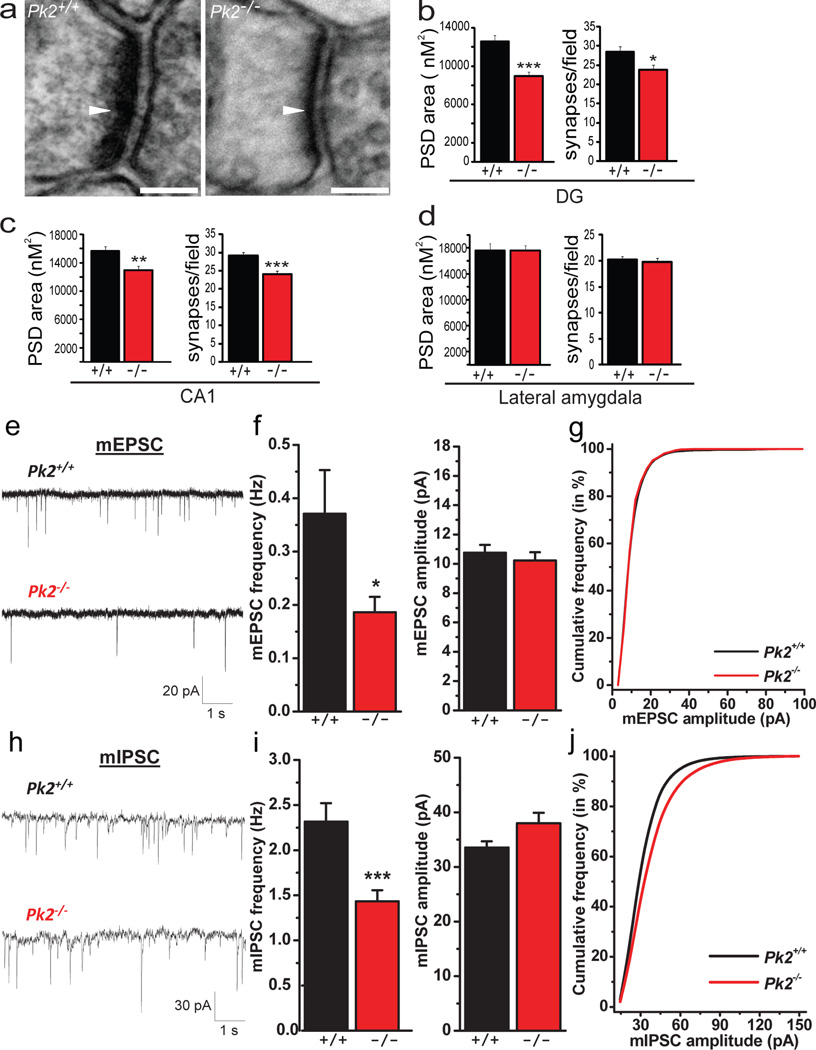
Figure 3. Prickle2−/− hippocampal neurons display altered hippocampal synapse morphology and decreased basal synaptic transmission
(a–d) TEM analysis of Pk2+/+ (+/+) and Pk2−/− (−/−) post synaptic densities (PSD) (a). Dentate gyrus PSD size (***p=0.0001) and synapses/field (*p=0.017) are significantly reduced in Pk2−/− mice (b). CA1 PSD area (**p=0.001) and synaptic number (***p=0.0006) are significantly decreased in Pk2−/− mice (c). Lateral amygdala PSD size (p=0.98) and synaptic number (p=0.81) are normal in Pk2−/− mice (d); See methods for all n values, scale bar = 100nM. (e–g) mEPSC recordings from CA1 pyramidal neurons in acute hippocampal slices. Representative mEPSC traces from Pk2+/+ and Pk2−/− slices (e). mEPSC frequency (*p=0.03) but not amplitude (p>0.05) is reduced in Pk2−/− mice (f). (Pk2+/+, n=18 neurons; Pk2−/−, n=14 neurons) from at least 5 slices. Cumulative probability plot confirms the decrease in frequency with no change in amplitude (g). (h–j) mIPSC recordings from CA1 pyramidal neurons in acute hippocampal slices. Representative mIPSC traces from Pk2+/+ and Pk2−/− slices (h). Pk2−/− neurons show a significant decrease in mIPSC frequency (***p=0.0007), and no difference in mIPSC amplitude (p>0.05) (i). (Pk2+/+, n=21; Pk2−/−, n=26). Cumulative probability plot for mIPSCs confirms the decrease in frequency with no change in amplitude (j). Mann-Whitney U test was performed for all comparisons. Error bars represent ± S.E.M.
Figure 4
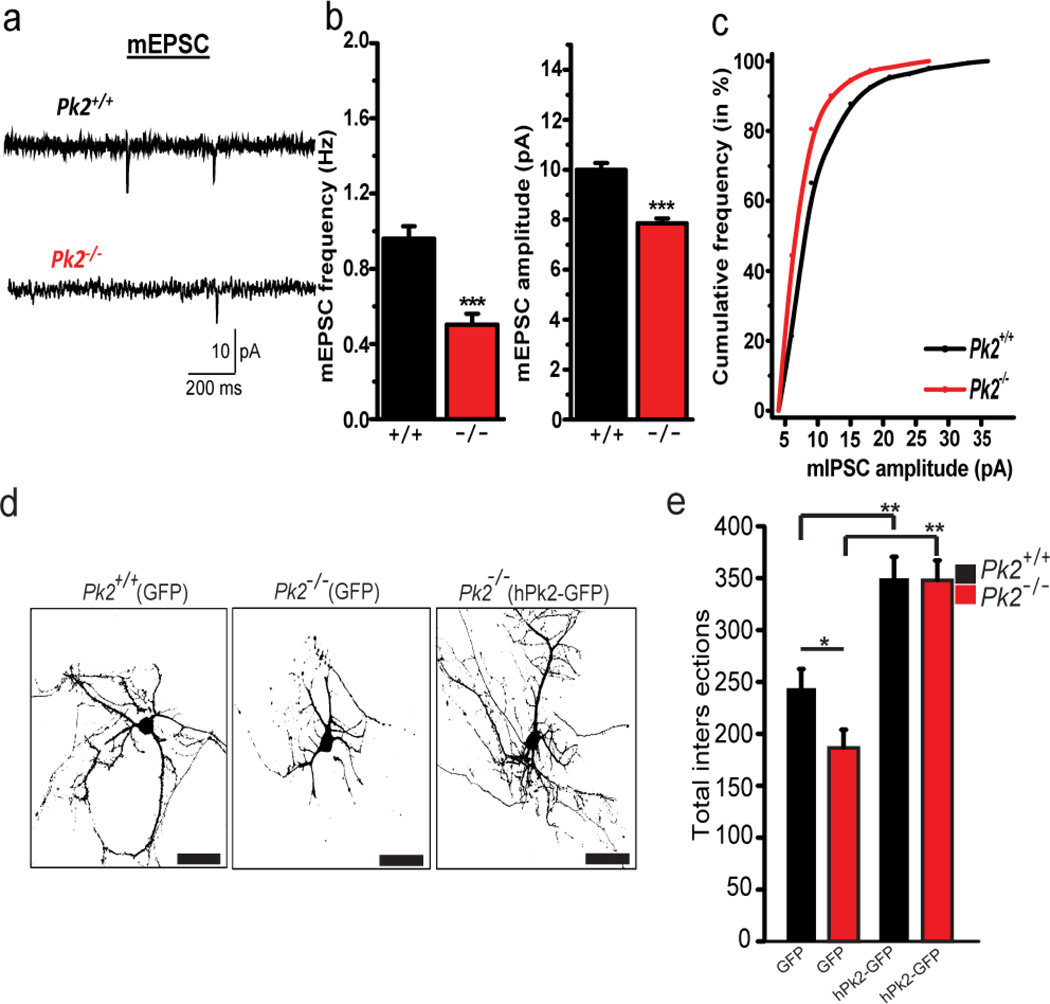
Figure 4. Prickle2−/− decreases miniature excitatory post synaptic current frequency and dendritic complexity in cultured primary hippocampal neurons
(a–c) Miniature excitatory post synaptic currents (mEPSCs) in primary hippocampal cultured neurons. Representative tracings from Pk2+/+ and Pk2−/− neurons (a). mEPSC frequency (***p<0.001) and amplitude (***p<0.001) are significantly reduced in Pk2−/− neurons (b). Cumulative probability plot (c) (d,e)In vitro Sholl analysis. Representative images of Pk2+/+(GFP), Pk2−/−(GFP), or Pk2−/−(hPk2-GFP) transfected cultured primary hippocampal neurons (a). Total intersections for Pk2−/− neurons are reduced relative to Pk2+/+ neurons (*p=0.017) (d). hPk2-GFP overexpression in Pk2+/+ neurons increases dendritic complexity (**p<0.001) and reverses Pk2−/− deficits (**p=0.002) (e). T-test with Bonferroni correction for (e). T-test for (b) Error Bars represent ± S.E.M. See methods for all n values.
Figure 5
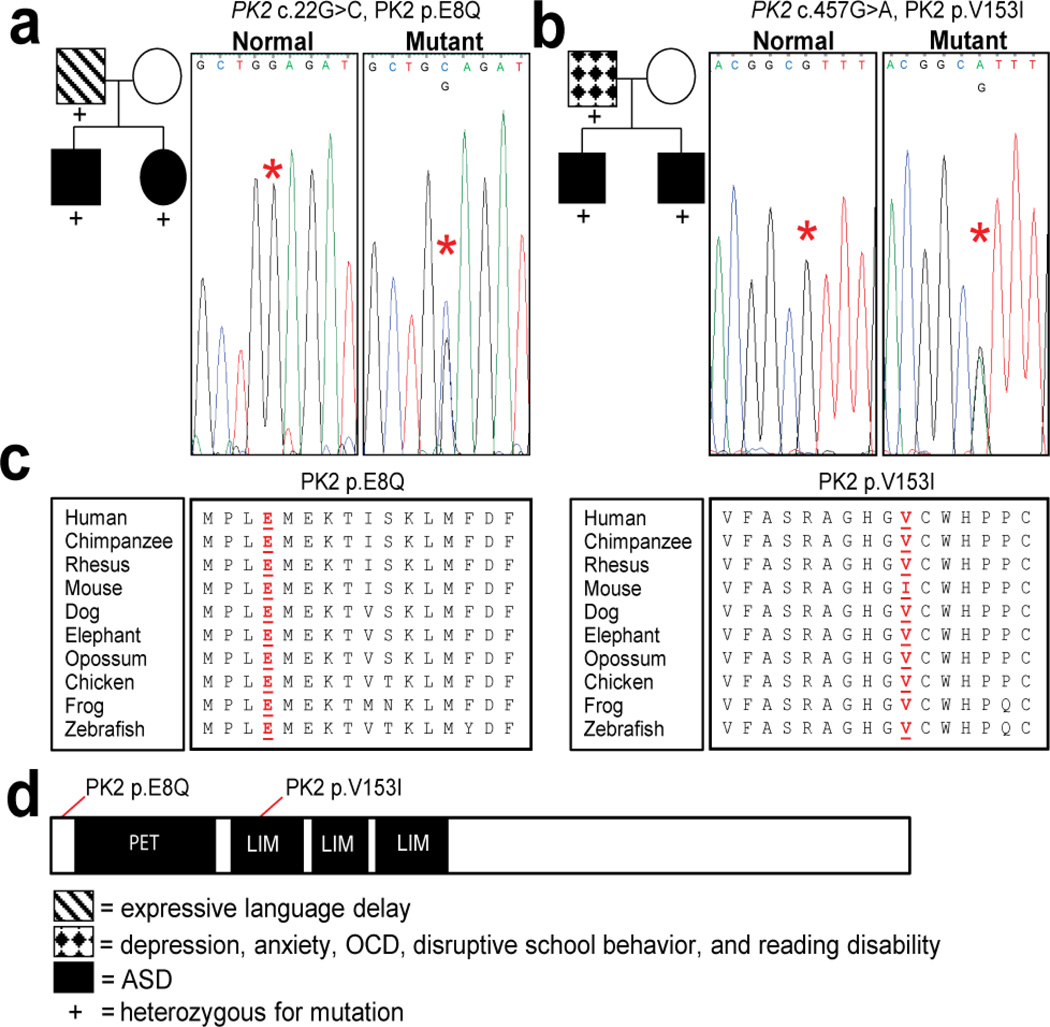
Figure 5. Pedigrees of affected families and representative chromographs
Asterisks denote affected nucleotides in respective chromographs. The Family in (a) has (NM_198859.3:c.22G>C p.E8Q) mutation. The father and both children have the mutation. The children are on the autism spectrum based on ADOS testing and have increased visual-spatial IQ based on the PPVT. The family in (b) has (NM_198859.3:c. 457G>A p.V153I) mutation present in a highly conserved protein interaction domain of PRICKLE2. The father and children have the mutation and both children have ASD by ADOS testing. Neither father was found to have ASD by ADOS testing. (c) Evolutionary conservation of PRICKLE2. Mutated residues are marked by the underlined red residue. (d) PRICKLE2 protein map and location of mutated amino acids.
Figure 6
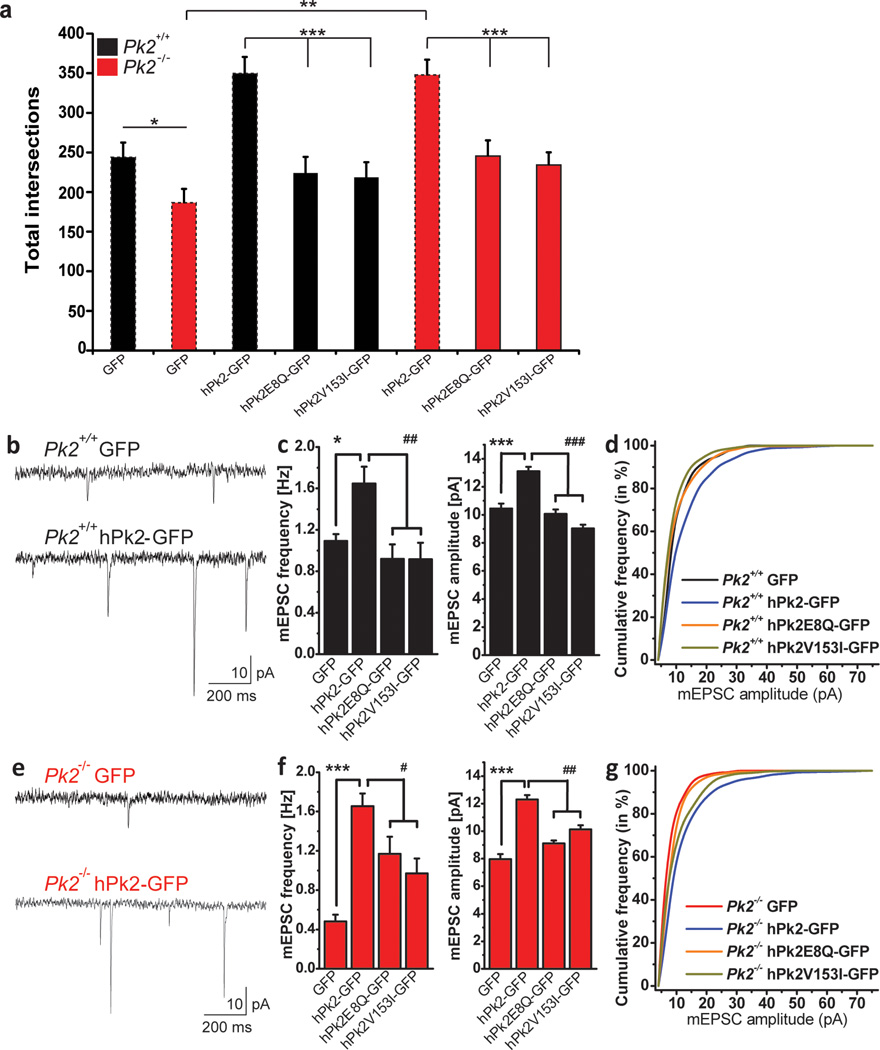
Figure 6. PRICKLE2 mutations present in human ASD patients fail to complement loss of prickle2 function in Prickle2−/− neurons
(a) Dashed lines represent bar graphs from figure 4 and are present for comparison. hPk2E8Q-GFP and hPk2V153I-GFP do not increase dendritic complexity in Pk2+/+ neurons (***p=0.0001, and ***p=4E–5 respectively), nor fully complement hPk2-GFP in Pk2−/− neurons (***p=0.0001, and ***p=0.0009 respectively). (b–g) Representative traces from Pk2+/+ and Pk2+/+ hPk2-GFP neurons (b). hPk2-GFP overexpression in Pk2+/+ neurons significantly increased mEPSC frequency relative to GFP and rescued mEPSC frequency deficits in Pk2−/− neurons (c,f) (p values: see statistics section). hPk2-GFP overexpression also increases amplitude in Pk2+/+ neurons and rescued the amplitude decrease in Pk2−/− neurons (c,f). hPk2E8Q-GFP and hPk2V153I-GFP do not increase frequency and amplitude in Pk2+/+ neurons, nor fully complement hPk2-GFP in both mEPSC frequency and amplitude (c,f) Cumulative probability plots for Pk2-GFP constructs confirm findings in c and f (d,g). T-test with Bonferroni correction for (a). Error Bars represent ± S.E.M. See methods for all n values. Statistics for (c,f) are in statistics section.

References

    1. Geschwind D. Autism: searching for coherence. Biological psychiatry. 2007;62(9):949–950. Epub 2007/10/24. - PubMed
    1. Geschwind DH, Levitt P. Autism spectrum disorders: developmental disconnection syndromes. Current opinion in neurobiology. 2007;17(1):103–111. Epub 2007/02/06. - PubMed
    1. Persico AM, Bourgeron T. Searching for ways out of the autism maze: genetic, epigenetic and environmental clues. Trends in neurosciences. 2006;29(7):349–358. Epub 2006/07/01. - PubMed
    1. Developmental Disabilities Monitoring Network Surveillance Year Principal I. Prevalence of autism spectrum disorders - autism and developmental disabilities monitoring network, 14 sites, United States, 2008. Morbidity and mortality weekly report Surveillance summaries. 2012;61(3):1–19. Epub 2012/03/30. - PubMed
    1. Canitano R. Epilepsy in autism spectrum disorders. European child & adolescent psychiatry. 2007;16(1):61–66. Epub 2006/08/26. - PubMed

Publication types

MeSH terms