


Risk factors for proton pump inhibitor refractoriness in Chinese patients with non-erosive reflux disease
- PMID: 23716993
- PMCID: PMC3662953
- DOI: 10.3748/wjg.v19.i20.3124
Risk factors for proton pump inhibitor refractoriness in Chinese patients with non-erosive reflux disease
Abstract
Aim: To analyze risk factors for refractoriness to proton pump inhibitors (PPIs) in patients with non-erosive reflux disease (NERD).
Methods: A total of 256 NERD patients treated with the PPI esomeprazole were enrolled. They were classified into symptom-free and residual symptoms groups according to Quality of Life in Reflux and Dyspepsia (QolRad) scale. All subjects completed questionnaires on psychological status (self-rating anxiety scale; self-rating depression scale) and quality of life scale (Short Form 36). Multivariate analysis was used to determine the predictive factors for PPI responses.
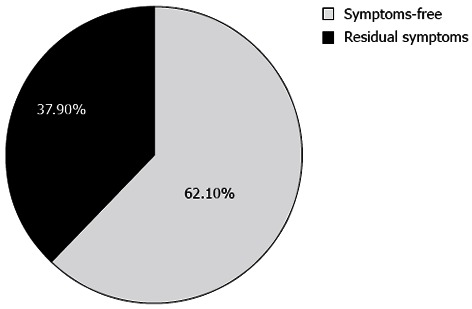
Results: According to QolRad, 97 patients were confirmed to have residual reflux symptoms, and the remaining 159 patients were considered symptom free. There were no significant differences between the two groups in lifestyle factors (smoking and alcohol consumption), age, Helicobacter pylori infection, and hiatal hernia. There were significant differences between the two groups in relation to sex, psychological distress including anxiety and depression, body mass index (BMI), and irritable bowel syndrome (IBS) (P < 0.05). Logistic regression analysis found that BMI < 23, comorbid IBS, anxiety, and depression were major risk factors for PPI resistance. Symptomatic patients had a lower quality of life compared with symptom-free patients.
Conclusion: Some NERD patients are refractory to PPIs and have lower quality of life. Residual symptoms are associated with psychological distress, intestinal disorders, and low BMI.
Keywords: Non-erosive reflux disease; Proton pump inhibitors; Refractoriness; Risk factors.
Figures
References
-
- Ma XQ, Cao Y, Wang R, Yan X, Zhao Y, Zou D, Wallander MA, Johansson S, Liu W, Gu Z, et al. Prevalence of, and factors associated with, gastroesophageal reflux disease: a population-based study in Shanghai, China. Dis Esophagus. 2009;22:317–322. - PubMed
-
- Nandurkar S, Talley NJ. Epidemiology and natural history of reflux disease. Baillieres Best Pract Res Clin Gastroenterol. 2000;14:743–757. - PubMed
-
- Armstrong D. A critical assessment of the current status of non-erosive reflux disease. Digestion. 2008;78 Suppl 1:46–54. - PubMed
MeSH terms
Substances
LinkOut - more resources
Full Text Sources
Other Literature Sources
Medical
