


Chemical Diversity of Panax ginseng, Panax quinquifolium, and Panax notoginseng
- PMID: 23717099
- PMCID: PMC3659563
- DOI: 10.5142/jgr.2012.36.1.1
Chemical Diversity of Panax ginseng, Panax quinquifolium, and Panax notoginseng
Abstract
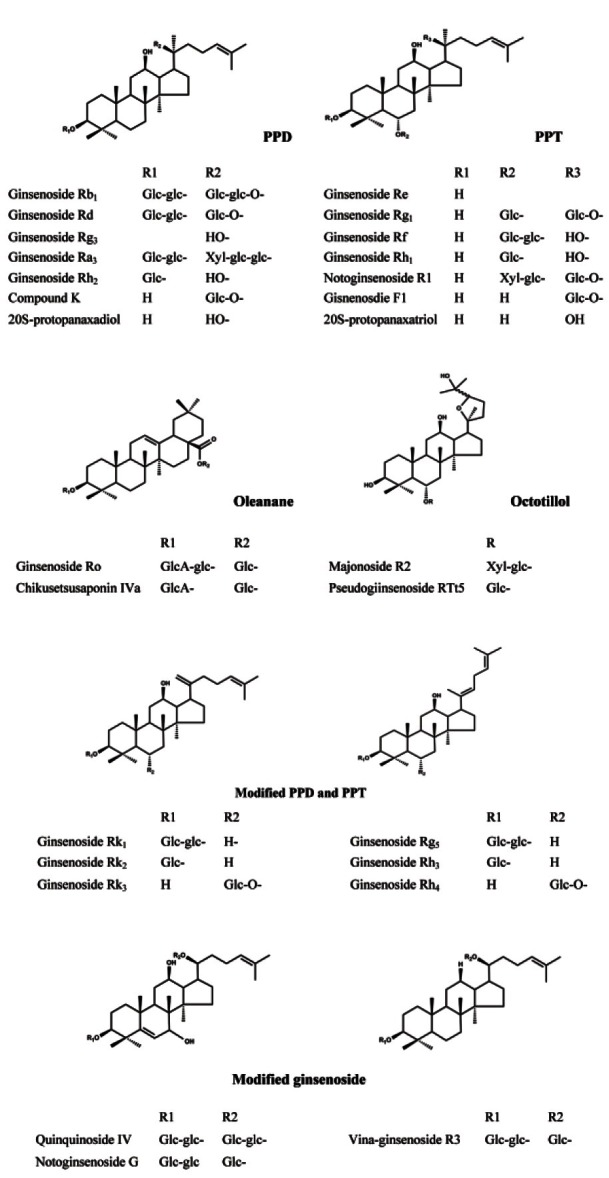
The major commercial ginsengs are Panax ginseng Meyer (Korean ginseng), P. quinquifolium L. (American ginseng), and P. notoginseng (Burk.) FH Chen (Notoginseng). P. ginseng is the most commonly used as an adaptogenic agent and has been shown to enhance physical performance, promote vitality, increase resistance to stress and aging, and have immunomodulatory activity. These ginsengs contain saponins, which can be classified as dammarane-type, ocotillol-type and oleanane-type oligoglycosides, and polysaccharides as main constituents. Dammarane ginsenosides are transformed into compounds such as the ginsenosides Rg3, Rg5, and Rk1 by steaming and heating and are metabolized into metabolites such as compound K, ginsenoside Rh1, protoand panaxatriol by intestinal microflora. These metabolites are nonpolar, pharmacologically active and easily absorbed from the gastrointestinal tract. However, the activities metabolizing these constituents into bioactive compounds differ significantly among individuals because all individuals possess characteristic indigenous strains of intestinal bacteria. To overcome this difference, ginsengs fermented with enzymes or microbes have been developed.
Keywords: Biotransformation; Constituents; Panax ginseng; Panax notoginseng; Panax quinquifolium.
Figures
References
-
- Scaglione F, Ferrara F, Dugnani S, Falchi M, Santoro G, Fraschini F. Immunomodulatory effects of two extracts of Panax ginseng C.A. Meyer. Drugs Exp Clin Res. 1990;16:537–542. - PubMed
LinkOut - more resources
Full Text Sources
Other Literature Sources
Miscellaneous