Protein intake from 0 to 18 years of age and its relation to health: a systematic literature review for the 5th Nordic Nutrition Recommendations
- PMID: 23717219
- PMCID: PMC3664059
- DOI: 10.3402/fnr.v57i0.21083
Protein intake from 0 to 18 years of age and its relation to health: a systematic literature review for the 5th Nordic Nutrition Recommendations
Abstract
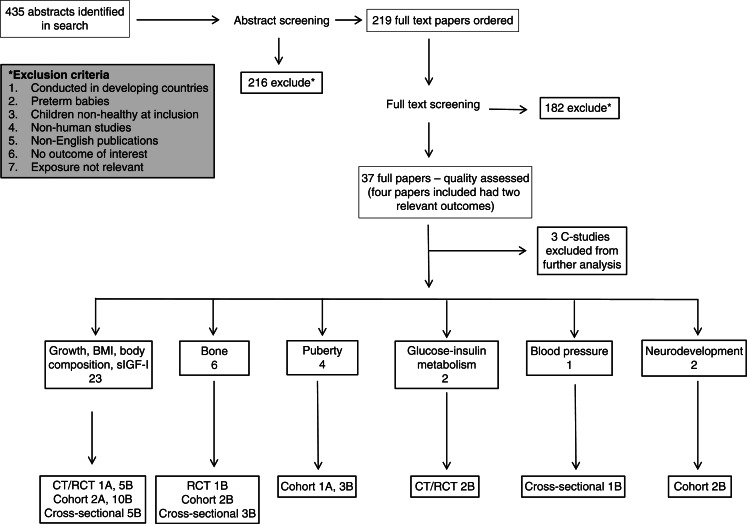
The present systematic literature review is a part of the 5th revision of the Nordic Nutrition Recommendations. The aim was to assess the health effects of different levels of protein intake in infancy and childhood in a Nordic setting. The initial literature search resulted in 435 abstracts, and 219 papers were identified as potentially relevant. Full paper selection resulted in 37 quality-assessed papers (4A, 30B, and 3C). A complementary search found four additional papers (all graded B). The evidence was classified as convincing, probable, limited-suggestive, and limited-inconclusive. Higher protein intake in infancy and early childhood is convincingly associated with increased growth and higher body mass index in childhood. The first 2 years of life is likely most sensitive to high protein intake. Protein intake between 15 E% and 20 E% in early childhood has been associated with an increased risk of being overweight later in life, but the exact level of protein intake above which there is an increased risk for being overweight later in life is yet to be established. Increased intake of animal protein in childhood is probably related to earlier puberty. There was limited-suggestive evidence that intake of animal protein, especially from dairy, has a stronger association with growth than vegetable protein. The evidence was limited-suggestive for a positive association between total protein intake and bone mineral content and/or other bone variables in childhood and adolescence. Regarding other outcomes, there were too few published studies to enable any conclusions. In conclusion, the intake of protein among children in the Nordic countries is high and may contribute to increased risk of later obesity. The upper level of a healthy intake is yet to be firmly established. In the meantime, we suggest a mean intake of 15 E% as an upper limit of recommended intake at 12 months, as a higher intake may contribute to increased risk for later obesity.
Keywords: BMI; bone health; growth; overweight; puberty.
Figures
References
-
- Rolland-Cachera MF, Deheeger M, Akrout M, Bellisle F. Influence of macronutrients on adiposity development: a follow up study of nutrition and growth from 10 months to 8 years of age. Int J Obes Rel Metabol Dis. 1995;19:573–8. - PubMed
-
- Gunnarsdottir I, Thorsdottir I. Relationship between growth and feeding in infancy and body mass index at the age of 6 years. Int J Obes Rel Metabol Dis. 2003;27:1523–7. - PubMed
-
- Öhlund I, Hernell O, Hörnell A, Stenlund H, Lind T. BMI at 4 years of age is associated with previous and current protein intake and with paternal BMI. Eur J Clin Nutr. 2010;64:138–45. - PubMed
-
- Räihä NC, Fazzolari-Nesci A, Cajozzo C, Puccio G, Monestier A, Moro G, et al. Whey predominant, whey modified infant formula with protein/energy ratio of 1.8 g/100 kcal: adequate and safe for term infants from birth to four months. J Pediatric Gastroenterol Nutr. 2002;35:275–81. - PubMed
LinkOut - more resources
Full Text Sources
Other Literature Sources