


A clinical update on massive ovarian oedema - a pseudotumour?
- PMID: 23717339
- PMCID: PMC3660160
- DOI: 10.3332/ecancer.2013.318
A clinical update on massive ovarian oedema - a pseudotumour?
Abstract
Objective: Benign massive ovarian oedema is a rare clinical entity arising from the ovaries, and it poses a significant clinical challenge as it can be easily mistaken for neoplasm. Due to the lack of pathognomonic clinical features or characteristic hallmarks on non-invasive diagnostic modalities and the dependence on the final histopathology, the efforts of the surgeon have been deviated from performing fertility-sparing surgery on young women. The lack of standardised guidelines due to the rarity of this condition calls for a review of the literature to enable the clinician to formulate treatment guidelines.
Methods and material: A Medline search on the PubMed database for literature published in English from 1969 to 2011 was done using the keywords 'massive ovarian oedema, massive ovarian oedema case report or case series, and pseudotumour of ovary'. A total of 177 women who had undergone a variety of treatments were retrieved. We also report the management options we used for four women presenting to us between August 2000 and October 2011, as well as a review of the literature.
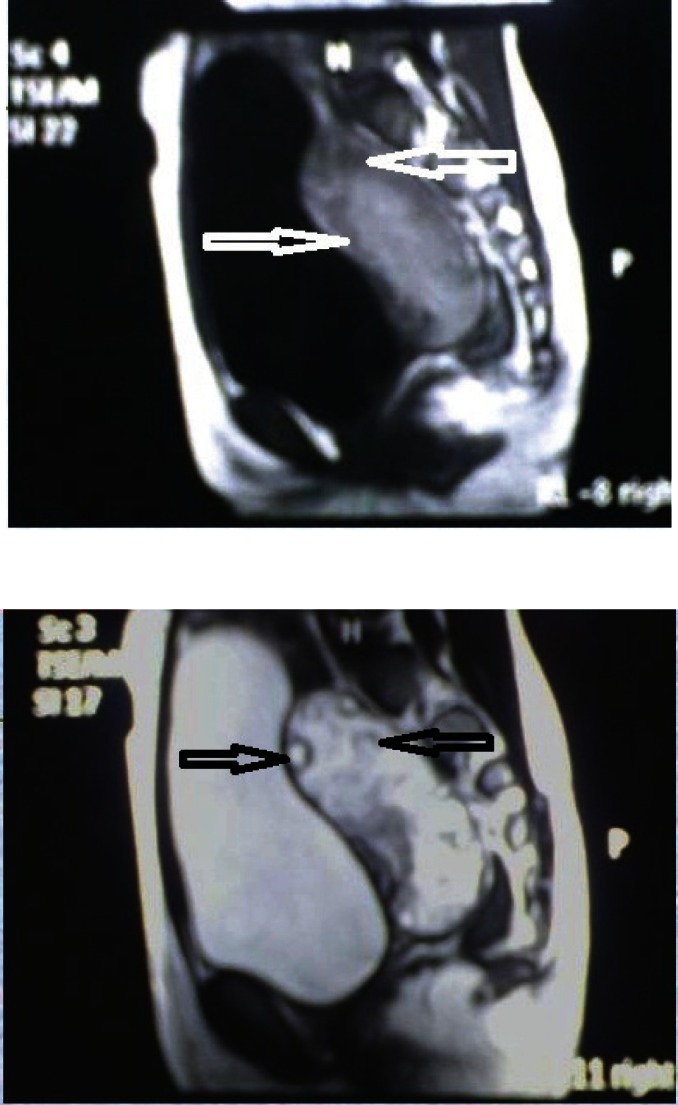
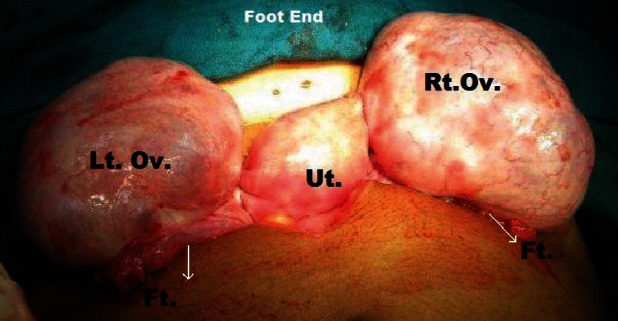
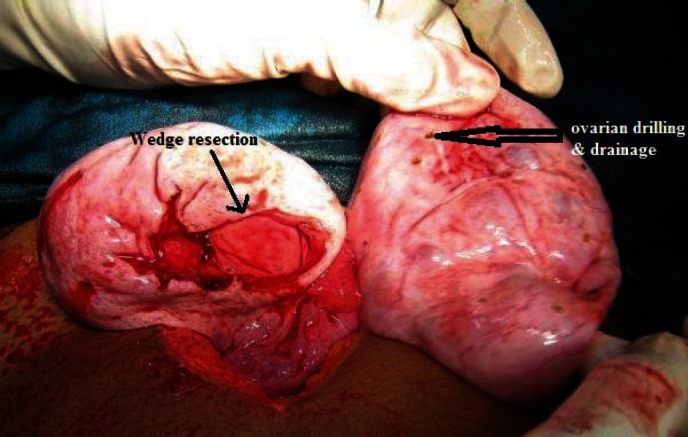
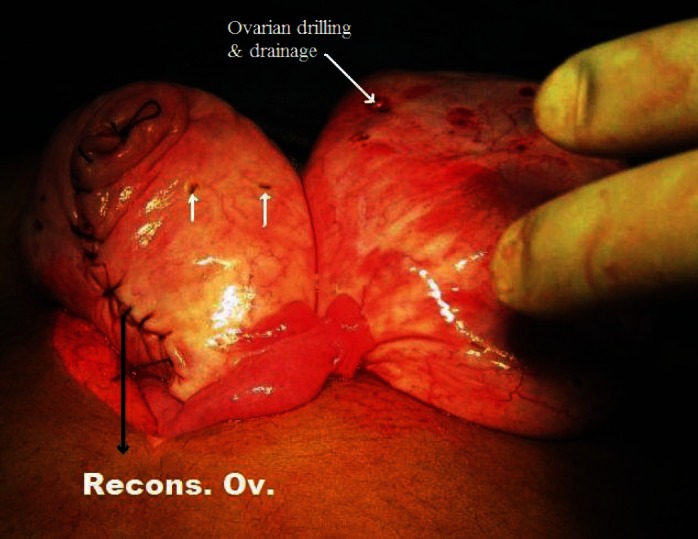
Result: A total of 177 cases of massive ovarian oedema were identified. Out of these cases 151 (85.3%) were primary massive ovarian oedema; secondary massive ovarian oedema was identified in 26 (14.7%) cases. A salpingo-oophorectomy was done in 145 (81.9%) cases, 12 (6.8%) cases had an abdominal hysterectomy with bilateral salpingo-oophorectomy. A total of 76 (42.9%) cases intraoperatively were found to have ovarian torsions, and one patient with primary massive ovarian oedema had ascites. Conservative treatment was carried out in 20 (11.3%) patients; 14 of these had a wedge biopsy with frozen section and with or without ovarian suspension, one patient had diagnostic laparotomy, and five cases had only ultrasonographic or magnetic resonance imaging monitoring and symptomatic treatment. The four cases treated at the regional cancer institute from 2000 to 2011 revealed that the first three cases had salpingo-oophorectomy and the fourth case received a successful conservative treatment.
Conclusion: The majority of massive ovarian oedemas will respond to judicious use of intraoperative wedge resection and frozen section for the confirmation of diagnosis. The detorsion and transfixation of the ovary or partial debulking and drainage of fluid accumulated in the cyst may be more appropriate to preserve hormonal function and fertility in these young women.
Keywords: Massive ovarian Oedema; fertility-sparing surgery; ovarian drilling; ovarian reconstruction; pseudotumour of ovary.
Figures
References
-
- Kalstone CE, Jaffe RB, Abell MR. Massive edema of the ovary simulating fibroma. Obstet Gynecol. 1969;34(4):564–71. - PubMed
-
- Roth LM, Tsubara A, Dietel M, Senzaki H. Miscellaneous tumors and tumor-like conditions of the ovary. In: Tavassoli FA, Devilee P, editors. Pathology and Genetics of Tumors of the Breast and Female Genital Organs, World Health Organization Classification of Tumors. Vol. 5. Lyon: IARC Press; 2003. pp. 182–190.
-
- Shirk JO, Copas PR, Kattine AA. Massive ovarian edema in a menopausal woman. A case report. J Reprod Med. 1996;41(5):359–62. - PubMed
LinkOut - more resources
Full Text Sources