Review
. 2013 Jul;14(7):502-11.
doi: 10.1038/nrn3516. Epub 2013 May 30.

Cognitive and emotional control of pain and its disruption in chronic pain

Affiliations
Review

Cognitive and emotional control of pain and its disruption in chronic pain

M Catherine Bushnell et al. Nat Rev Neurosci. 2013 Jul.

Abstract

Chronic pain is one of the most prevalent health problems in our modern world, with millions of people debilitated by conditions such as back pain, headache and arthritis. To address this growing problem, many people are turning to mind-body therapies, including meditation, yoga and cognitive behavioural therapy. This article will review the neural mechanisms underlying the modulation of pain by cognitive and emotional states - important components of mind-body therapies. It will also examine the accumulating evidence that chronic pain itself alters brain circuitry, including that involved in endogenous pain control, suggesting that controlling pain becomes increasingly difficult as pain becomes chronic.


Conflict of interest statement

Competing interests statement

The authors declare no competing financial interests.

Figures
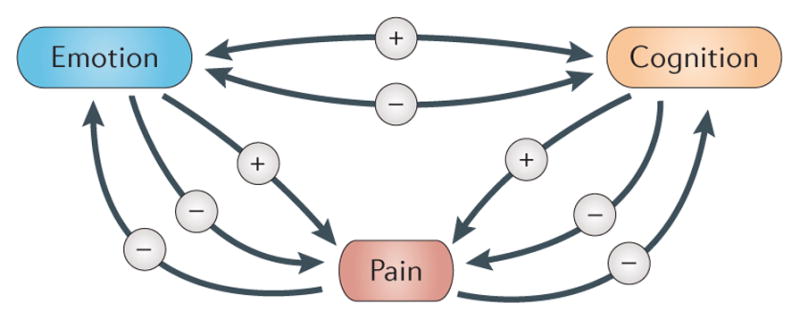
Figure 1
Figure 1. Feedback loops between pain, emotions and cognition
Pain can have a negative effect on emotions and on cognitive function. Conversely, a negative emotional state can lead to increased pain, whereas a positive state can reduce pain. Similarly, cognitive states such as attention and memory can either increase or decrease pain. Of course, emotions and cognition can also reciprocally interact. The minus sign refers to a negative effect and the plus sign refers to a positive effect.
Figure 2
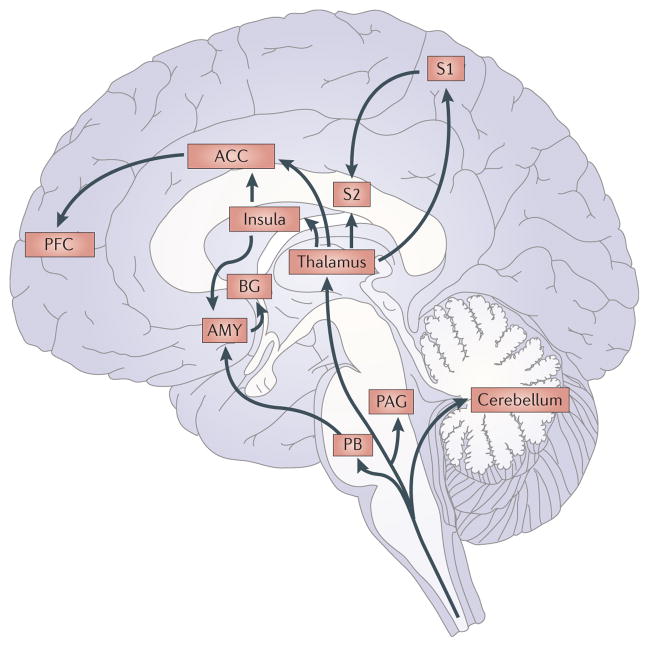
Figure 2. Afferent pain pathways include multiple brain regions
Afferent nociceptive information enters the brain from the spinal cord. Afferent spinal pathways include the spinothalamic, spinoparabrachio–amygdaloid and spinoreticulo–thalamic pathways. Nociceptive information from the thalamus is projected to the insula, anterior cingulate cortex (ACC), primary somatosensory cortex (S1) and secondary somatosensory cortex (S2), whereas information from the amygdala (AMY) is projected to the basal ganglia (BG). See the main text for references. PAG, periaqueductal grey; PB, parabrachial nucleus; PFC, prefrontal cortex.
Figure 3
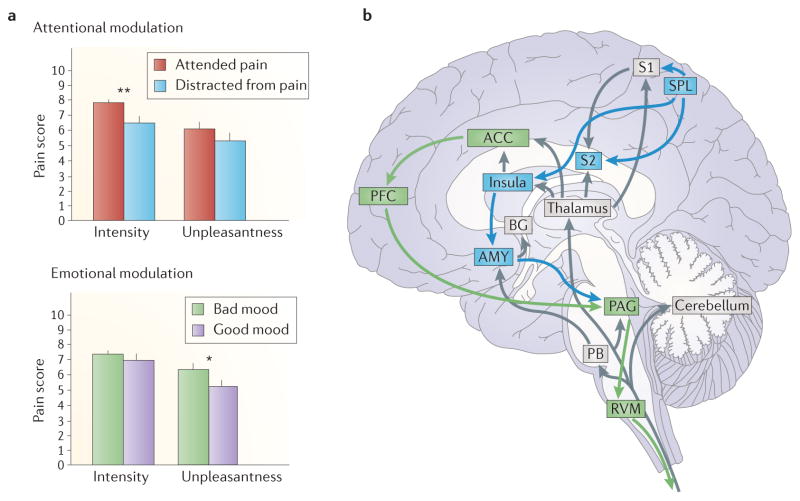
Figure 3. Attentional and emotional factors modulate pain perception via different pathways
a | Manipulating the attentional state primarily alters the perceived intensity of the pain sensation without significantly altering the perceived unpleasantness of the pain (top graph). By contrast, altering the mood state alters the perceived unpleasantness of the pain without altering the intensity of the sensation (bottom graph). b | Attention and emotion alter pain via different descending modulatory systems. Emotions (and placebo analgesia) activate circuitry involving the anterior cingulate cortex (ACC), prefrontal cortex (PFC) and periaqueductal grey (PAG) (shown in green), whereas attention activates circuitry involving projections from the superior parietal lobe (SPL) to the primary somatosensory cortex (S1) and insula (shown in blue). Grey regions show parts of the ascending pain pathways depicted in FIG. 2. AMY, amygdala; BG, basal ganglia; PB, parabrachial nucleus; RVM, rostroventral medulla; S2, secondary somatosensory cortex. * indicates p < 0.05, and ** indicates p < 0.01. Data used in part a are from REF. .
Figure 4
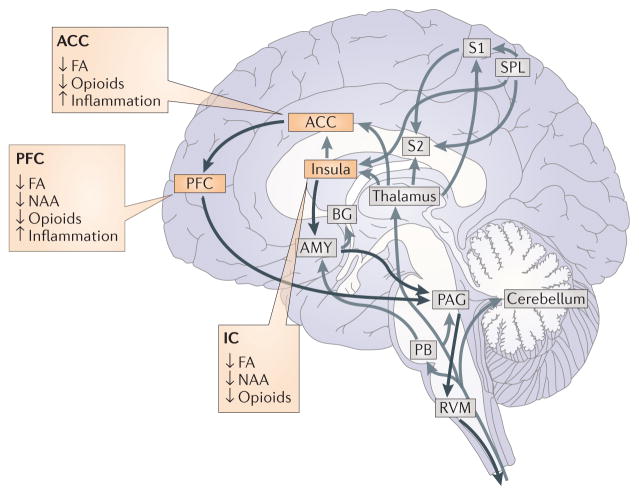
Figure 4. Consistently identified changes in the brains of patients with chronic pain
The three cortical regions that consistently show decreases in grey matter are the anterior cingulate cortex (ACC), prefrontal cortex (PFC) and insula. Studies have also identified changes in white matter integrity in these regions; such changes are manifested by decreased fractional anisotropy (FA), which suggests that there is a decrease in white matter health. Molecular imaging studies show decreases in opioid receptor binding in patients with chronic pain in all three regions. Studies using in vivo proton magnetic resonance spectrometry show chronic pain-related decreases of the neuronal marker N-acetyl aspartate (NAA) in the frontal cortex and the insula. Finally, rodent studies show increased neuroinflammation in the ACC and PFC. Black arrows show the descending pathways from FIG. 3. Grey arrows show afferent pain pathways.

References

    1. Bingel U, et al. The effect of treatment expectation on drug efficacy: imaging the analgesic benefit of the opioid remifentanil. Sci Transl Med. 2011;3:70ra14. - PubMed
    1. Benedetti F, Mayberg HS, Wager TD, Stohler CS, Zubieta JK. Neurobiological mechanisms of the placebo effect. J Neurosci. 2005;25:10390–10402. - PMC - PubMed
    1. Villemure C, Bushnell MC. Cognitive modulation of pain: how do attention and emotion influence pain processing? Pain. 2002;95:195–199. - PubMed
    1. Villemure C, Bushnell MC. Mood influences supraspinal pain processing separately from attention. J Neurosci. 2009;29:705–715. This is the first study to dissociate the circuitry involved in emotional and attentional modulation of pain. - PMC - PubMed
    1. Loggia ML, Mogil JS, Bushnell MC. Empathy hurts: compassion for another increases both sensory and affective components of pain perception. Pain. 2008;136:168–176. - PubMed

Publication types