


Stress differentially alters mu opioid receptor density and trafficking in parvalbumin-containing interneurons in the female and male rat hippocampus
- PMID: 23720407
- PMCID: PMC3778032
- DOI: 10.1002/syn.21683
Stress differentially alters mu opioid receptor density and trafficking in parvalbumin-containing interneurons in the female and male rat hippocampus
Abstract
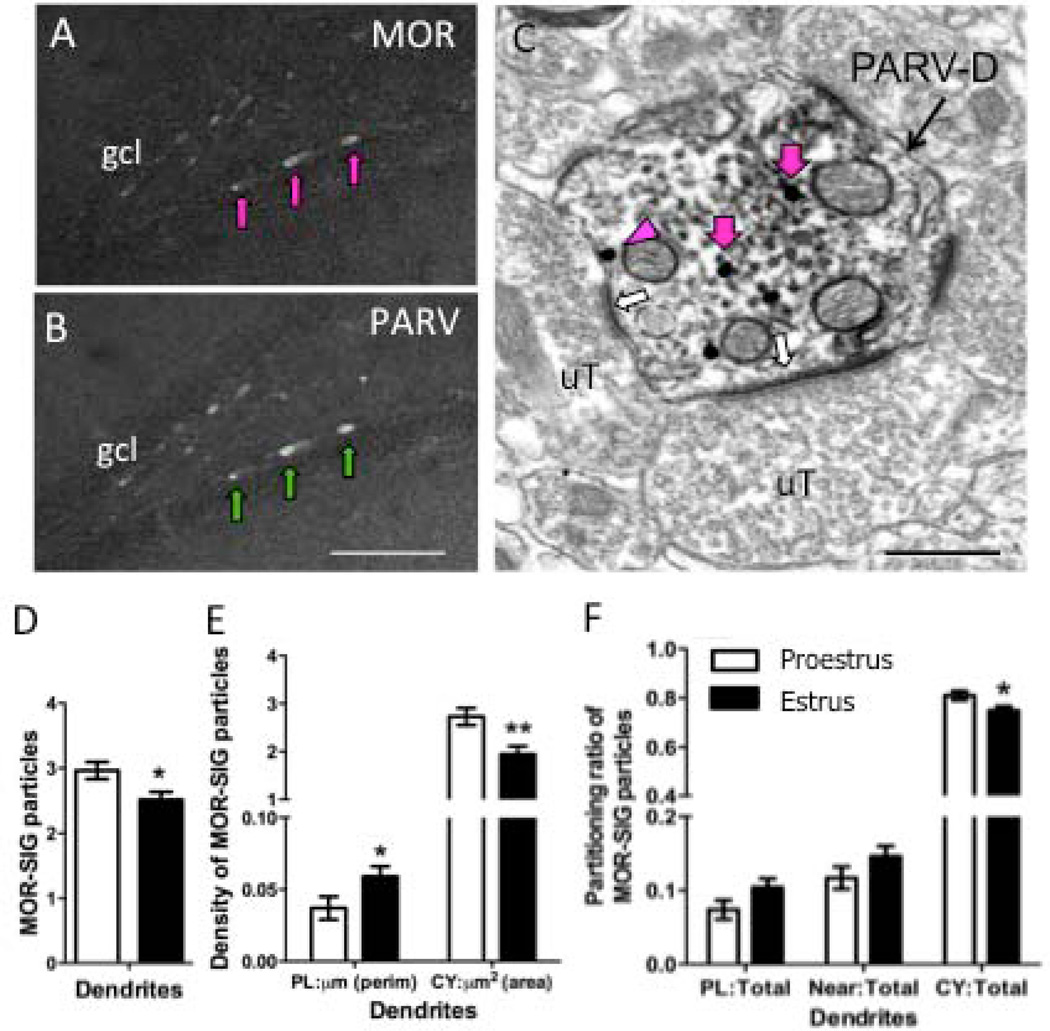
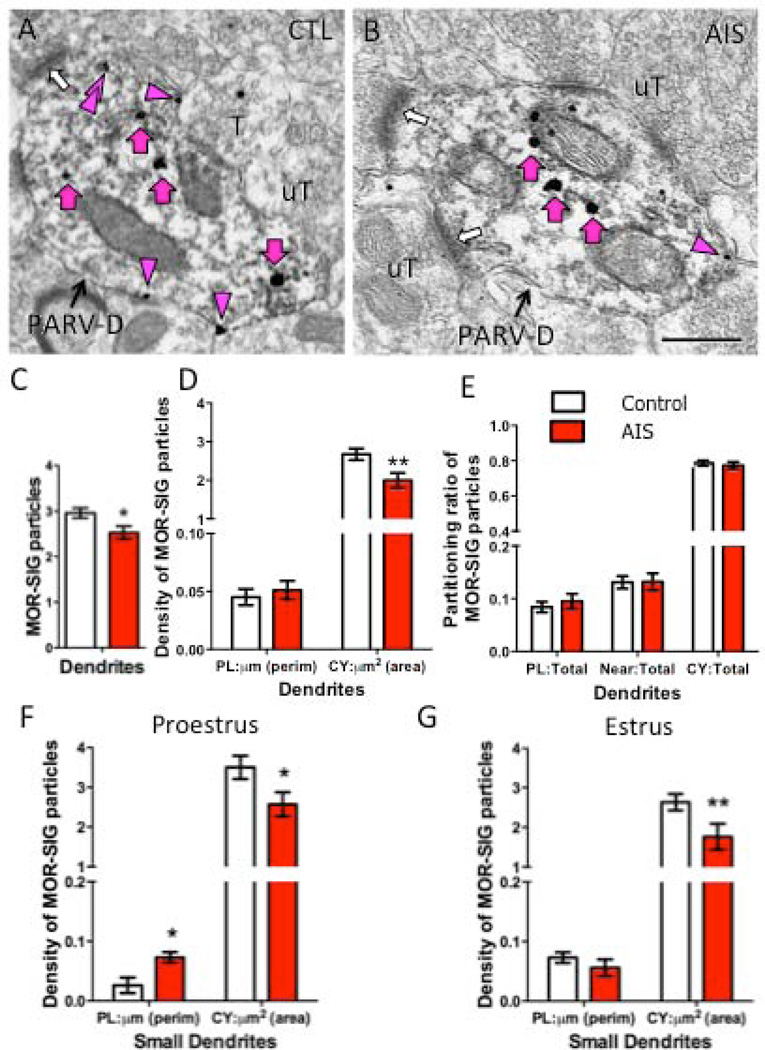
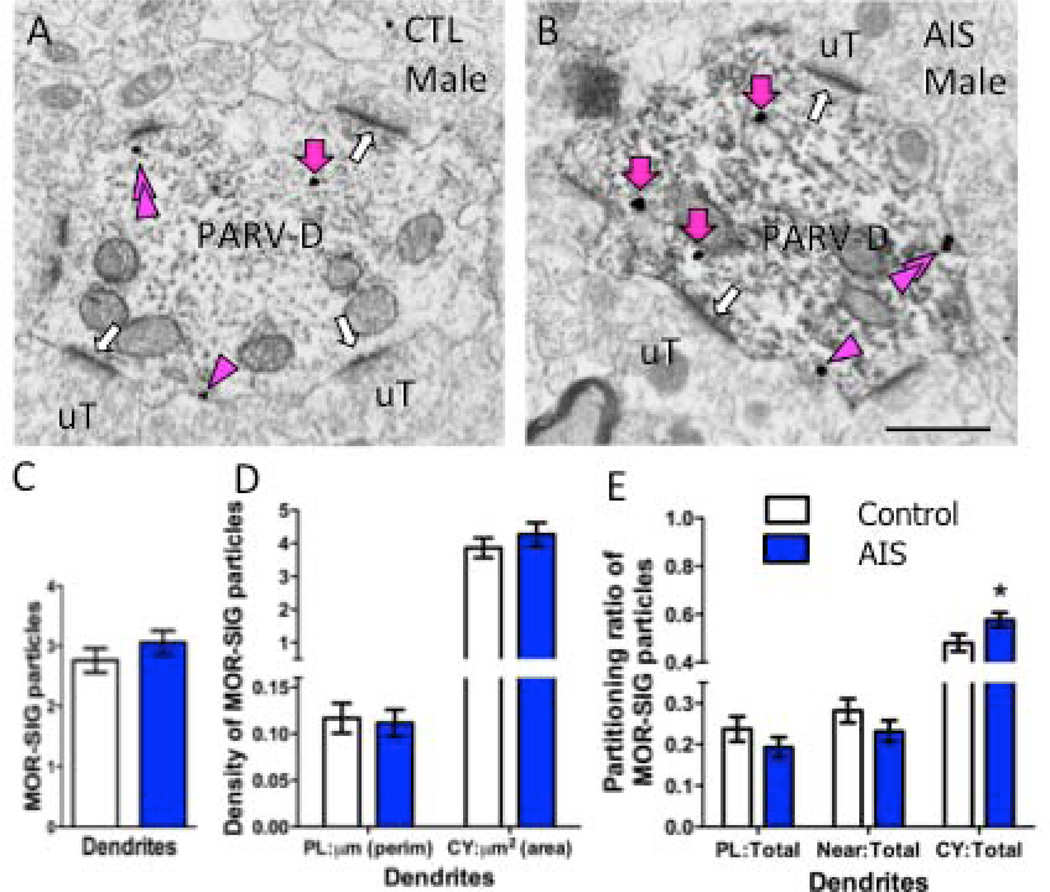
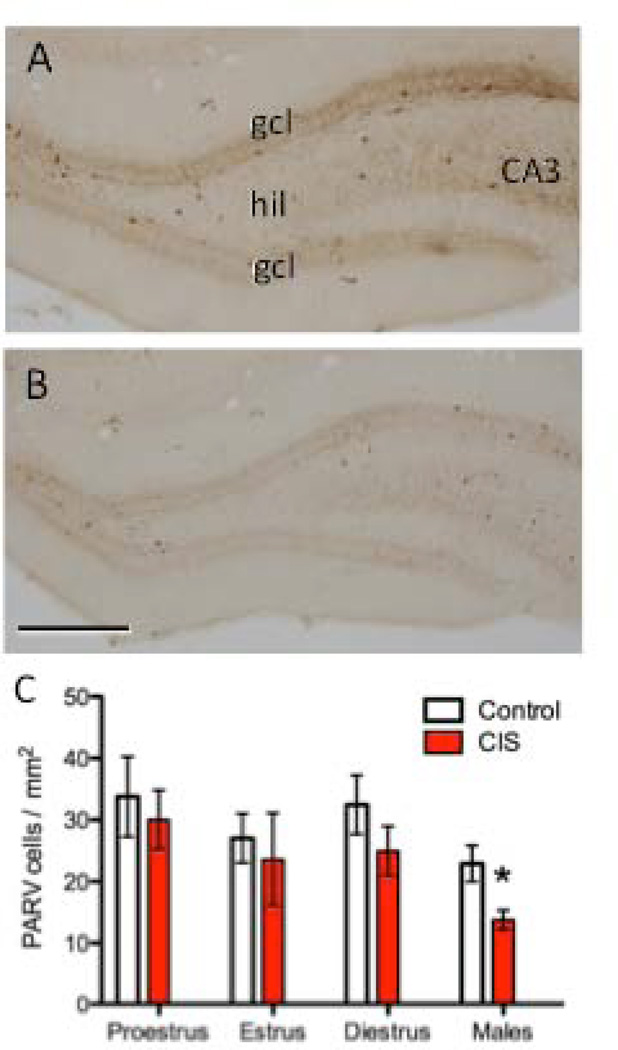
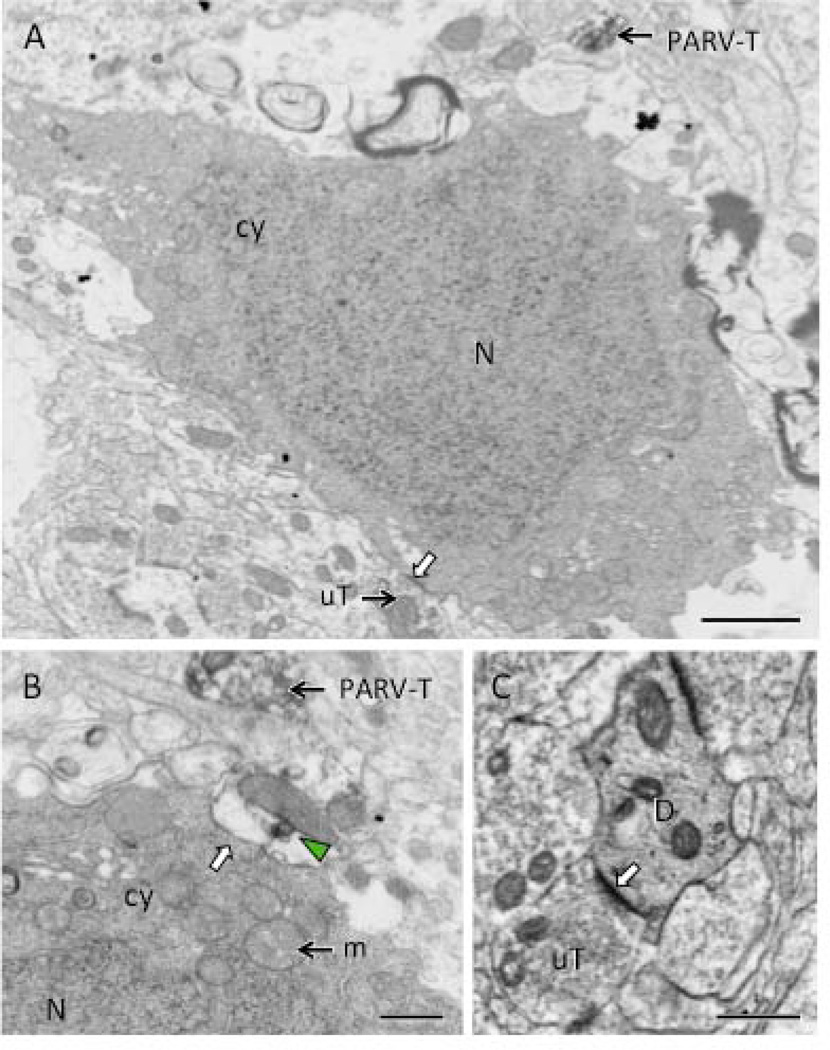
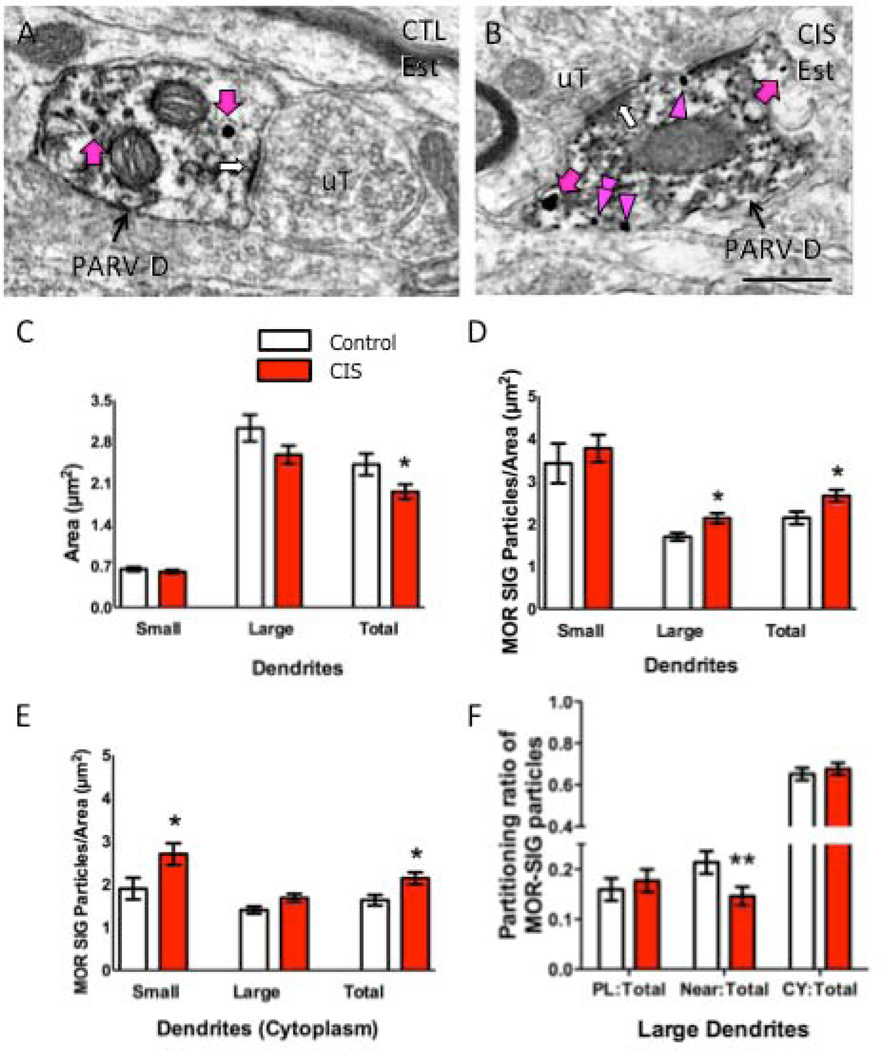
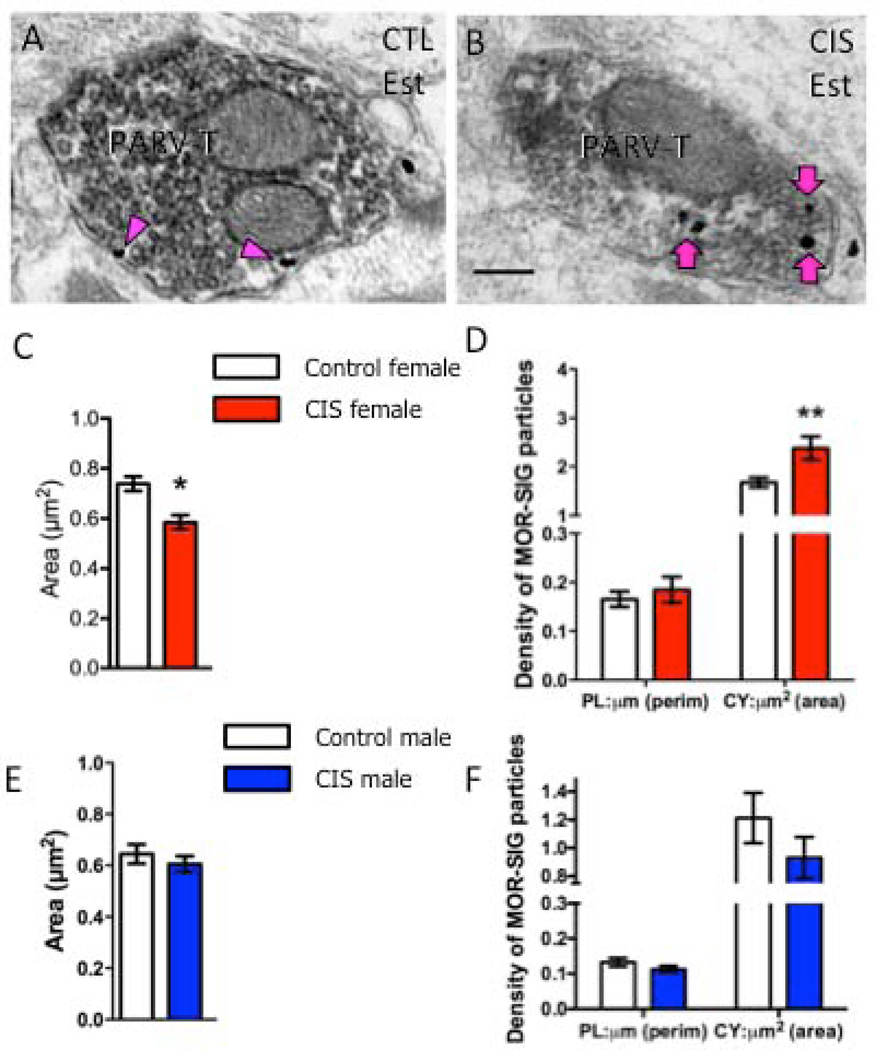
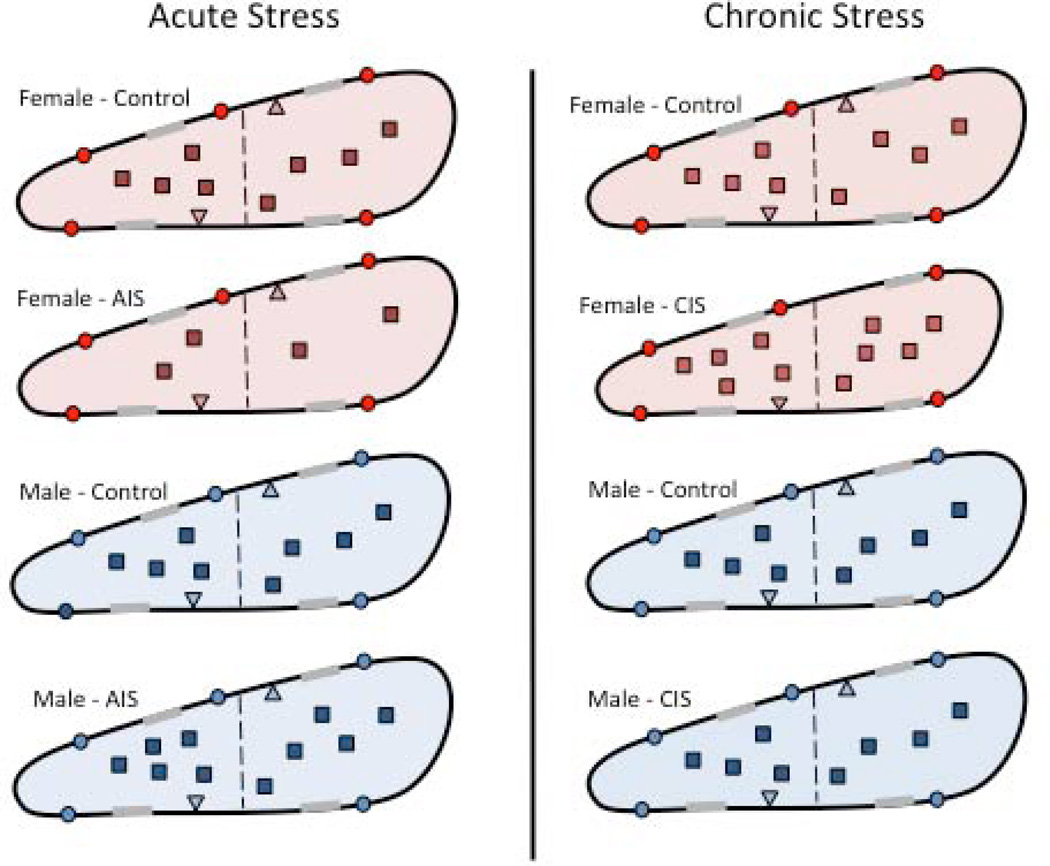
Stress differentially affects hippocampal-dependent learning relevant to addiction and morphology in male and female rats. Mu opioid receptors (MORs), which are located in parvalbumin (PARV)-containing GABAergic interneurons and are trafficked in response to changes in the hormonal environment, play a critical role in promoting principal cell excitability and long-term potentiation. Here, we compared the effects of acute and chronic immobilization stress (AIS and CIS) on MOR trafficking in PARV-containing neurons in the hilus of the dentate gyrus in female and male rats using dual label immunoelectron microscopy. Following AIS, the density of MOR silver-intensified gold particles (SIGs) in the cytoplasm of PARV-labeled dendrites was significantly reduced in females (estrus stage). Conversely, AIS significantly increased the proportion of cytoplasmic MOR SIGs in PARV-labeled dendrites in male rats. CIS significantly reduced the number of PARV-labeled neurons in the dentate hilus of males but not females. However, MOR/PARV-labeled dendrites and terminals were significantly smaller in CIS females, but not males, compared with controls. Following CIS, the density of cytoplasmic MOR SIGs increased in PARV-labeled dendrites and terminals in females. Moreover, the proportion of near-plasmalemmal MOR SIGs relative to total decreased in large PARV-labeled dendrites in females. After CIS, no changes in the density or trafficking of MOR SIGs were seen in PARV-labeled dendrites or terminals in males. These data show that AIS and CIS differentially affect available MOR pools in PARV-containing interneurons in female and male rats. Furthermore, they suggest that CIS could affect principal cell excitability in a manner that maintains learning processes in females but not males.
Keywords: acute stress; chronic stress; estrogens; opioids; sex differences.
Copyright © 2013 Wiley Periodicals, Inc.
Figures
References
-
- Abbadie C, Pan YX, Drake CT, Pasternak GW. Comparative immunohistochemical distributions of carboxy terminus epitopes from the mu-opioid receptor splice variants MOR-1D, MOR-1 and MOR-1C in the mouse and rat CNS. Neurosci. 2000;100:141–153. - PubMed
-
- Akaishi T, Saito H, Ito Y, Ishige K, Ikegaya Y. Morphine augments excitatory synaptic transmission in the dentate gyrus through GABAergic disinhibition. Neurosci Res. 2000;38:357–363. - PubMed
Publication types
MeSH terms
Substances
Grants and funding
- R01 NS007080/NS/NINDS NIH HHS/United States
- NS007080/NS/NINDS NIH HHS/United States
- R01 DA008259/DA/NIDA NIH HHS/United States
- HL098351/HL/NHLBI NIH HHS/United States
- P01 HL096571/HL/NHLBI NIH HHS/United States
- T32 GM007739/GM/NIGMS NIH HHS/United States
- AG059850/AG/NIA NIH HHS/United States
- DK07313/DK/NIDDK NIH HHS/United States
- DA08259/DA/NIDA NIH HHS/United States
- HL096571/HL/NHLBI NIH HHS/United States
- R21 AG039850/AG/NIA NIH HHS/United States
- GM07739/GM/NIGMS NIH HHS/United States
- R01 HL098351/HL/NHLBI NIH HHS/United States
- T32 DK007313/DK/NIDDK NIH HHS/United States
LinkOut - more resources
Full Text Sources
Other Literature Sources
Medical
Research Materials