


Prevalence, incidence and remission of urinary incontinence in women: longitudinal data from the Norwegian HUNT study (EPINCONT)
- PMID: 23721491
- PMCID: PMC3674916
- DOI: 10.1186/1471-2490-13-27
Prevalence, incidence and remission of urinary incontinence in women: longitudinal data from the Norwegian HUNT study (EPINCONT)
Abstract
Background: To determine incidence and remission of UI as well as changes in UI prevalence in the Norwegian EPINCONT surveys.
Methods: The EPINCONT surveys were conducted in the county of Nord-Trøndelag, Norway, as part of two large cross-sectional health surveys (HUNT2 and HUNT3) in 1995 - 1997 (EPINCONT1 (E1)), and 2006 - 2008 (EPINCONT2 (E2)). EPINCONT collected information about prevalence of UI, as well as information about type and severity of UI.
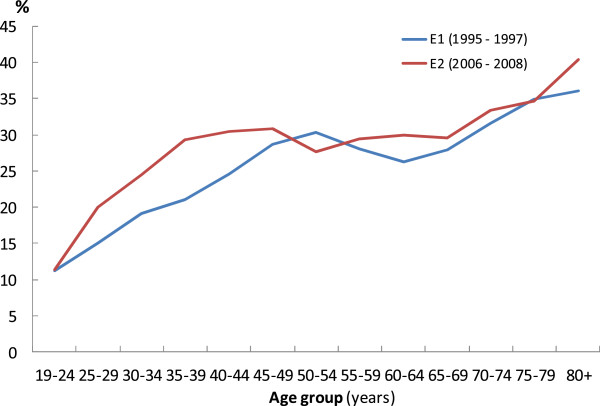
Results: A 16% relative increase in UI prevalence was found in 11 years. The women who answered E2 were significantly older, had a higher BMI and higher prevalence of diseases such as asthma, diabetes and angina compared with the women who answered E1.
Conclusion: Crude UI prevalence increased between the studies. Changes in known risk factors for UI such as age, BMI, weight and parity could explain some of the relative increase in prevalence, and were also found to be associated with either incidence of UI, remission of UI or both.
Figures
References
-
- Hunskaar S, Burgio K, Diokno A, Herzog AR, Hjälmas K, Lapitan MC. Epidemiology and natural history of urinary incontinence in women. Urology. 2003;62(4 Suppl 1):16–23. - PubMed
-
- Byles J, Millar CJ, Sibbritt DW, Chiarelli P. Living with urinary incontinence: a longitudinal study of older women. Age Ageing. 2009;38:333–338. discussion 251. - PubMed
MeSH terms
LinkOut - more resources
Full Text Sources
Other Literature Sources
Medical
