


Multisystem dysregulation in painful temporomandibular disorders
- PMID: 23721875
- PMCID: PMC3770463
- DOI: 10.1016/j.jpain.2013.03.011
Multisystem dysregulation in painful temporomandibular disorders
Abstract
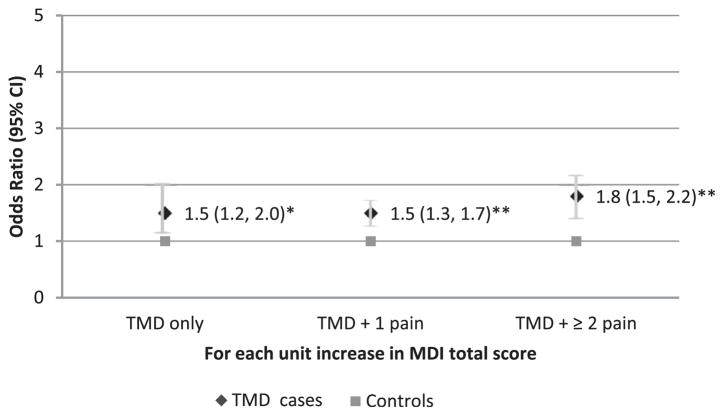
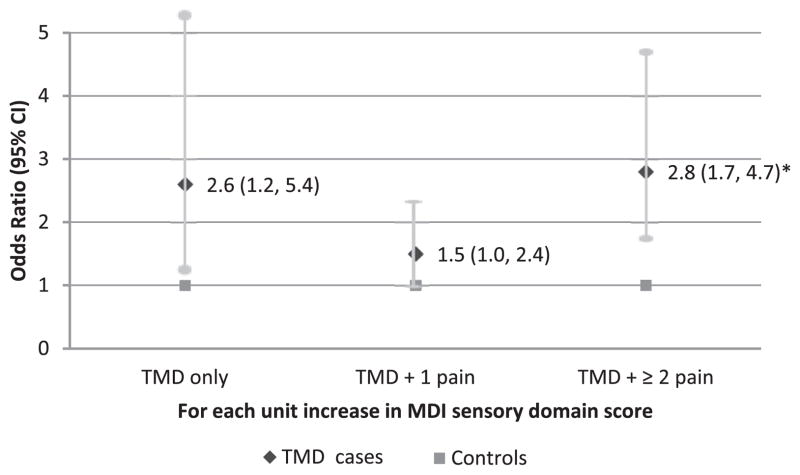
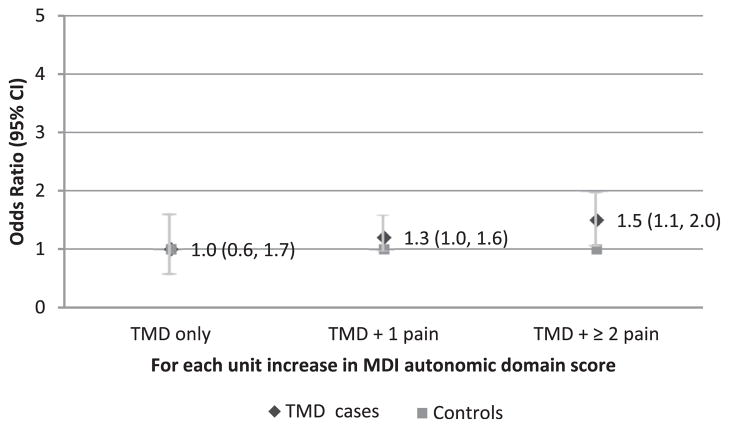
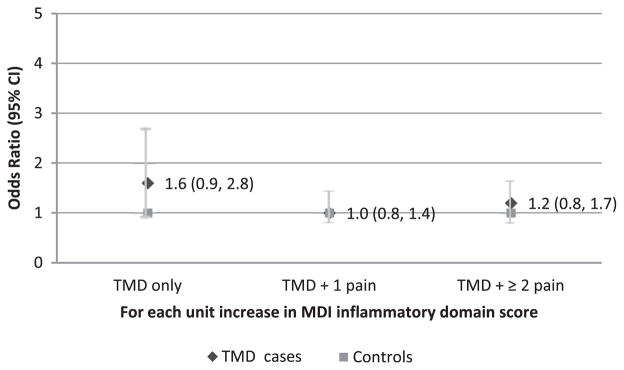
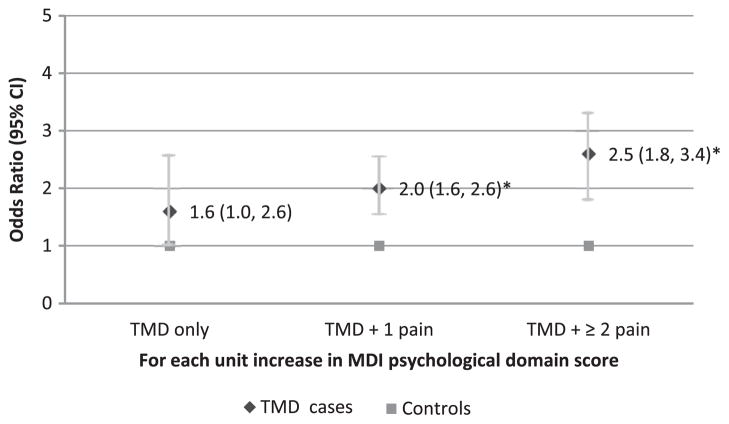
Multiple physiological and psychological regulatory domains may contribute to the pathophysiology of pain in temporomandibular disorder (TMD) and other bodily pain conditions. The purpose of this study was to evaluate the relationship between multisystem dysregulation and the presence of TMD pain, as well as the presence of different numbers of comorbid pain conditions in TMD. Secondary data analysis was conducted in 131 non-TMD (without comorbid pain) controls, 14 TMD subjects without comorbid pain, 78 TMD subjects with 1 comorbid pain, and 67 TMD subjects with multiple comorbid pain conditions who participated in a TMD genetic study. Twenty markers from sensory, autonomic, inflammatory, and psychological domains were evaluated. The results revealed that 1) overall dysregulation in multiple system domains (OR [odds ratio] = 1.6, 95% confidence interval [CI] = 1.4-1.8), particularly in the sensory (OR = 1.9, 95% CI = 1.3-2.9) and the psychological (OR = 2.1, 95% CI = 2.1-2.7) domains, were associated with increased likelihood of being a painful TMD case; and 2) dysregulations in individual system domains were selectively associated with the increased odds of being a TMD case with different levels of comorbid persistent pain conditions. These outcomes indicate that heterogeneous multisystem dysregulations may exist in painful TMD subgroups, and multidimensional physiological and psychological assessments can provide important information regarding pathophysiology, diagnosis, and management of pain in TMD patients.
Perspective: The concurrent assessment of multiple physiological and psychological systems is critical to our understanding of the pathophysiological processes that contribute to painful TMD and associated comorbid conditions, which will ultimately guide and inform appropriate treatment strategies that address the multisystem dysregulation associated with complex and common persistent pain conditions.
Keywords: Temporomandibular disorders; comorbid pain conditions; headache; multisystem dysregulation.
Copyright © 2013 American Pain Society. Published by Elsevier Inc. All rights reserved.
Conflict of interest statement
Drs Maixner and Diatchenko are equity shareholders in and consultants to Algynomics. The rest of the authors disclose no conflict of interest.
Figures
References
-
- Atkinson G, Leary AC, George KP, Murphy MB, Jones H. 24-hour variation in the reactivity of rate-pressure-product to everyday physical activity in patients attending a hypertension clinic. Chronobiol Int. 2009;26:958–973. - PubMed
-
- Bazzichi L, Rossi A, Massimetti G, Giannaccini G, Giuliano T, De Feo F, Ciapparelli A, Dell’Osso L, Bombardieri S. Cytokine patterns in fibromyalgia and their correlation with clinical manifestations. Clin Exp Rheumatol. 2007;25:225–230. - PubMed
-
- Bragdon EE, Light KC, Costello NL, Sigurdsson A, Bunting S, Bhalang K, Maixner W. Group differences in pain modulation: Pain-free women compared to pain-free men and to women with TMD. Pain. 2002;96:227–237. - PubMed
-
- Bruehl S, Chung OY, Ward P, Johnson B, McCubbin JA. The relationship between resting blood pressure and acute pain sensitivity in healthy normotensives and chronic back pain sufferers: The effects of opioid blockade. Pain. 2002;100:191–201. - PubMed
Publication types
MeSH terms
Grants and funding
LinkOut - more resources
Full Text Sources
Other Literature Sources
Medical
