


Mapping connectivity in the developing brain
- PMID: 23722009
- PMCID: PMC3800504
- DOI: 10.1016/j.ijdevneu.2013.05.007
Mapping connectivity in the developing brain
Abstract
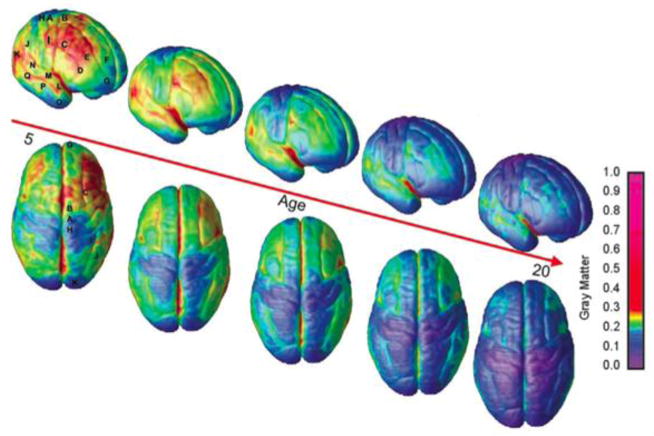
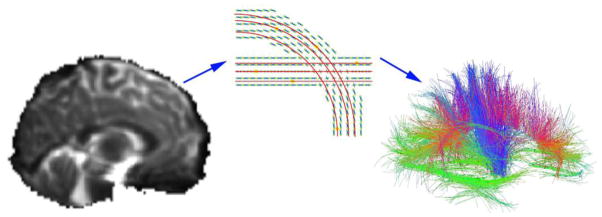
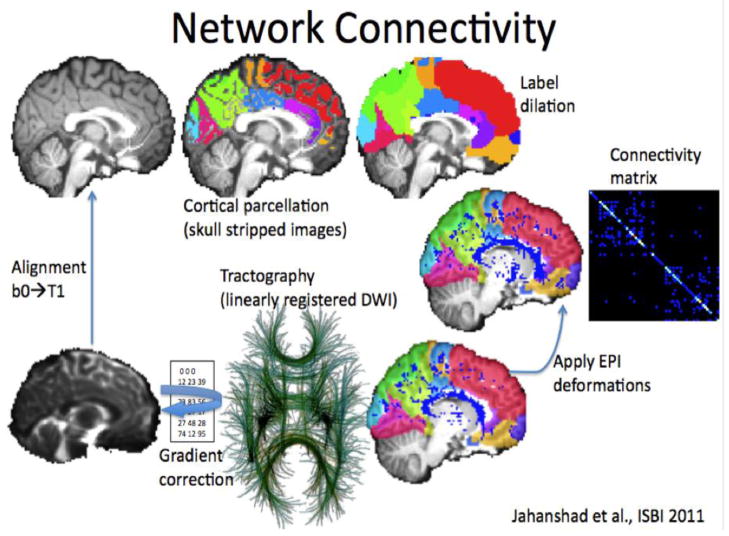
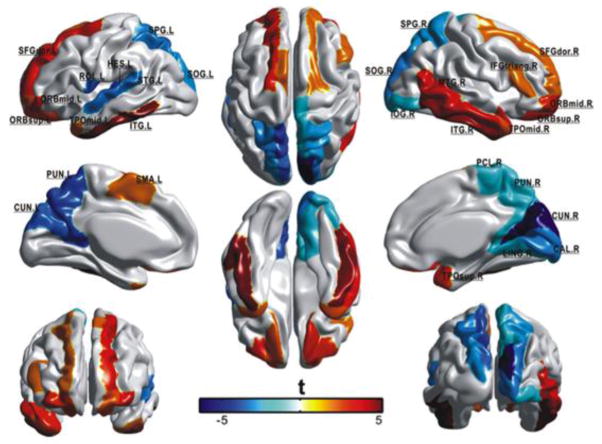
Recently, there has been a wealth of research into structural and functional brain connectivity, and how they change over development. While we are far from a complete understanding, these studies have yielded important insights into human brain development. There is an ever growing variety of methods for assessing connectivity, each with its own advantages. Here we review research on the development of structural and/or functional brain connectivity in both typically developing subjects and subjects with neurodevelopmental disorders. Space limitations preclude an exhaustive review of brain connectivity across all developmental disorders, so we review a representative selection of recent findings on brain connectivity in autism, Fragile X, 22q11.2 deletion syndrome, Williams syndrome, Turner syndrome, and ADHD. Major strides have been made in understanding the developmental trajectory of the human connectome, offering insight into characteristic features of brain development and biological processes involved in developmental brain disorders. We also discuss some common themes, including hemispheric specialization - or asymmetry - and sex differences. We conclude by discussing some promising future directions in connectomics, including the merger of imaging and genetics, and a deeper investigation of the relationships between structural and functional connectivity.
Keywords: 22q11.2 DS; ADHD; Autism; Brain connectivity; DTI; Development; Fragile X; HARDI; Turner syndrome; Williams syndrome; rs-fMRI.
Copyright © 2013 ISDN. Published by Elsevier Ltd. All rights reserved.
Figures
Republished in
-
Reprint of: Mapping connectivity in the developing brain.Int J Dev Neurosci. 2014 Feb;32:41-57. doi: 10.1016/j.ijdevneu.2013.11.005. Epub 2013 Dec 2. Int J Dev Neurosci. 2014. PMID: 24295552 Free PMC article.
References
-
- Anderson JC, Williams S, McGee R, Silva PA. DSM-III disorders in preadolescent children. Prevalence in a large sample from the general population. Arch Gen Psych. 1987;44(1):69–76. - PubMed
-
- Ashtari M, Kumra S, Bhaskar SL, Clarke T, Thaden E, Cervellione KL, Rhinewine J, Kane JM, Adesman A, Milanaik R, Maytal J, Diamond A, Szeszko P, Ardekani BA. Attention-deficit/hyperactivity disorder: A preliminary diffusion tensor imaging study. Biological Psychiatry. 2005;57(5):448–455. - PubMed
Publication types
MeSH terms
Grants and funding
- EB007813/EB/NIBIB NIH HHS/United States
- R01 EB007813/EB/NIBIB NIH HHS/United States
- R01 MH100027/MH/NIMH NIH HHS/United States
- EB008432/EB/NIBIB NIH HHS/United States
- P41 RR013642/RR/NCRR NIH HHS/United States
- R01 MH081754/MH/NIMH NIH HHS/United States
- EB008281/EB/NIBIB NIH HHS/United States
- R01 EB008281/EB/NIBIB NIH HHS/United States
- T32MH073526-06/MH/NIMH NIH HHS/United States
- T32 MH073526/MH/NIMH NIH HHS/United States
- R01 HD050735/HD/NICHD NIH HHS/United States
- R01 EB008432/EB/NIBIB NIH HHS/United States
LinkOut - more resources
Full Text Sources
Other Literature Sources
Medical
