


The physiological importance of glucosinolates on plant response to abiotic stress in Brassica
- PMID: 23722664
- PMCID: PMC3709749
- DOI: 10.3390/ijms140611607
The physiological importance of glucosinolates on plant response to abiotic stress in Brassica
Abstract
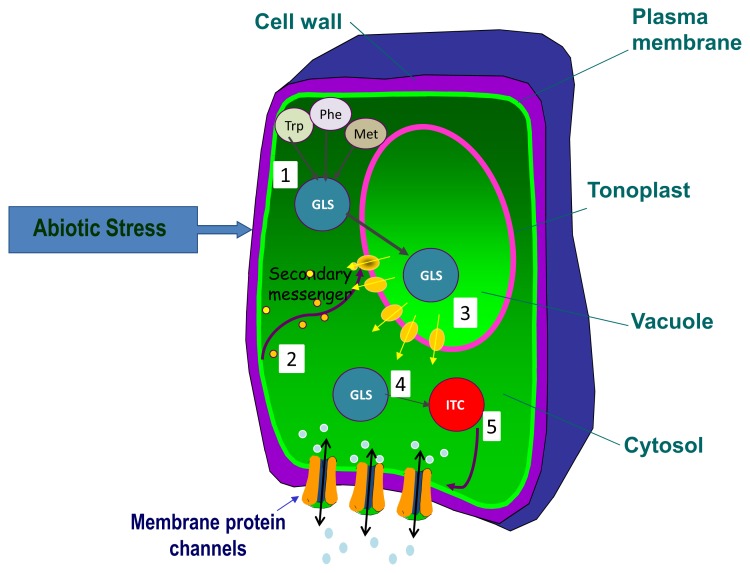
Glucosinolates, a class of secondary metabolites, mainly found in Brassicaceae, are affected by the changing environment. This review is focusing on the physiological significance of glucosinolates and their hydrolysis products in the plant response to different abiotic stresses. Special attention is paid to the crosstalk between some of the physiological processes involved in stress response and glucosinolate metabolism, with the resulting connection between both pathways in which signaling mechanisms glucosinolate may act as signals themselves. The function of glucosinolates, further than in defense switching, is discussed in terms of alleviating pathogen attack under abiotic stress. The fact that the exogenous addition of glucosinolate hydrolysis products may alleviate certain stress conditions through its effect on specific proteins is described in light of the recent reports, but the molecular mechanisms involved in this response merit further research. Finally, the transient allocation and re-distribution of glucosinolates as a response to environmental changes is summarized.
Figures
References
-
- Fahey J.W., Zalcmann A.T., Talalay P. The chemical diversity and distribution of glucosinolates and isothiocyanates among plants. Phytochemistry. 2001;56:5–51. - PubMed
-
- Wittstock U., Halkier B.A. Glucosinolate research in the Arabidopsis era. Trends Plant Sci. 2002;7:263–270. - PubMed
-
- Bones A.M., Rossiter J.T. The enzymic and chemically induced decomposition of glucosinolates. Phytochemistry. 2006;67:1053–1067. - PubMed
-
- Mithen R.F., Dekker M., Verkerk R., Rabot S., Johnson I.T. The nutritional significance, biosynthesis and bioavailability of glucosinolates in human foods. J. Sci. Food Agric. 2000;80:967–984.
-
- Traka M., Mithen R. Glucosinolates, isothiocyanates and human health. Phytochem. Rev. 2009;8:269–282.
Publication types
MeSH terms
Substances
LinkOut - more resources
Full Text Sources
Other Literature Sources
