


The challenges of pain management in primary care: a pan-European survey
- PMID: 23723719
- PMCID: PMC3666876
- DOI: 10.2147/JPR.S41883
The challenges of pain management in primary care: a pan-European survey
Abstract
Background: The OPENMinds Primary Care group is a group of European primary care physicians (PCPs) with an interest in pain management, formed to improve the understanding and management of chronic pain in primary care.
Objective: A survey was conducted to assess the challenges of chronic nonmalignant pain (CNMP) management in primary care in Europe, focusing particularly on pain assessment, opioid therapy, and educational needs.
Methods: A questionnaire was developed for online use by PCPs in 13 European countries (Belgium, Denmark, France, Germany, Ireland, Italy, the Netherlands, Norway, Poland, Portugal, Spain, Sweden, and the UK).
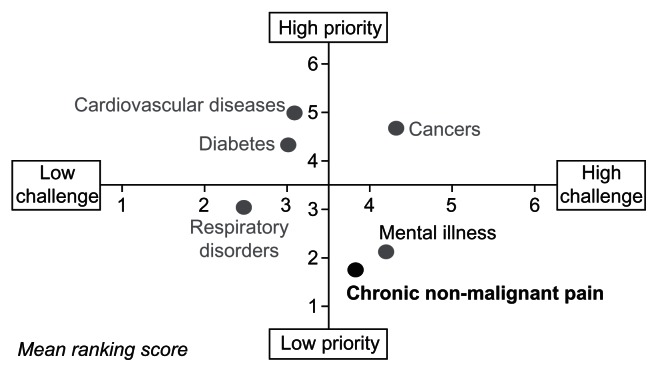
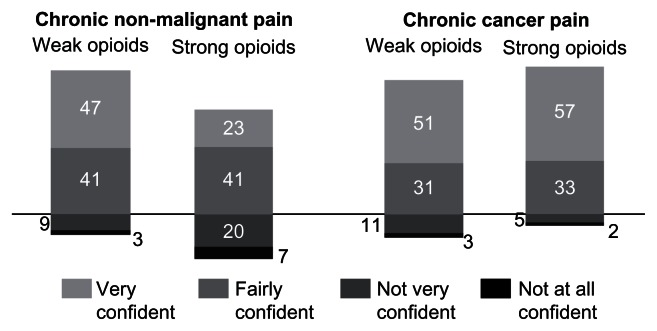
Results: A total of 1309 PCPs completed the questionnaire, approximately 100 from each country. Most PCPs (84%) perceived CNMP to be one of the most challenging conditions to treat, yet a low priority within healthcare systems. Only 48% of PCPs used pain assessment tools, and 81% considered chronic pain and its impact on quality of life to be underassessed in primary care. PCPs were less confident about prescribing strong opioids for CNMP than for use in cancer pain. Most PCPs (84%) considered their initial training on CNMP was not comprehensive, with 89% recognizing a need for more education on the topic.
Conclusion: These findings reveal that PCPs in Europe find CNMP a challenge to treat. Areas to address with training include underuse of pain assessment tools and lack of confidence in use of opioid therapy. Guidelines on CNMP management in primary care would be welcomed. The insights gained should provide the basis for future initiatives to support primary care management of chronic pain.
Keywords: Europe; chronic pain; opioid analgesics; primary care physicians.
Figures
References
-
- Breivik H, Collett B, Ventafridda V, Cohen R, Gallacher D. Survey of chronic pain in Europe: prevalence, impact on daily life, and treatment. Eur J Pain. 2006;10(4):287–333. - PubMed
-
- Crombie IK. Epidemiologic studies of pain. Journal of the Pain Society. 1993;11:30–32.
-
- Von Korff M, Dworkin SF, Le Resche L. Graded chronic pain status: an epidemiologic evaluation. Pain. 1990;40(3):279–291. - PubMed
-
- Leverence RR, Williams RL, Potter M, et al. Prime Net Clinicians. Chronic non-cancer pain: a siren for primary care – a report from the PRImary Care MultiEthnic Network (PRIME Net) J Am Board Fam Med. 2011;24(5):551–561. - PubMed
LinkOut - more resources
Full Text Sources
Other Literature Sources
