. 2013 May 27;8(5):e62707.
doi: 10.1371/journal.pone.0062707. Print 2013.

Disentangling the origins of cultivated sweet potato (Ipomoea batatas (L.) Lam.)

Affiliations

Disentangling the origins of cultivated sweet potato (Ipomoea batatas (L.) Lam.)

Caroline Roullier et al. PLoS One. .

Abstract

Sweet potato (Ipomoea batatas (L.) Lam., Convolvulaceae) counts among the most widely cultivated staple crops worldwide, yet the origins of its domestication remain unclear. This hexaploid species could have had either an autopolyploid origin, from the diploid I. trifida, or an allopolyploid origin, involving genomes of I. trifida and I. triloba. We generated molecular genetic data for a broad sample of cultivated sweet potatoes and its diploid and polyploid wild relatives, for noncoding chloroplast and nuclear ITS sequences, and nuclear SSRs. Our data did not support an allopolyploid origin for I. batatas, nor any contribution of I. triloba in the genome of domesticated sweet potato. I. trifida and I. batatas are closely related although they do not share haplotypes. Our data support an autopolyploid origin of sweet potato from the ancestor it shares with I. trifida, which might be similar to currently observed tetraploid wild Ipomoea accessions. Two I. batatas chloroplast lineages were identified. They show more divergence with each other than either does with I. trifida. We thus propose that cultivated I. batatas have multiple origins, and evolved from at least two distinct autopolyploidization events in polymorphic wild populations of a single progenitor species. Secondary contact between sweet potatoes domesticated in Central America and in South America, from differentiated wild I. batatas populations, would have led to the introgression of chloroplast haplotypes of each lineage into nuclear backgrounds of the other, and to a reduced divergence between nuclear gene pools as compared with chloroplast haplotypes.


Conflict of interest statement

Competing Interests: The authors have declared that no competing interests exist.

Figures

Figure 1
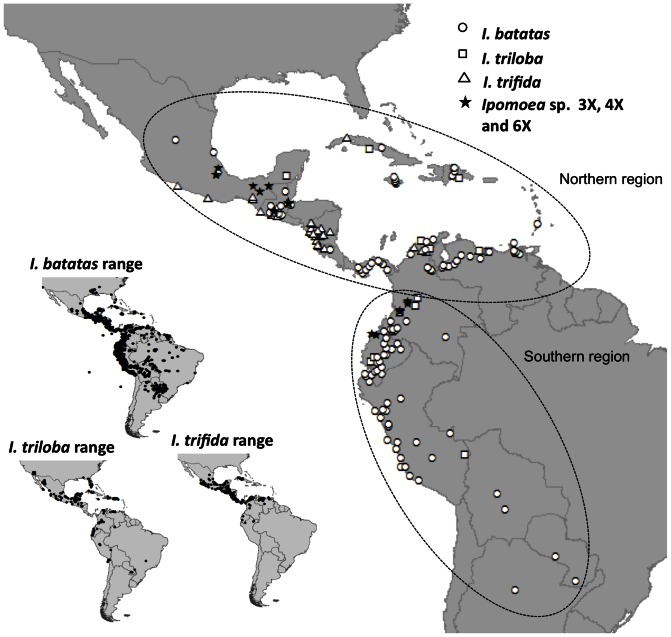
Figure 1. Sampling geographical distribution.
Location of I. triloba, I. trifida, I. batatas and polyploid Ipomoea sp. accessions used in the present study and current taxon distribution ranges, as determined from GBIF records (http://data.gbif.org/species/) are provided. Accessions with no geographical information are not shown; details on sampling are provided in Tables S1.
Figure 2
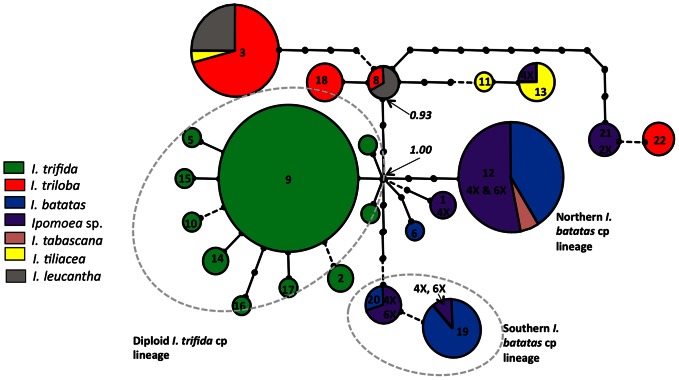
Figure 2. Genetic relationships of I. batatas, five wild relatives and Ipomoea sp. accessions based on chloroplast DNA analyses.
Statistical Parsimony Network of rpl32-trnL(UAG) haplotypes. Circle size is proportional to the number of individuals per haplotype. Substitutions and inversions are represented using full lines and indels are displayed using broken lines. Intermediate, unsampled haplotypes appear as dots. The posterior probability of two nodes, as obtained through a Bayesian tree reconstruction (Figure S1), is reported in italics. The ploidy level of Ipomoea sp. accessions is indicated.
Figure 3
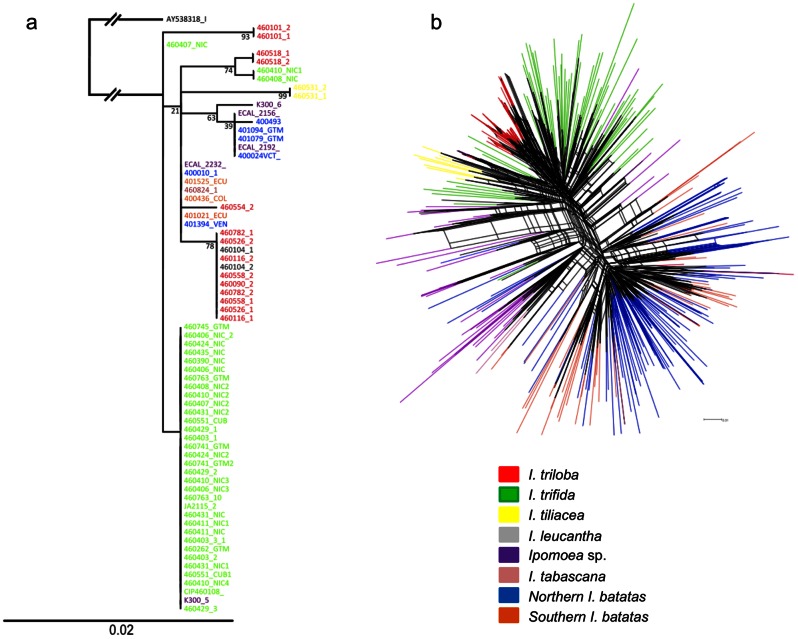
Figure 3. Genetic relationships of I. batatas, five wild relatives and Ipomoea sp. accessions based on nuclear DNA analyses.
a) Maximum likelihood tree based on ITS sequences. Bootstrap values are indicated for central nodes. b) NeighborghNet diagram based on Jaccard distance for nuclear SSR data.
Figure 4
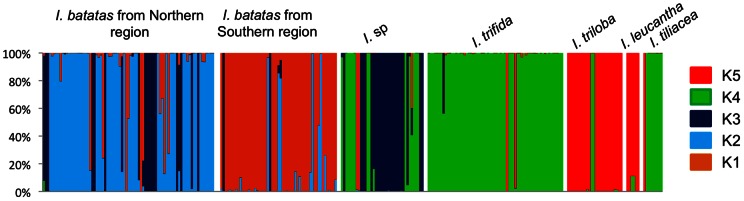
Figure 4. Taxa boundaries as accessed with DAPC analysis for nuclear SSR data.
Diagram representing the proportion of membership probabilities in nuclear five clusters (K1, K2, K3, K4 and K5) as determined by the DAPC analysis. Each individual is represented as a vertical bar, with colours corresponding to membership probabilities to the five clusters.
Figure 5
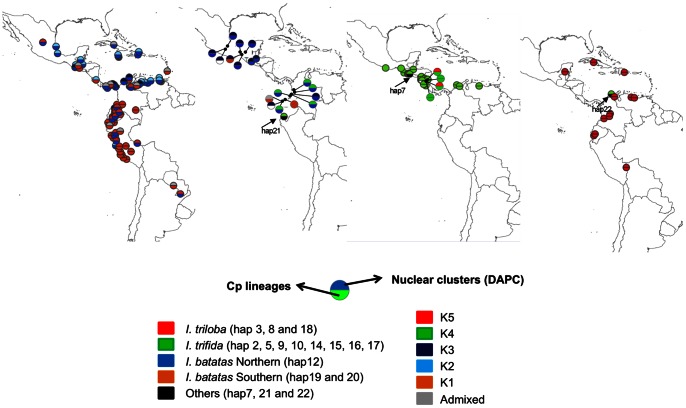
Figure 5. Geographical patterns of cpDNA lineages and nuclear clusters (DAPC results) of I. batatas, I. trifida, I. triloba and polyploid Ipomoea sp. accessions.
The bottom half of the circle provides the chloroplast lineage while the top half gives the nuclear genome as revealed by DAPC grouping. When the membership probability to a given cluster is less than 0.8, the accession was considered as admixed. Each circle represents one accession, unless samples of the same accession provided different information. In this case, all combinations encountered are provided. They appeared connected to a black point which indicates their locality.
Figure 6
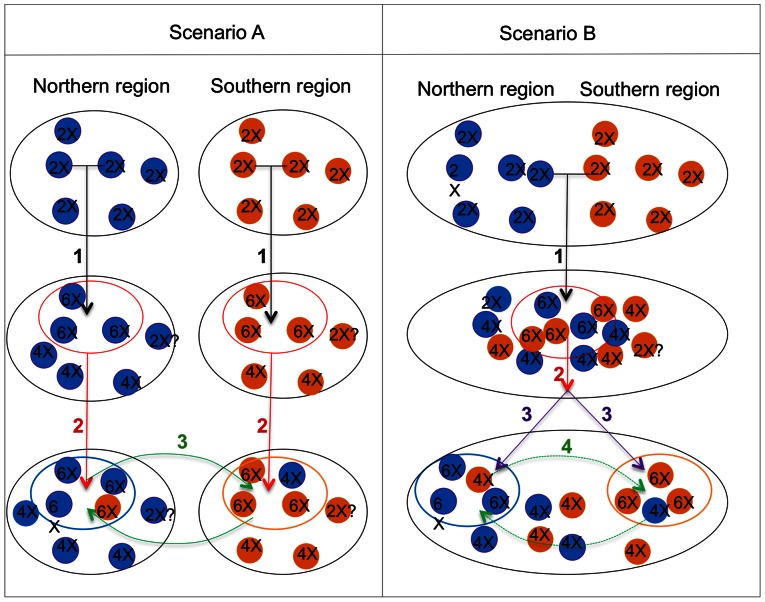
Figure 6. Two possible scenarios about the origins of Ipomoea batatas.
a) Scenario A which represents according to us, the most parsimonious scenario explaining the clear-cut phylogeographical pattern inferred from both nuclear and chloroplast data: 1) Multiple independent events of autopolypoidy within several polymorphic and pre-differentiated wild populations (phylogeographical differentiation), and then 2) multi-local domestication within each polyploid population, followed by 3) gene flow between the two cultivated genepools and between cultivated and wild forms. b) Scenario B: 1) Hybridization between differentiated conspecific wild populations (in contact because of potential climate-induced or human-induced range shift) and polyploidization, followed by 2) the domestication of these polyploids forms and then 3) patterns of post-domestication human expansion may have been responsible for the clear-cut phylogeographical pattern found within cultivated I. batatas in tropical America. Finally, 4) Gene flow between the two cultivated genepools and between cultivated and wild forms may also have occurred.

References

    1. Otto SP (2007) The evolutionary consequences of polyploidy. Cell 131: 452–462. - PubMed
    1. Purugganan MD, Fuller DQ (2009) The nature of selection during plant domestication. Nature 457: 843–848. - PubMed
    1. Zohary D (2004) Unconscious selection and the evolution of domesticated plants. Econ Bot 58: 5–10.
    1. Allaby RG, Fuller DQ, Brown T (2008) The genetic expectations of a protracted model for the origins of domesticated crops. Proc Natl Acad Sci 105: 13982–13986. - PMC - PubMed
    1. McKey D, Elias M, Pujol B, Duputié A (2010) The evolutionary ecology of clonally propagated domesticated plants. New Phytol 186: 318–332. - PubMed

Publication types

MeSH terms

LinkOut - more resources