


Influence of traditional markets on plant management in the Tehuacán Valley
- PMID: 23725352
- PMCID: PMC3698157
- DOI: 10.1186/1746-4269-9-38
Influence of traditional markets on plant management in the Tehuacán Valley
Abstract
Background: The Tehuacán Valley, Mexico is a region with exceptionally high biocultural richness. Traditional knowledge in this region comprises information on nearly 1,600 plant species used by local peoples to satisfy their subsistence needs. Plant resources with higher cultural value are interchanged in traditional markets. We inventoried the edible plant species interchanged in regional markets documenting economic, cultural and ecological data and about their extraction and management in order to: (1) assess how commercialization and ecological aspects influence plant management, (2) identify which species are more vulnerable, and (3) analyze how local management contributes to decrease their risk. We hypothesized that scarcer plant species with higher economic value would be under higher pressure motivating more management actions than on more abundant plants with lower economic value. However, construction of management techniques is also influenced by the time-span the management responses have taken as well as biological and ecological aspects of the plant species that limit the implementation of management practices. Plant management mitigates risk, but its absence on plant species under high risk may favor local extinction.
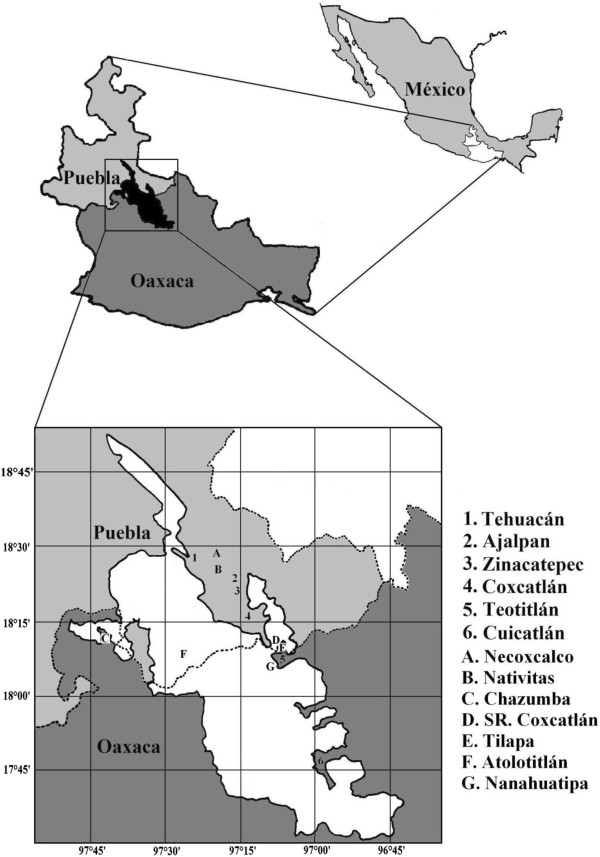
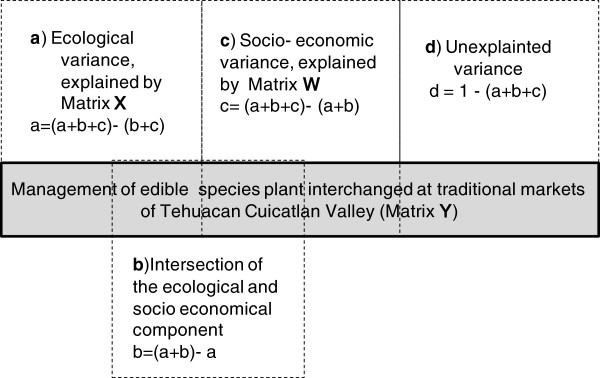
Methods: Six traditional markets were studied through 332 semi-structured interviews to local vendors about barter, commercialization, and management types of local edible plant species. We retrieved ethnobotanical information on plant management from ten communities in a workshop and sampled regional vegetation in a total of 98 sites to estimate distribution and abundance of plant species commercialized. Through Canonical Correspondence Analysis (CCA) we analyzed the amount of variation of management types that can be explained from socioeconomic and ecological information. A risk index was calculated relating distribution, abundance, economic value and management of plant resources to identify the most vulnerable species.
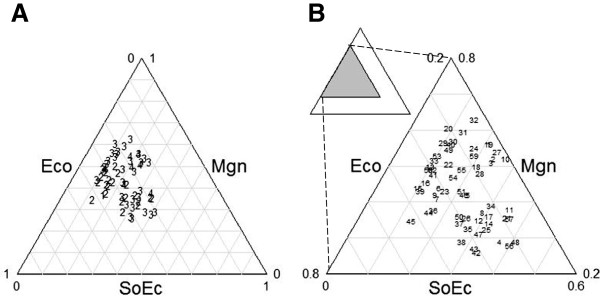
Results: We recorded 122 edible plant species interchanged in the main regional markets. CCA explained significantly 24% of management variation, spatial distribution and plant parts used being particularly important in management decisions. The indeterminate 76% of variation suggests that management decisions depend on particular variables that are not explained by the ecological and socioeconomic factors studied and/or their high variation in the context at the regional scale. The risk index indicated that management was the factor that mostly influences decreasing of risk of interchanged plant species. We identified Clinopodium mexicanum, Pachycereus weberi, Dasylirion serratifolium, Disocorea sp., Ceiba aesculifolia, Neobuxbamia tetetzo, Lippia graveolens, Litsea glaucescens, L. neesiana, Jatropha neopauciflora, Agave potatorum and other agave species used for producing mescal among the more endangered plant species due to human pressure, their relative scarcity and limited or inexistent management.
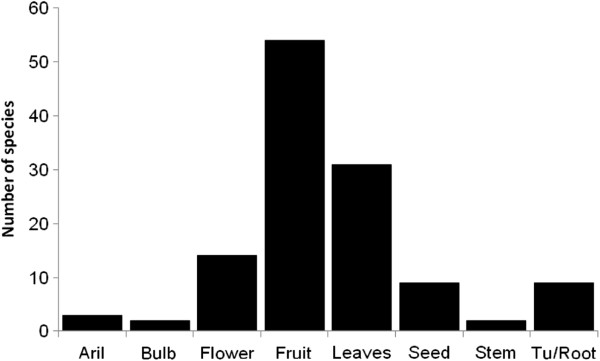
Conclusion: Spatial distribution and plant parts used are particularly meaningful factors determining risk and influencing management actions on edible plant species interchanged in the region. Limited or inexistent management may favor extinction of local populations under risk. Local management techniques synthesize knowledge and experiences crucial for designing sustainable management programs. Traditional management techniques supported by ecological information and environmental management approaches could make valuable contributions for sustainable use of plant species, particularly those becoming economically important more recently.
Figures
References
-
- Rojas-González F. El Comercio entre los Indios de México. Rev Mex Sociol. 1945;7(Suppl 1):123–137.
-
- Tourtellot G, Sabloff JA. Exchange Systems among the Ancient Maya. Am Antiq. 1970;37(Suppl 1):126–135.
-
- Cortés H, Alcalá M. Cartas de Relación. México: Porrúa; 2004.
-
- Díaz DC B, Barbón JA. Historia verdadera de la conquista de la Nueva España. Nueva España: Porrua; 2005.
-
- Sahagún FB, Garibay AM. Historia General de las cosas de la Nueva España, escrita por el Fr. Porrúa: Bernardino de Sahagún; 1982.
Publication types
MeSH terms
LinkOut - more resources
Full Text Sources
Other Literature Sources
