


Characterization of the genome of the dairy Lactobacillus helveticus bacteriophage {Phi}AQ113
- PMID: 23728811
- PMCID: PMC3719528
- DOI: 10.1128/AEM.00620-13
Characterization of the genome of the dairy Lactobacillus helveticus bacteriophage {Phi}AQ113
Abstract
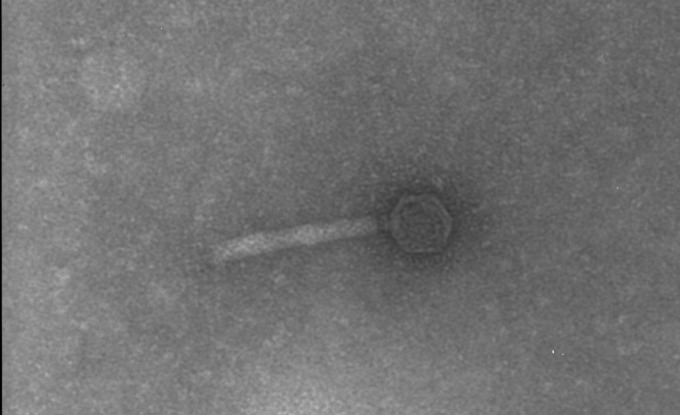
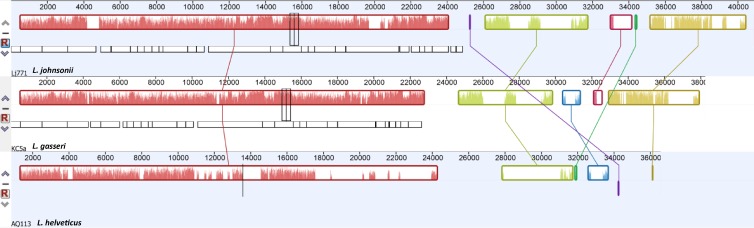
The complete genomic sequence of the dairy Lactobacillus helveticus bacteriophage ΦAQ113 was determined. Phage ΦAQ113 is a Myoviridae bacteriophage with an isometric capsid and a contractile tail. The final assembled consensus sequence revealed a linear, circularly permuted, double-stranded DNA genome with a size of 36,566 bp and a G+C content of 37%. Fifty-six open reading frames (ORFs) were predicted, and a putative function was assigned to approximately 90% of them. The ΦAQ113 genome shows functionally related genes clustered together in a genome structure composed of modules for DNA replication/regulation, DNA packaging, head and tail morphogenesis, cell lysis, and lysogeny. The identification of genes involved in the establishment of lysogeny indicates that it may have originated as a temperate phage, even if it was isolated from natural cheese whey starters as a virulent phage, because it is able to propagate in a sensitive host strain. Additionally, we discovered that the ΦAQ113 phage genome is closely related to Lactobacillus gasseri phage KC5a and Lactobacillus johnsonii phage Lj771 genomes. The phylogenetic similarities between L. helveticus phage ΦAQ113 and two phages that belong to gut species confirm a possible common ancestral origin and support the increasing consideration of L. helveticus as a health-promoting organism.
Figures
References
-
- Moineau S, Levesque C. 2005. Control of bacteriophages in industrial fermentations, p 285–296 In Kutter E, Sulakvelidze A. (ed), Bacteriophages: biology and applications. CRC Press, Boca Raton, FL
-
- Altermann E, Klein JR, Henrich B. 1999. Primary structure and features of the genome of the Lactobacillus gasseri temperate bacteriophage Φadh. Gene 236:333–346 - PubMed
-
- Brussow H. 2001. Phages of dairy bacteria. Annu. Rev. Microbiol. 55:283–303 - PubMed
-
- Brussow H, Suarez JE. 2006. Lactobacillus phages, p 653–666 In Calendar R, Abedon ST. (ed), The bacteriophages, 2nd ed Oxford University Press, New York, NY
-
- Mozzi F, Raya RR, Vignolo GM. 2010. Biotechnology of lactic acid bacteria—novel applications. Wiley-Blackwell, Blackwell Publishing, Ames, IA
Publication types
MeSH terms
Substances
Associated data
- Actions
LinkOut - more resources
Full Text Sources
Other Literature Sources
Molecular Biology Databases
