


Aspiration pneumonia after chemo-intensity-modulated radiation therapy of oropharyngeal carcinoma and its clinical and dysphagia-related predictors
- PMID: 23729173
- PMCID: PMC4144677
- DOI: 10.1002/hed.23275
Aspiration pneumonia after chemo-intensity-modulated radiation therapy of oropharyngeal carcinoma and its clinical and dysphagia-related predictors
Abstract
Background: The purpose of this study was to assess aspiration pneumonia (AsPn) rates and predictors after chemo-irradiation for head and neck cancer.
Methods: The was a prospective study of 72 patients with stage III to IV oropharyngeal cancer treated definitively with intensity-modulated radiotherapy (IMRT) concurrent with weekly carboplatin and paclitaxel. AsPn was recorded prospectively and dysphagia was evaluated longitudinally through 2 years posttherapy by observer-rated (Common Toxicity Criteria version [CTCAE]) scores, patient-reported scores, and videofluoroscopy.
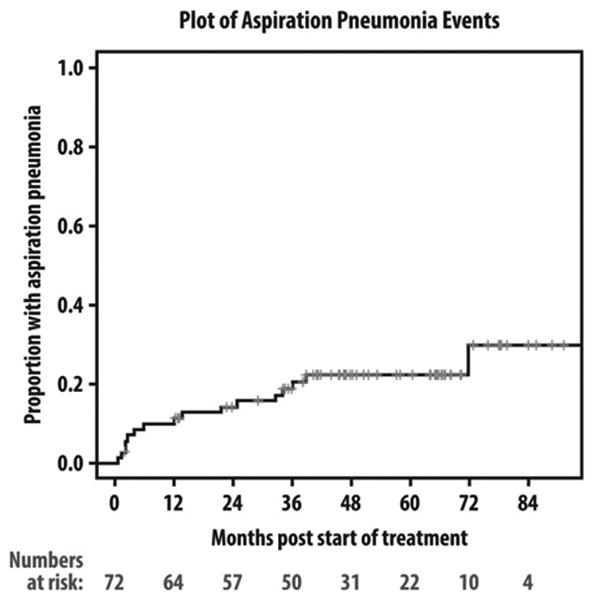
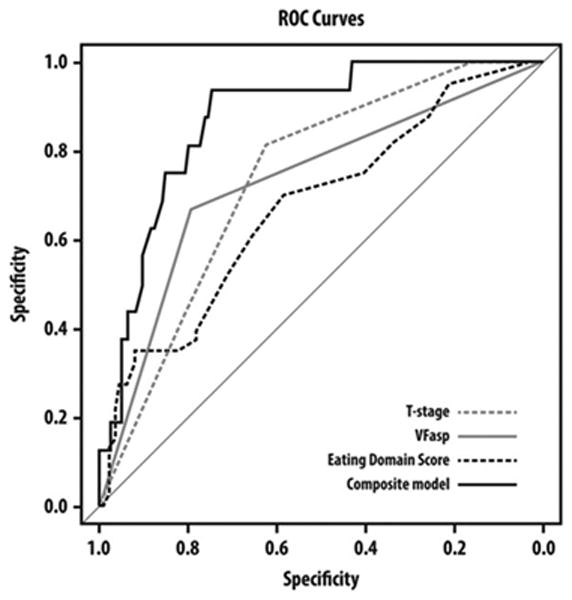
Results: Sixteen patients (20%) developed AsPn. Predictive factors included T classification (p = .01), aspiration detected on videofluoroscopy (videofluoroscopy-asp; p = .0007), and patient-reported dysphagia (p = .02-.0003), but not observer-rated dysphagia (p = .4). Combining T classification, patient reported dysphagia, and videofluoroscopy-asp, provided the best predictive model.
Conclusion: AsPn continues to be an under-reported consequence of chemo-irradiation for head and neck cancer. These data support using patient-reported dysphagia to identify high-risk patients requiring videofluoroscopy evaluation for preventive measures. Reducing videofluoroscopy-asp rates, by reducing swallowing structures radiation doses and by trials reducing treatment intensity in patients predicted to do well, are likely to reduce AsPn rates.
Keywords: IMRT; aspiration pneumonia; dysphagia; head and neck cancer; oropharyngeal cancer.
Copyright © 2013 Wiley Periodicals, Inc.
Figures
References
-
- Langendijk JA, Doornaert P, Verdonck–de Leeuw IM, Leemans CR, Aaronson NK, Slotman BJ. Impact of late treatment-related toxicity on quality of life among patients with head and neck cancer treated with radiotherapy. J Clin Oncol. 2008;26:3770–3776. - PubMed
-
- Eisbruch A, Lyden T, Bradford CR, et al. Objective assessment of swallowing dysfunction and aspiration after radiation concurrent with chemotherapy for head-and-neck cancer. Int J Radiat Oncol Biol Phys. 2002;53:23–28. - PubMed
-
- Rosenthal DI, Lewin JS, Eisbruch A. Prevention and treatment of dysphagia and aspiration after chemoradiation for head and neck cancer. J Clin Oncol. 2006;24:2636–2643. - PubMed
-
- Murphy BA, Gilbert J. Dysphagia in head and neck cancer patients treated with radiation: assessment, sequelae, and rehabilitation. Semin Radiat Oncol. 2009;19:35–42. - PubMed
Publication types
MeSH terms
Grants and funding
LinkOut - more resources
Full Text Sources
Other Literature Sources
Medical
