


Cancer-generated lactic acid: a regulatory, immunosuppressive metabolite?
- PMID: 23729358
- PMCID: PMC3757307
- DOI: 10.1002/path.4218
Cancer-generated lactic acid: a regulatory, immunosuppressive metabolite?
Abstract
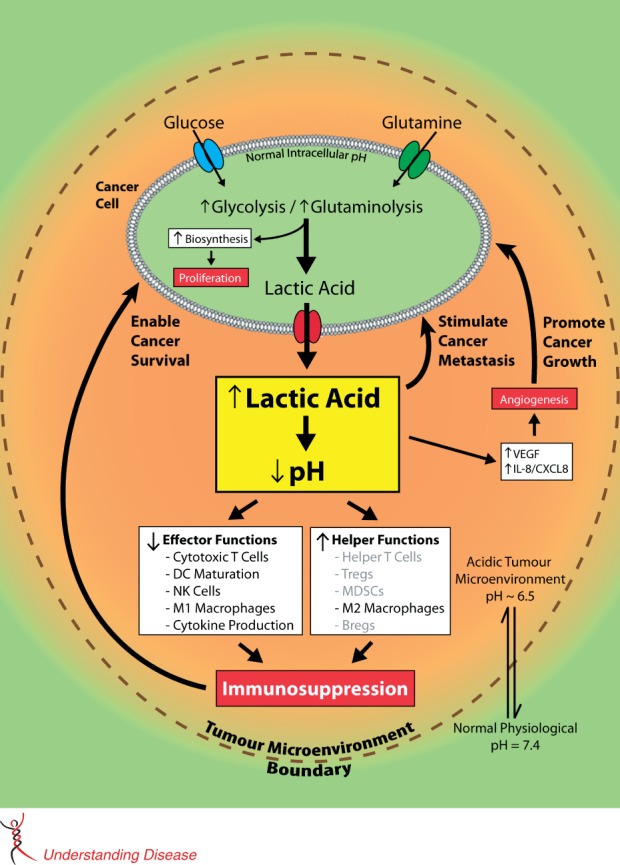
The common preference of cancers for lactic acid-generating metabolic energy pathways has led to proposals that their reprogrammed metabolism confers growth advantages such as decreased susceptibility to hypoxic stress. Recent observations, however, suggest that it generates a novel way for cancer survival. There is increasing evidence that cancers can escape immune destruction by suppressing the anti-cancer immune response through maintaining a relatively low pH in their micro-environment. Tumours achieve this by regulating lactic acid secretion via modification of glucose/glutamine metabolisms. We propose that the maintenance by cancers of a relatively low pH in their micro-environment, via regulation of their lactic acid secretion through selective modification of their energy metabolism, is another major mechanism by which cancers can suppress the anti-cancer immune response. Cancer-generated lactic acid could thus be viewed as a critical, immunosuppressive metabolite in the tumour micro-environment rather than a 'waste product'. This paradigm shift can have major impact on therapeutic strategy development.
Keywords: Warburg effect; aerobic glycolysis; glutaminolysis; immune suppression; lactic acid; tumour micro-environment.
© 2013 The Authors. Journal of Pathology published by John Wiley & Sons Ltd on behalf of Pathological Society of Great Britain and Ireland.
Figures
References
-
- Warburg O. On respiratory impairment in cancer cells. Science. 1956;124::269–270. - PubMed
-
- Feron O. Pyruvate into lactate and back: from the Warburg effect to symbiotic energy fuel exchange in cancer cells. Radiother Oncol. 2009;92::329–333. - PubMed
-
- Hsu PP, Sabatini DM. Cancer cell metabolism: Warburg and beyond. Cell. 2008;134::703–707. - PubMed
-
- Shaw RJ. Glucose metabolism and cancer. Curr Opin Cell Biol. 2006;18::598–608. - PubMed
Publication types
MeSH terms
Substances
Grants and funding
LinkOut - more resources
Full Text Sources
Other Literature Sources
