The effect of topical cyclosporine 0.05% on dry eye after cataract surgery
- PMID: 23730108
- PMCID: PMC3663058
- DOI: 10.3341/kjo.2013.27.3.167
The effect of topical cyclosporine 0.05% on dry eye after cataract surgery
Abstract
Purpose: To evaluate the effectiveness of cyclosporine 0.05% for dry eye after cataract surgery.
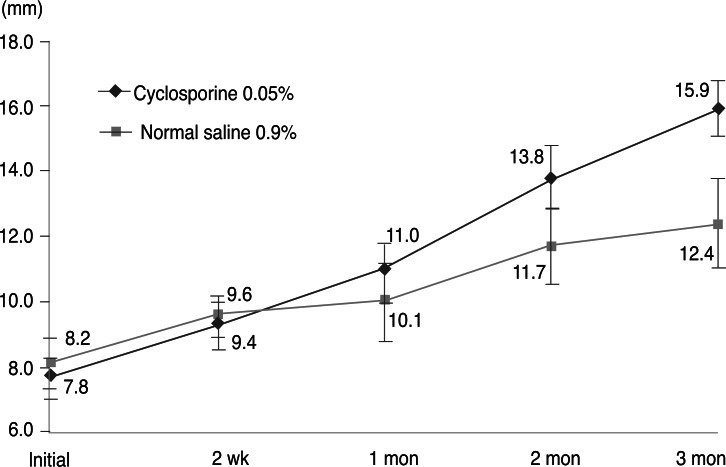
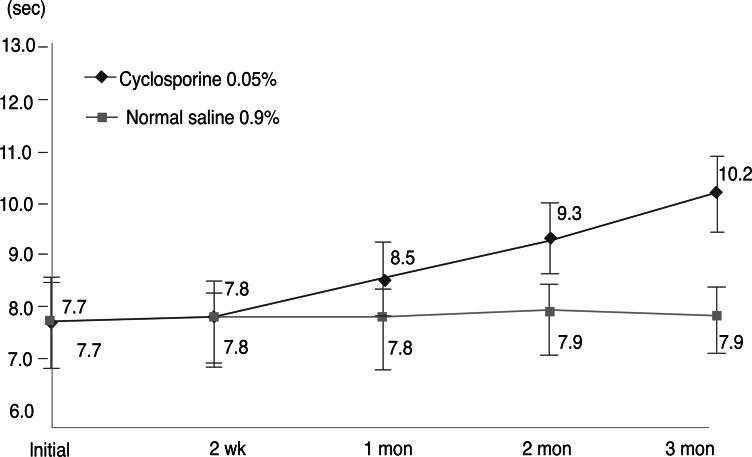
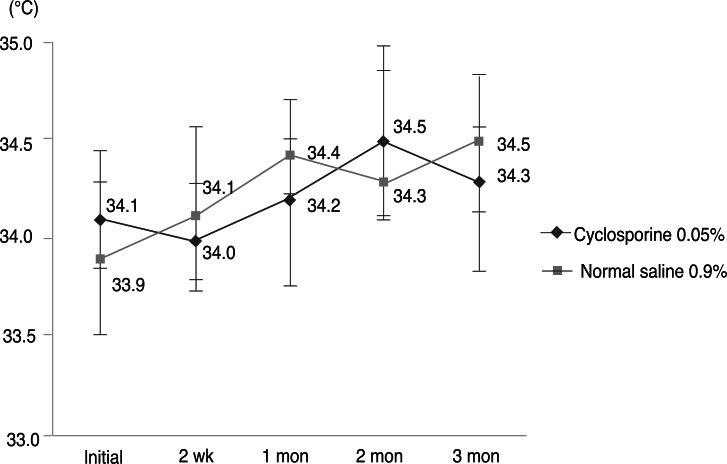
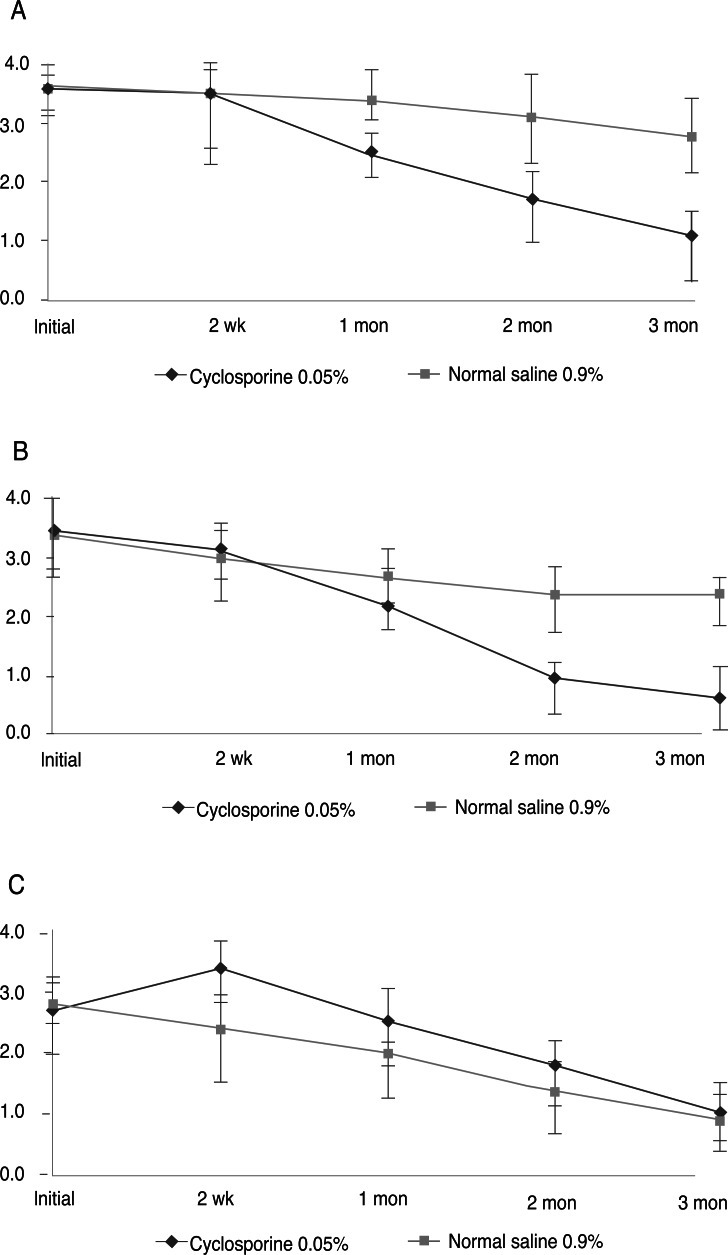
Methods: Thirty-two newly diagnosed patients with dry eye syndrome 1 week after cataract surgery received a twice-daily treatment of cyclosporine 0.05% for one eye and normal saline 0.9% for the other. Disease severity was measured at 2 weeks, 1 month, 2 months, and 3 months by Schirmer test I (ST-I), tear film break-up time (tBUT), corneal temperature and dry eye symptom questionnaire (Ocular Surface Disease Index).
Results: Both groups increased in ST-I and tBUT over time. ST-I in the cyclosporine 0.05% group showed a significant increase at 3 months and tBUT in the cyclosporine 0.05% group showed an increase at 2 and 3 months. The dry eye symptom score was significantly reduced in the cyclosporine 0.05% group.
Conclusions: Cyclosporine 0.05% can also be an effective treatment for dry eye after cataract surgery.
Keywords: Cataract surgery; Cyclosporine; Dry eye syndromes.
Conflict of interest statement
No potential conflict of interest relevant to this article was reported.
Figures
References
-
- Kohlhaas M. Corneal sensation after cataract and refractive surgery. J Cataract Refract Surg. 1998;24:1399–1409. - PubMed
-
- Li XM, Hu L, Hu J, Wang W. Investigation of dry eye disease and analysis of the pathogenic factors in patients after cataract surgery. Cornea. 2007;26(9 Suppl 1):S16–S20. - PubMed
-
- Wilson SE, Perry HD. Long-term resolution of chronic dry eye symptoms and signs after topical cyclosporine treatment. Ophthalmology. 2007;114:76–79. - PubMed
-
- Donnenfeld E, Pflugfelder SC. Topical ophthalmic cyclosporine: pharmacology and clinical uses. Surv Ophthalmol. 2009;54:321–338. - PubMed
Publication types
MeSH terms
Substances
LinkOut - more resources
Full Text Sources
Other Literature Sources
Medical