Rapid effects of 17β-estradiol on male copulatory behaviors are not elicited by the novel membrane active estrogenic compound STX
- PMID: 23731070
- PMCID: PMC3953449
- DOI: 10.1037/a0032950
Rapid effects of 17β-estradiol on male copulatory behaviors are not elicited by the novel membrane active estrogenic compound STX
Abstract
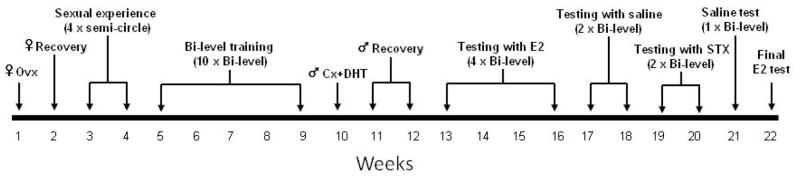
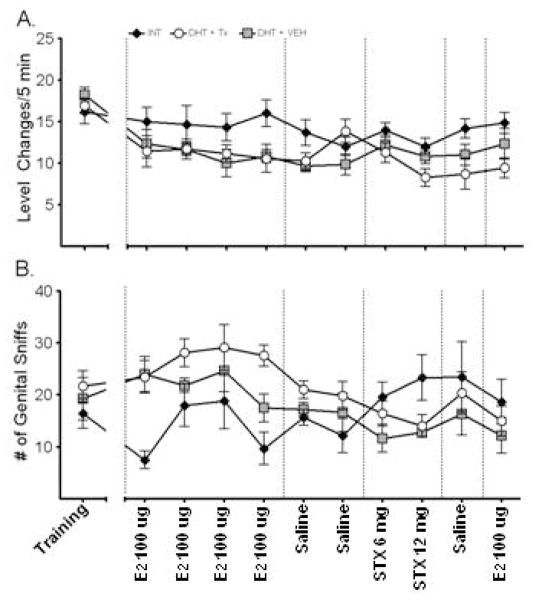
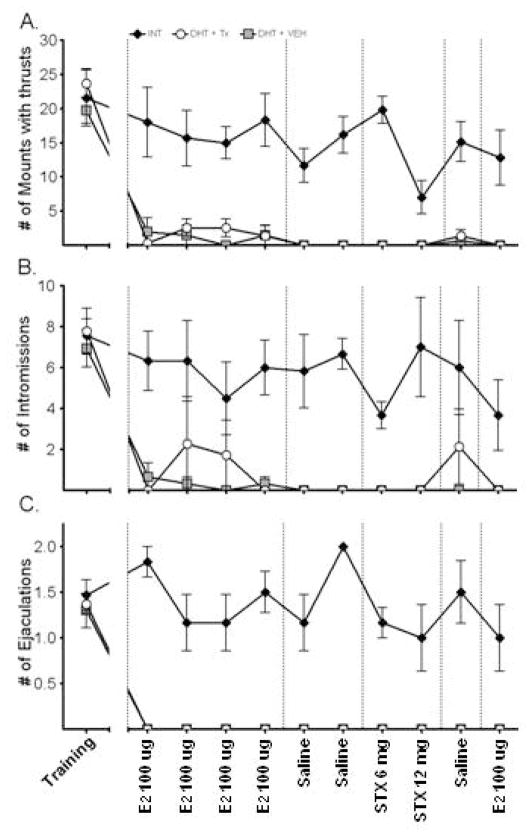
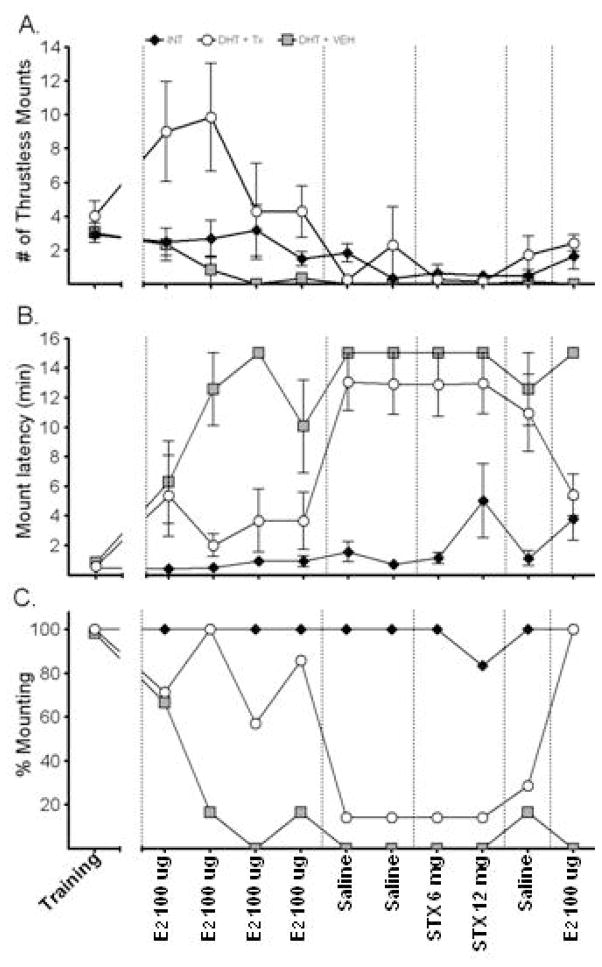
Estrogens have been shown to rapidly promote male copulatory behaviors with a time-course that suggests rapid signaling events are involved. The present study tested the hypothesis that estrogen acts through a novel Gq protein-coupled membrane estrogen receptor (ER). Thus, either estradiol (E2), STX (a diphenylacrylamide compound that selectively activates a membrane ER pathway), or vehicle were administered acutely to castrated male rats that bore subcutaneous (sc) dihydrotestosterone implants to maintain genital sensitivity. Appetitive (level changes, genital investigation) and consummatory (mounts, intromissions, ejaculations) components of male sexual behavior were measured in a bilevel testing apparatus. Testing showed that E2 treatment promoted olfactory and mounting behaviors, but had no effect on motivation as measured by anticipatory level changes. STX treatment showed no effect on either component of male sexual behavior. These results support previous results that showed that E2 can rapidly affect male sexual behaviors but fail to support a role for the specific membrane-initiated pathway activated by STX.
Figures
References
-
- Abdelgadir SE, Resko JA, Ojeda SR, Lephart ED, McPhaul MJ, Roselli CE. Androgens regulate aromatase cytochrome P450 messenger ribonucleic acid in rat brain. Endocrinology. 1994;135:395–401. - PubMed
-
- Attila M, Oksala R, Ågmo A. Sexual incentive motivation in male rats requires both androgens and estrogens. Horm Behav. 2010;58:341–351. - PubMed
-
- Bakker J, Brand T, Van Ophemert J, Slob AK. Hormonal regulation of adult partner preference behavior in neonatally ATD-treated male rats. Behav Neurosci. 1994;56:597–601. - PubMed
-
- Baum MJ. Neuroendocrinology of Male Reproductive Behavior. In: Lajtha A, Blaustein JD, editors. Handbook of Neurochemistry and Molecular Neurobiology Behavioral Neurochemistry, Neuroendocrinology and Molecular Neurobiology. Berlin: Springer-Verlag; 2007. pp. 1–35.
-
- Beach FA. Relative effects of androgen upon mating behavior of male rats subjected to forebrain injury or castrations. J Exp Zool. 1944;97:249–295.
Publication types
MeSH terms
Substances
Grants and funding
LinkOut - more resources
Full Text Sources
Other Literature Sources