Dissociation between implicit and explicit responses in postconditioning UCS revaluation after fear conditioning in humans
- PMID: 23731073
- PMCID: PMC3959889
- DOI: 10.1037/a0032742
Dissociation between implicit and explicit responses in postconditioning UCS revaluation after fear conditioning in humans
Abstract
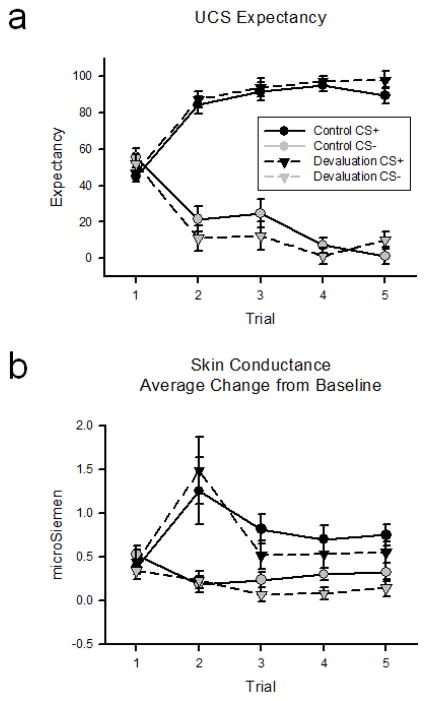
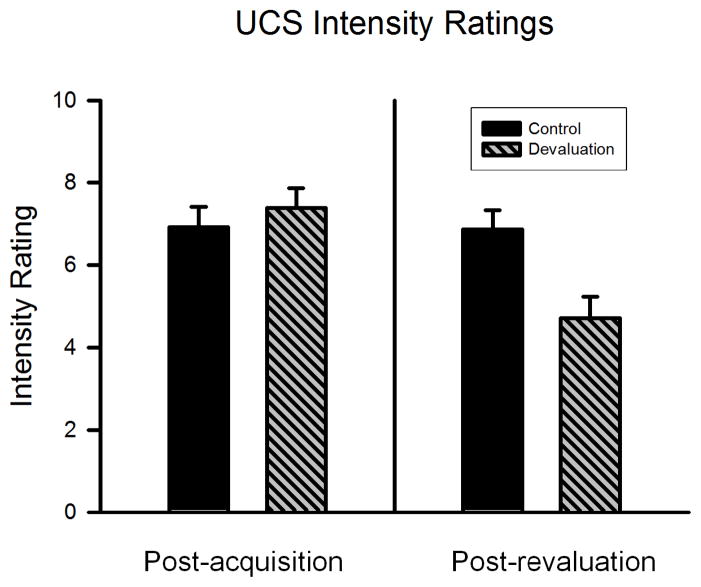
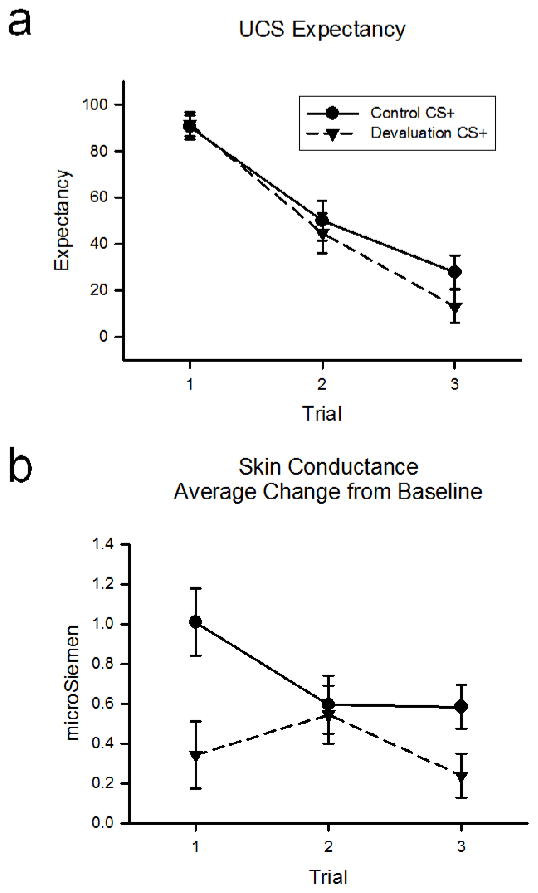
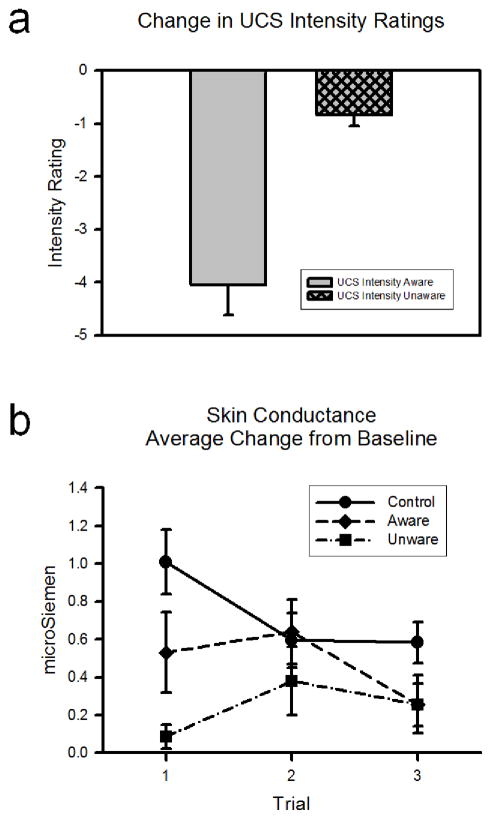
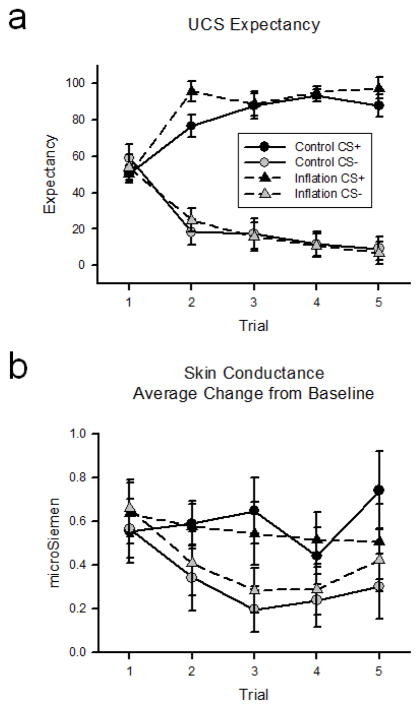
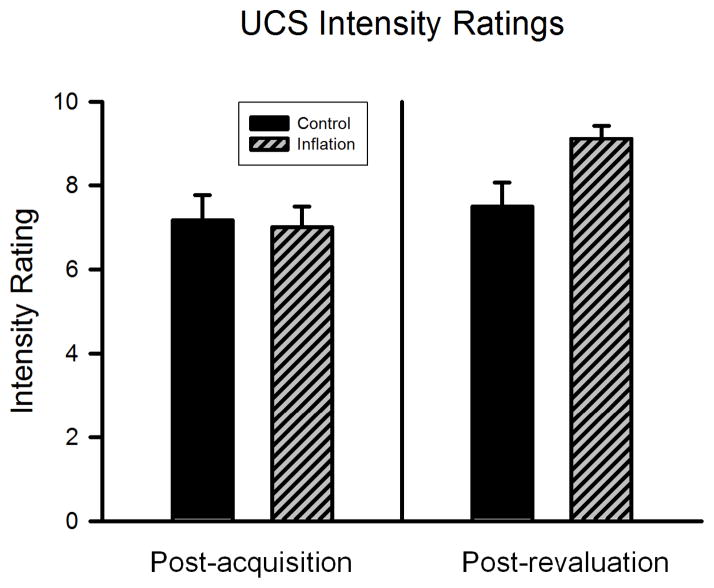
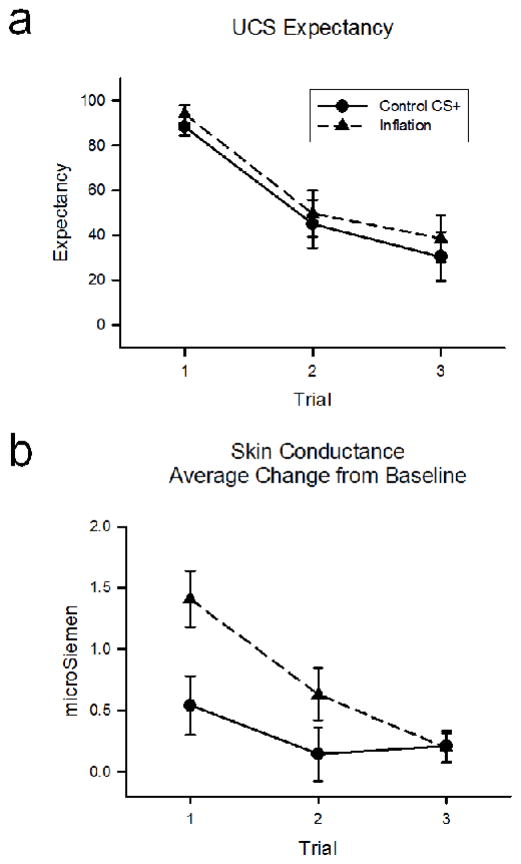
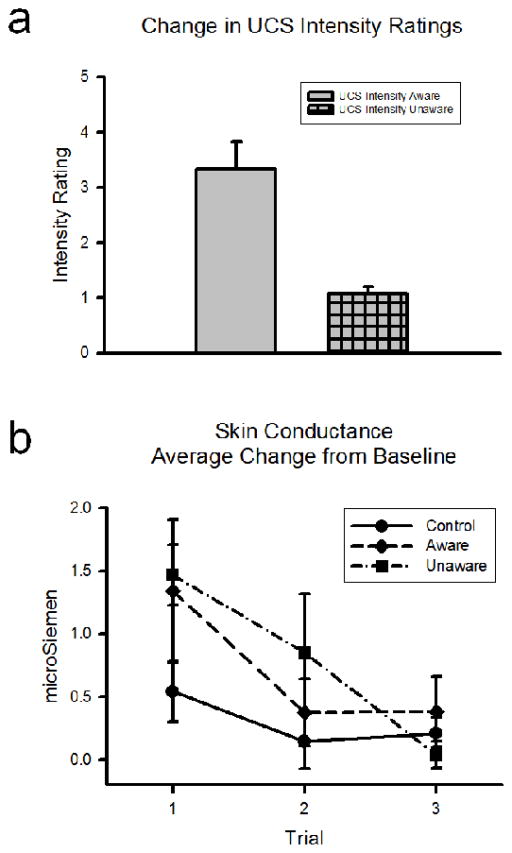
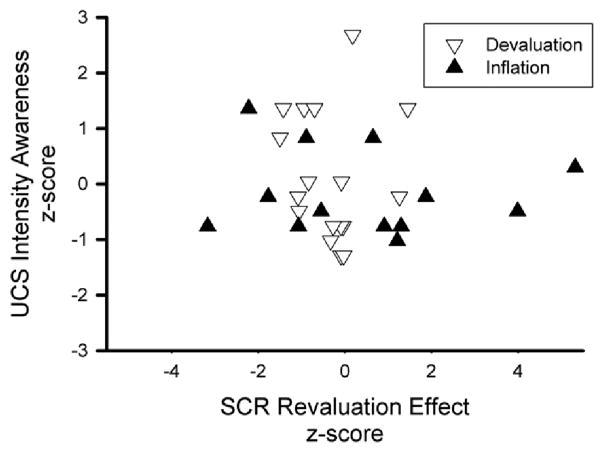
The nature of the relationship between explicit and implicit learning is a topic of considerable debate. To investigate this relationship we conducted two experiments on postconditioning revaluation of the unconditional stimulus (UCS) in human fear conditioning. In Experiment 1, the intensity of the UCS was decreased after acquisition for one group (devaluation) and held constant for another group (control). A subsequent test revealed that even though both groups exhibited similar levels of UCS expectancy, the devaluation group had significantly smaller conditional skin conductance responses. The devaluation effect was not explained by differences in the explicit estimates of UCS probability or explicit knowledge that the UCS intensity had changed. In Experiment 2, the value of the UCS was increased after acquisition for one group (inflation) and held constant for another group (control). Test performance revealed that UCS inflation did not alter expectancy ratings, but the inflation group exhibited larger learned skin conductance responses than the control group. The inflation effect was not explained by differences in the explicit estimates of UCS probability or explicit knowledge that the UCS intensity had changed. The SCR revaluation effect was not dependent on explicit memory processes in either experiment. In both experiments we found differences on an implicit measure of learning in the absence of changes in explicit measures. Together, the differences observed between expectancy measures and skin conductance support the idea that these responses might reflect different types of memory formed during the same training procedure and be supported by separate neural systems.
PsycINFO Database Record (c) 2013 APA, all rights reserved.
Figures
References
-
- Adams C, Dickinson A. Instrumental responding following reinforcer devaluation. The Quarterly Journal of Experimental Psychology B: Comparative and Physiological Psychology. 1981;33B:109–121.
-
- Baeyens F, Eelen P, Van den Bergh O, Crombez G. The content of learning in human evaluative conditioning: Acquired valence is sensitive to US-revaluation. Learning and Motivation. 1992;23:200–224.
-
- Bechara A, Tranel D, Damasio H, Adolphs R, Rockland C, Damasio A. Double dissociation of conditioning and declarative knowledge relative to the amygdala and hippocampus in humans. Science. 1995;269:1115–1118. - PubMed
-
- Clark R, Squire L. Classical conditioning and brain systems: the role of awareness. Science. 1998;280:77–81. - PubMed
Publication types
MeSH terms
Grants and funding
LinkOut - more resources
Full Text Sources
Other Literature Sources