


Anoxic photochemical oxidation of siderite generates molecular hydrogen and iron oxides
- PMID: 23733945
- PMCID: PMC3690895
- DOI: 10.1073/pnas.1308958110
Anoxic photochemical oxidation of siderite generates molecular hydrogen and iron oxides
Abstract
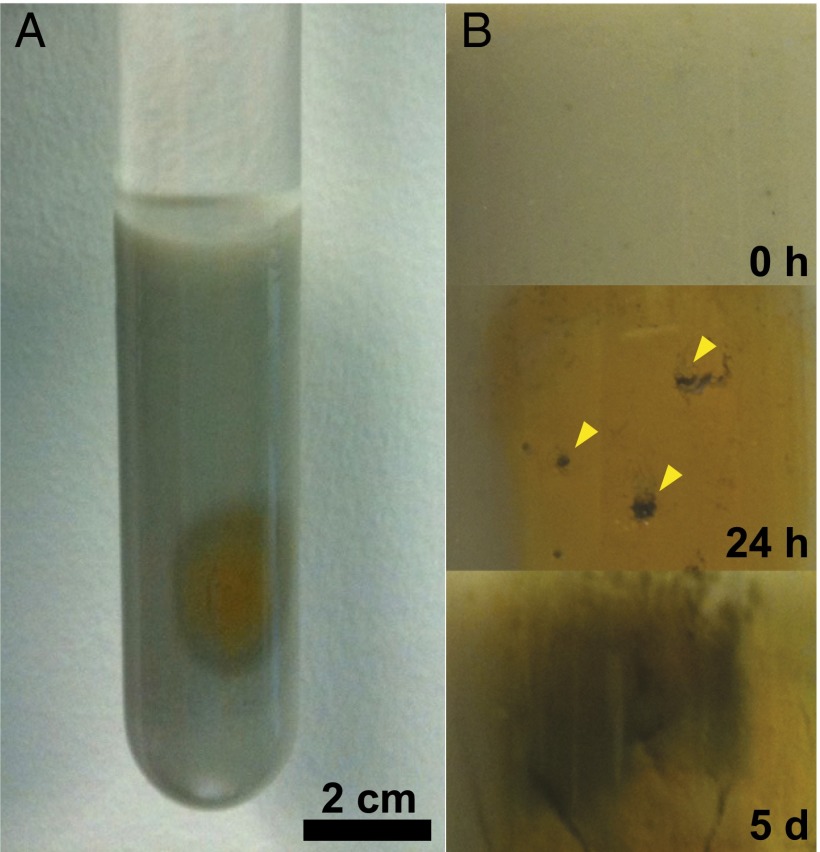
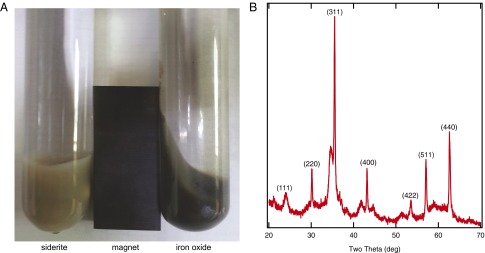
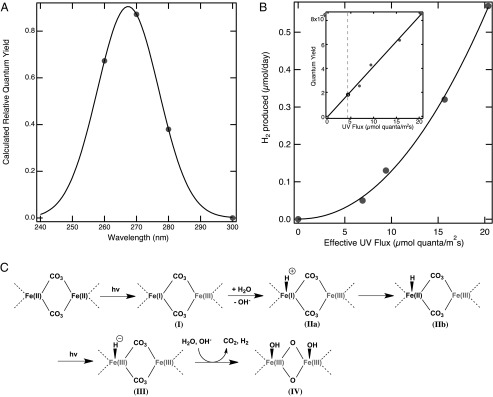
Photochemical reactions of minerals are underappreciated processes that can make or break chemical bonds. We report the photooxidation of siderite (FeCO3) by UV radiation to produce hydrogen gas and iron oxides via a two-photon reaction. The calculated quantum yield for the reaction suggests photooxidation of siderite would have been a significant source of molecular hydrogen for the first half of Earth's history. Further, experimental results indicate this abiotic, photochemical process may have led to the formation of iron oxides under anoxic conditions. The reaction would have continued through the Archean to at least the early phases of the Great Oxidation Event, and provided a mechanism for oxidizing the atmosphere through the loss of hydrogen to space, while simultaneously providing a key reductant for microbial metabolism. We propose that the photochemistry of Earth-abundant minerals with wide band gaps would have potentially played a critical role in shaping the biogeochemical evolution of early Earth.
Keywords: Archean iron cycle; astrobiology; banded iron formations; photogeochemistry.
Conflict of interest statement
The authors declare no conflict of interest.
Figures
References
-
- Oparin AI (1957) Chapter I. Theories of the spontaneous generation of life. The Origin of Life on the Earth, 3rd Ed (Academic Press Inc. New York)
-
- Da Silva JF, Williams RJP (2001) The Biological Chemistry of the Elements: The Inorganic Chemistry of Life (Oxford Univ Press, New York)
-
- Marcus RA. On the theory of electron transfer reactions. VI. Unified treatment for homogeneous and electrode Reactions. J Chem Phys. 1965;43(2):679–701.
Publication types
MeSH terms
Substances
LinkOut - more resources
Full Text Sources
Other Literature Sources
Molecular Biology Databases
