


Distinct Thalamo-Cortical Controls for Shoulder, Elbow, and Wrist during Locomotion
- PMID: 23734124
- PMCID: PMC3659318
- DOI: 10.3389/fncom.2013.00062
Distinct Thalamo-Cortical Controls for Shoulder, Elbow, and Wrist during Locomotion
Abstract
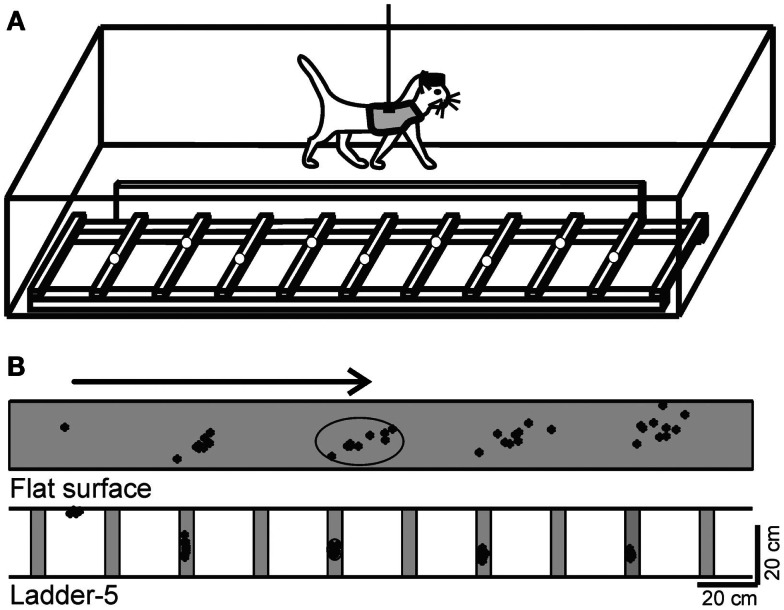
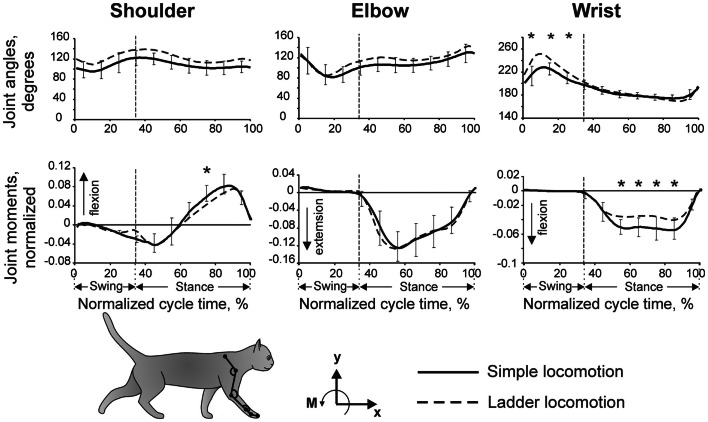
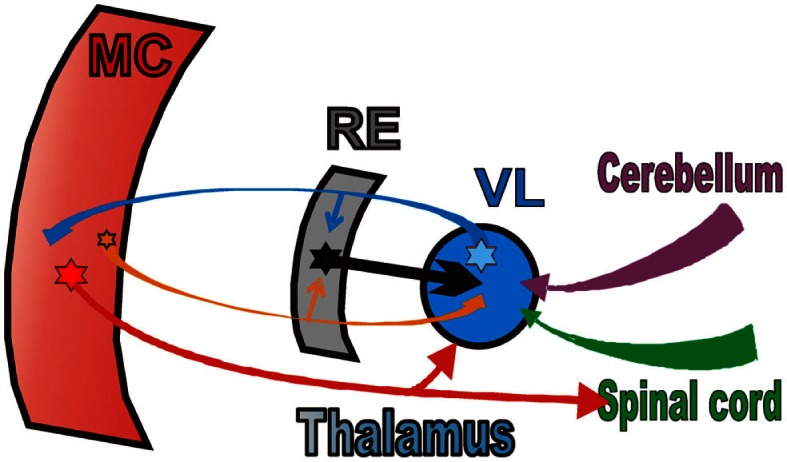
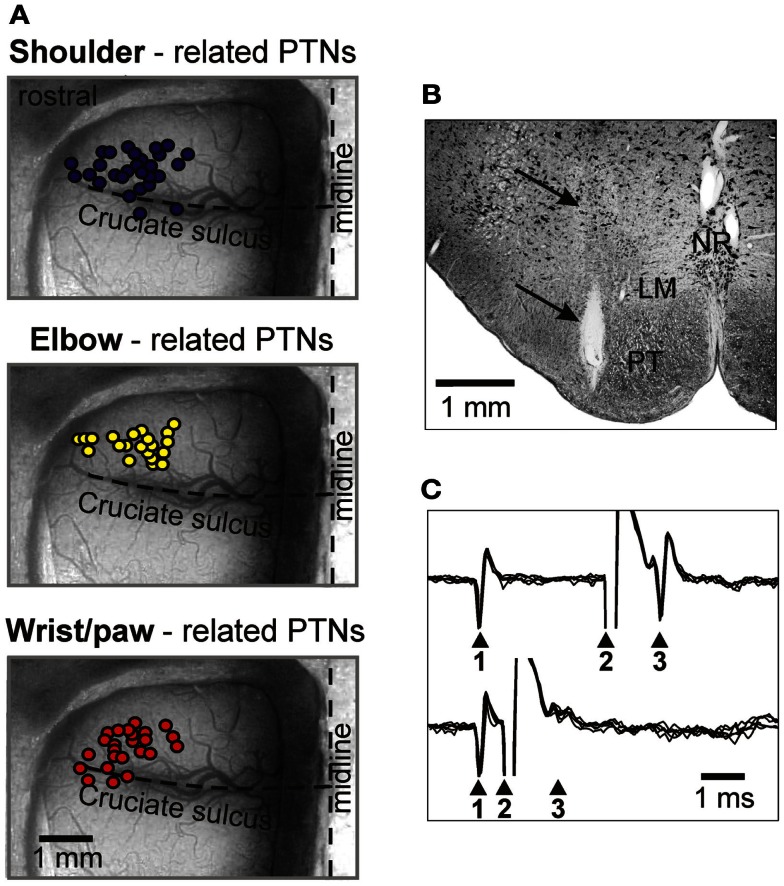
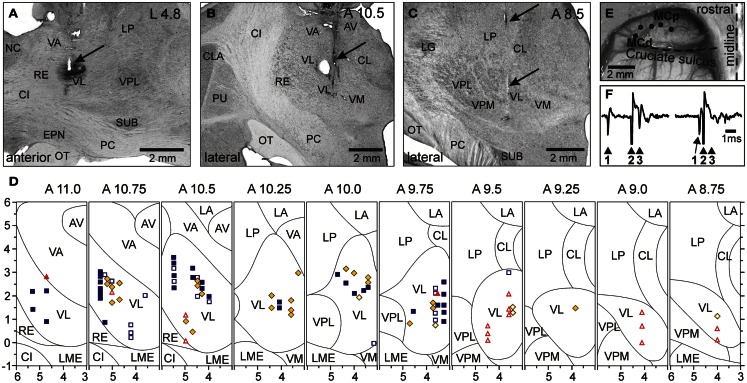
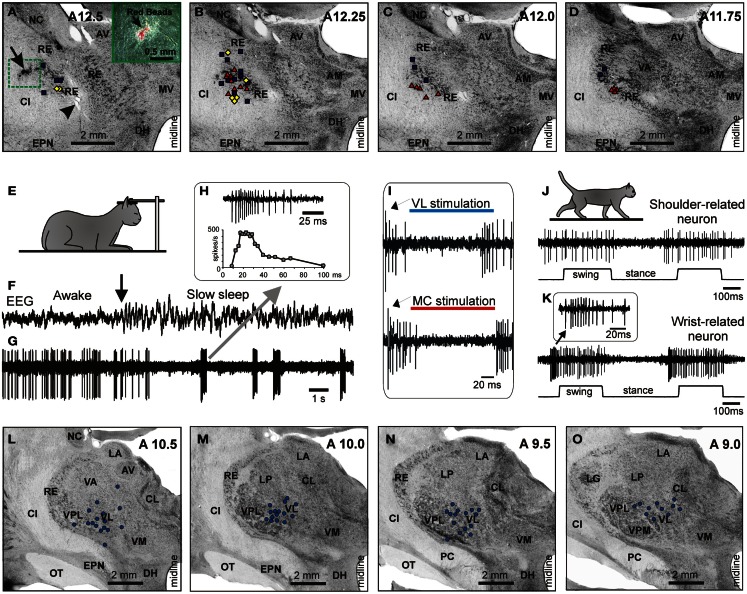
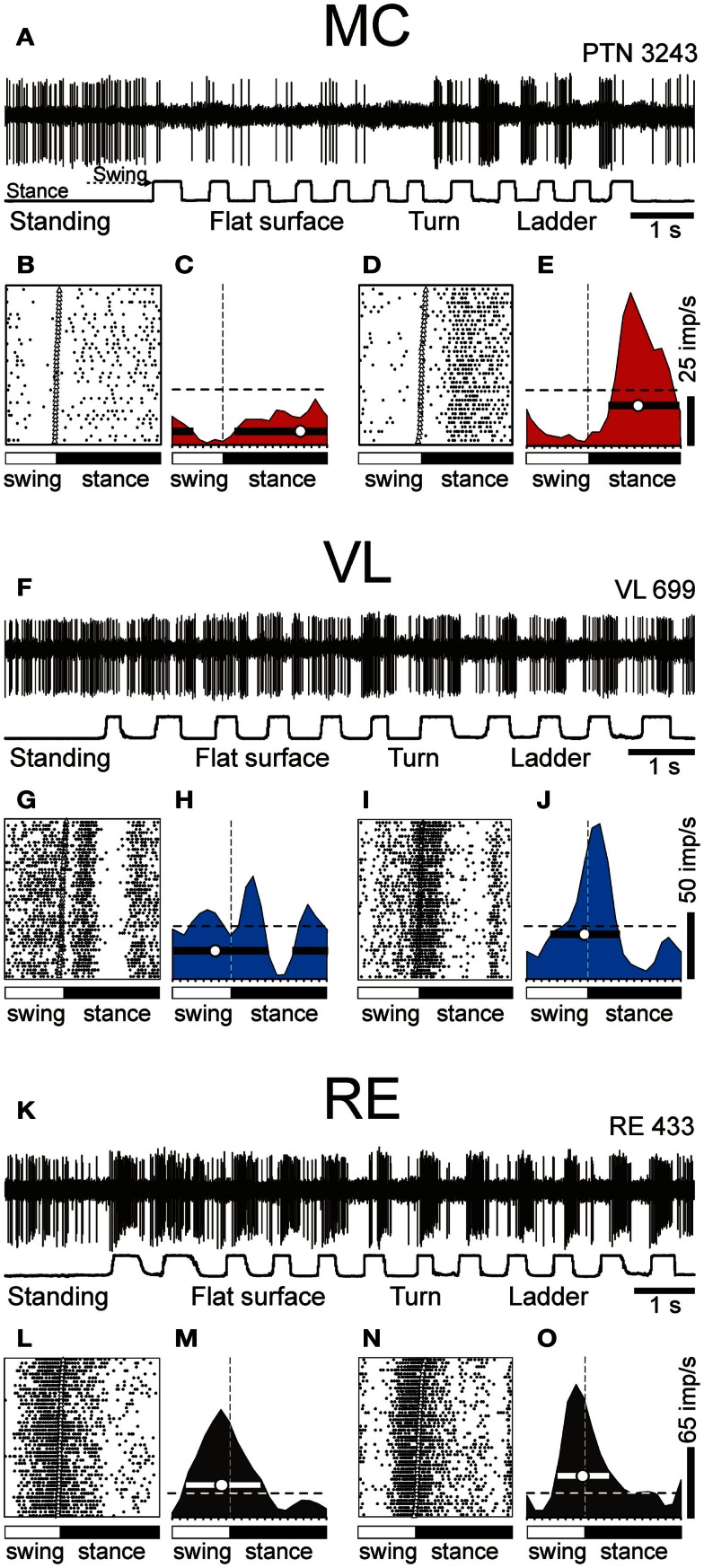
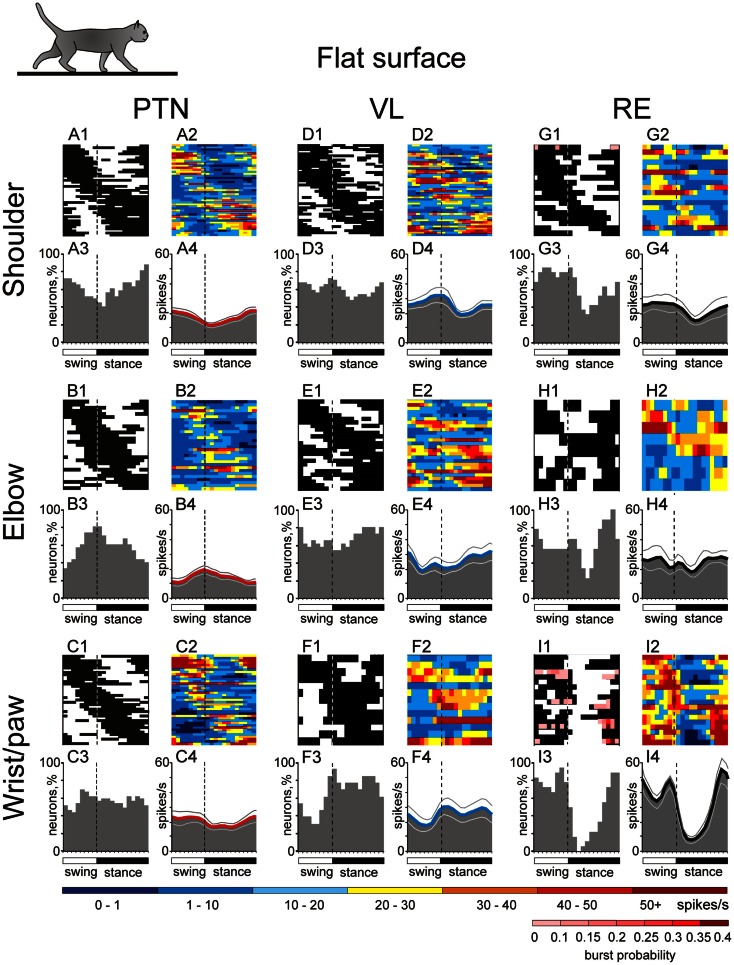
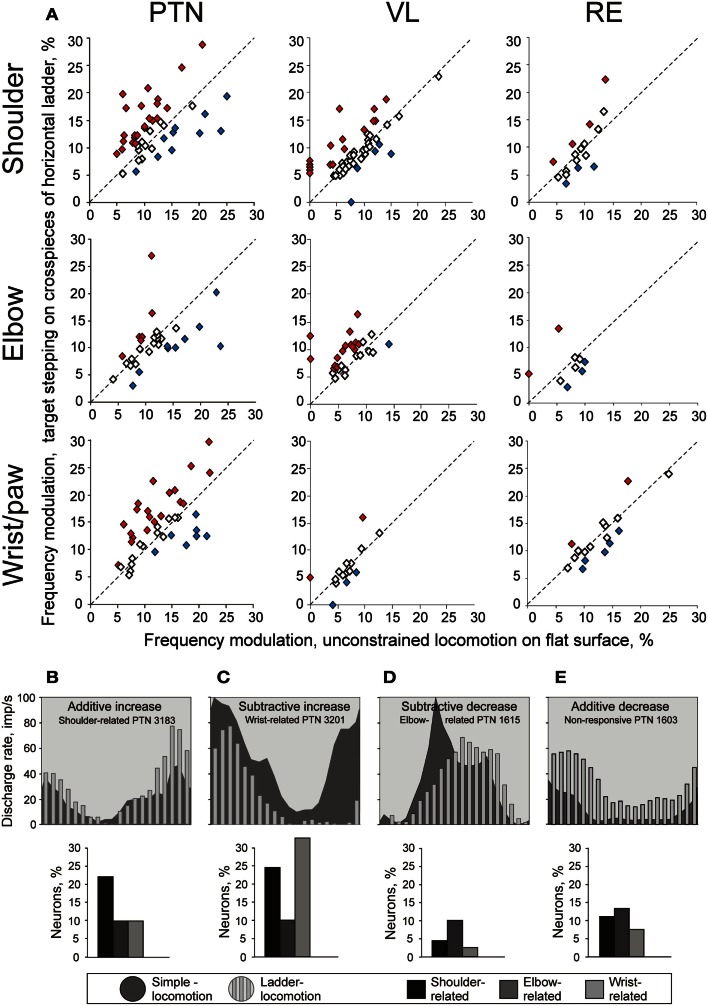
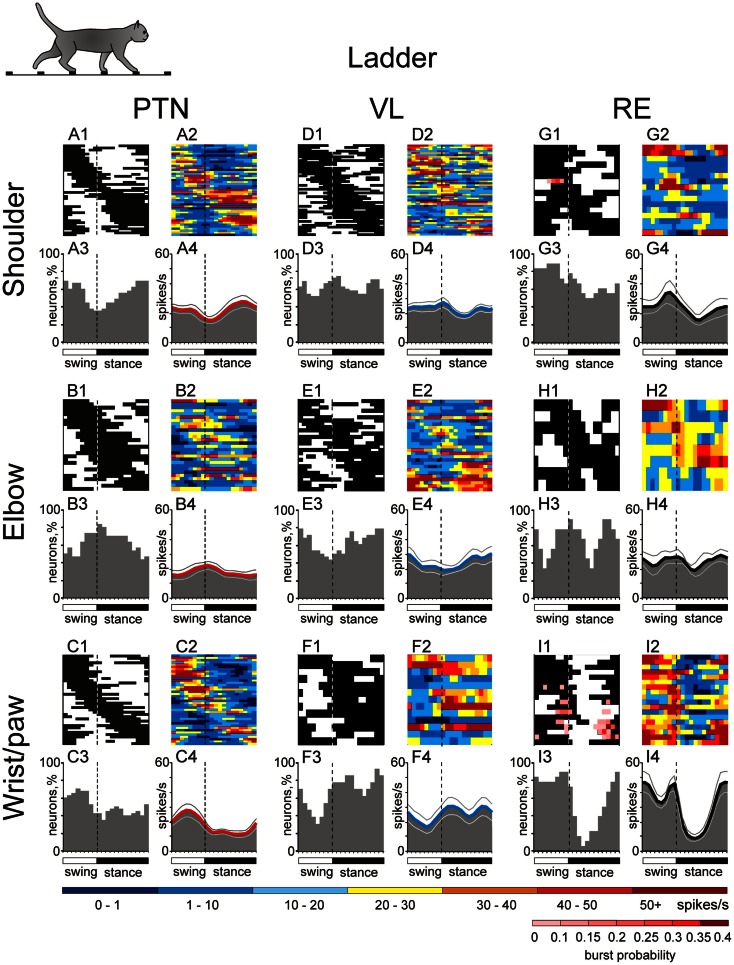
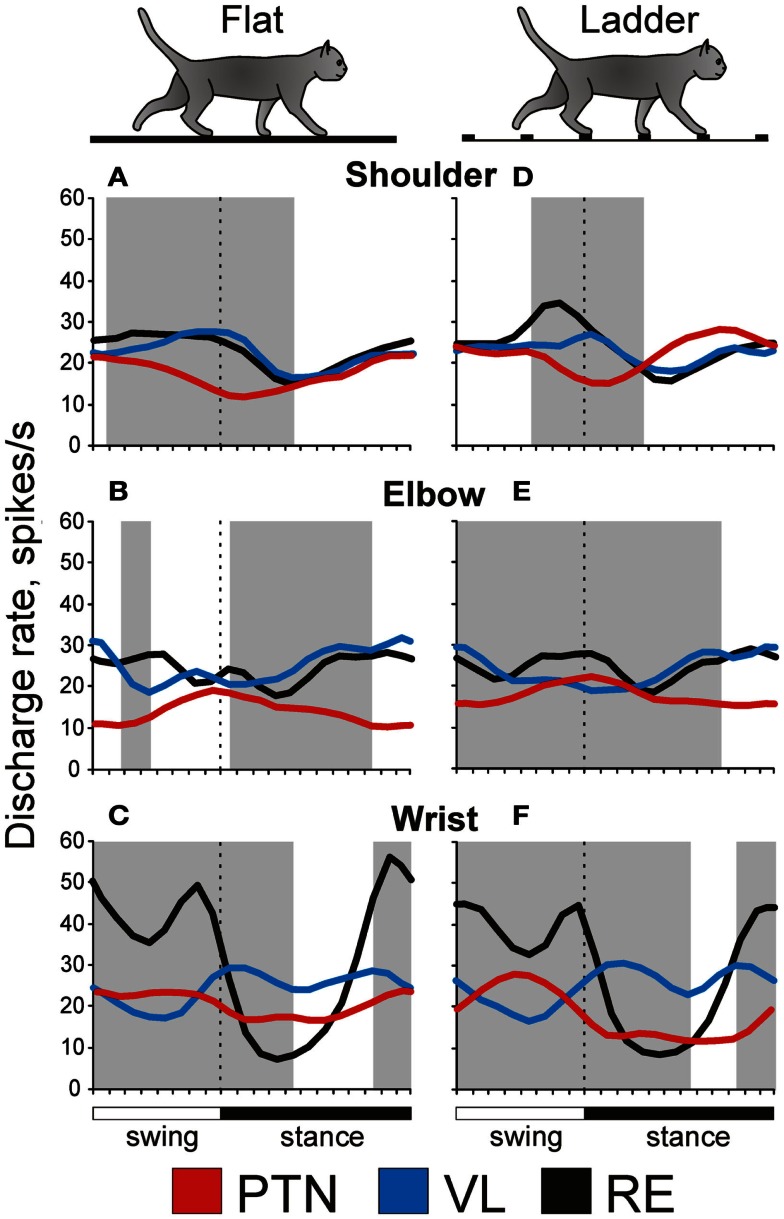
Recent data from this laboratory on differential controls for the shoulder, elbow, and wrist exerted by the thalamo-cortical network during locomotion is presented, based on experiments involving chronically instrumented cats walking on a flat surface and along a horizontal ladder. The activity of the following three groups of neurons is characterized: (1) neurons of the motor cortex that project to the pyramidal tract (PTNs), (2) neurons of the ventrolateral thalamus (VL), many identified as projecting to the motor cortex (thalamo-cortical neurons, TCs), and (3) neurons of the reticular nucleus of thalamus (RE), which inhibit TCs. Neurons were grouped according to their receptive field into shoulder-, elbow-, and wrist/paw-related categories. During simple locomotion, shoulder-related PTNs were most active in the late stance and early swing, and on the ladder, often increased activity and stride-related modulation while reducing discharge duration. Elbow-related PTNs were most active during late swing/early stance and typically remained similar on the ladder. Wrist-related PTNs were most active during swing, and on the ladder often decreased activity and increased modulation while reducing discharge duration. In the VL, shoulder-related neurons were more active during the transition from swing-to-stance. Elbow-related cells tended to be more active during the transition from stance-to-swing and on the ladder often decreased their activity and increased modulation. Wrist-related neurons were more active throughout the stance phase. In the RE, shoulder-related cells had low discharge rates and depths of modulation and long periods of activity distributed evenly across the cycle. In sharp contrast, wrist/paw-related cells discharged synchronously during the end of stance and swing with short periods of high activity, high modulation, and frequent sleep-type bursting. We conclude that thalamo-cortical network processes information related to different segments of the forelimb differently and exerts distinct controls over the shoulder, elbow, and wrist during locomotion.
Keywords: PTN; accuracy; cat; motor cortex; reticular nucleus of thalamus; thalamus; ventro-lateral thalamus; walking.
Figures
References
-
- Angaut P. (1979). “The cerebello-thalamic projection in the cat,” in Cerebro-Cerebellar Interactions, eds Massion J., Sasaki K. (North-Holland: Elsevier; ), 1943
Grants and funding
LinkOut - more resources
Full Text Sources
Other Literature Sources
Miscellaneous
