


Deconstructing the roles of glucocorticoids in adipose tissue biology and the development of central obesity
- PMID: 23735216
- PMCID: PMC3959161
- DOI: 10.1016/j.bbadis.2013.05.029
Deconstructing the roles of glucocorticoids in adipose tissue biology and the development of central obesity
Abstract
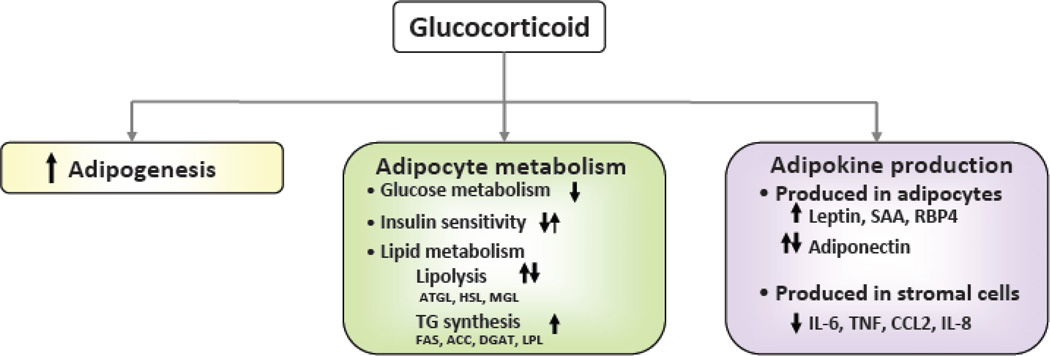
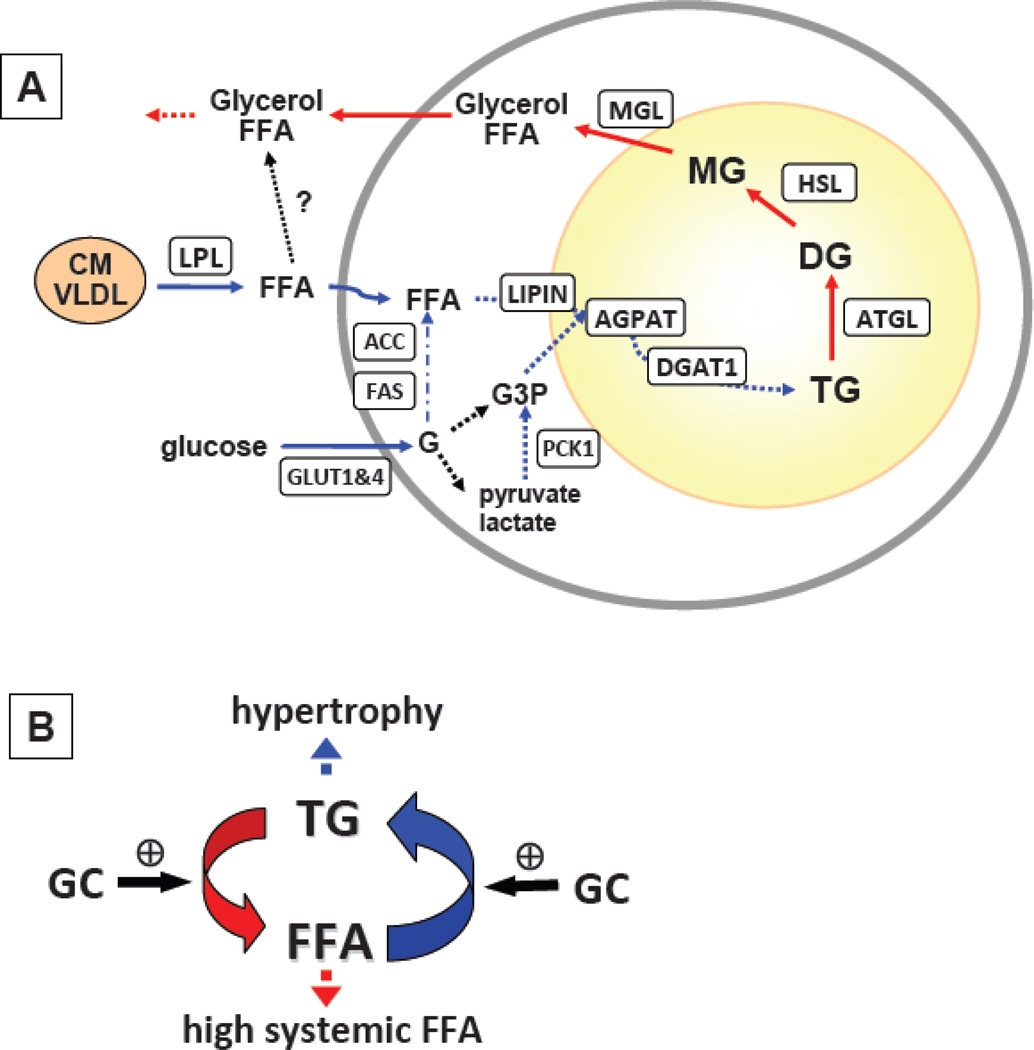
Central obesity is associated with insulin resistance and dyslipidemia. Thus, the mechanisms that control fat distribution and its impact on systemic metabolism have importance for understanding the risk for diabetes and cardiovascular disease. Hypercortisolemia at the systemic (Cushing's syndrome) or local levels (due to adipose-specific overproduction via 11β-hydroxysteroid dehydrogenase 1) results in the preferential expansion of central, especially visceral fat depots. At the same time, peripheral subcutaneous depots can become depleted. The biochemical and molecular mechanisms underlying the depot-specific actions of glucocorticoids (GCs) on adipose tissue function remain poorly understood. GCs exert pleiotropic effects on adipocyte metabolic, endocrine and immune functions, and dampen adipose tissue inflammation. GCs also regulate multiple steps in the process of adipogenesis. Acting synergistically with insulin, GCs increase the expression of numerous genes involved in fat deposition. Variable effects of GC on lipolysis are reported, and GC can improve or impair insulin action depending on the experimental conditions. Thus, the net effect of GC on fat storage appears to depend on the physiologic context. The preferential effects of GC on visceral adipose tissue have been linked to higher cortisol production and glucocorticoid receptor expression, but the molecular details of the depot-dependent actions of GCs are only beginning to be understood. In addition, increasing evidence underlines the importance of circadian variations in GCs in relationship to the timing of meals for determining their anabolic actions on the adipocyte. In summary, although the molecular mechanisms remain to be fully elucidated, there is increasing evidence that GCs have multiple, depot-dependent effects on adipocyte gene expression and metabolism that promote central fat deposition. This article is part of a Special Issue entitled: Modulation of Adipose Tissue in Health and Disease.
Keywords: 11-beta hydroxysteroid dehydrogenase; Adipokine; Cortisol; Inflammation; Lipogenesis; Lipolysis.
Copyright © 2013 Elsevier B.V. All rights reserved.
Figures
References
-
- Andrews RC, Walker BR. Glucocorticoids and insulin resistance: old hormones, new targets. Clin. Sci. (Lond) 1999;96:513–523. - PubMed
-
- Appel B, Fried SK. Effects of insulin and dexamethasone on lipoprotein lipase in human adipose tissue. Am. J. Physiol. 1992;262:E695–E699. - PubMed
-
- Arriza JL, Weinberger C, Cerelli G, Glaser TM, Handelin BL, Housman DE, Evans RM. Cloning of human mineralocorticoid receptor complementary DNA: structural and functional kinship with the glucocorticoid receptor. Science. 1987;237:268–275. - PubMed
-
- Balsalobre A, Brown SA, Marcacci L, Tronche F, Kellendonk C, Reichardt HM, Schutz G, Schibler U. Resetting of circadian time in peripheral tissues by glucocorticoid signaling. Science. 2000;289:2344–2347. - PubMed
-
- Basu R, Singh R, Basu A, Johnson CM, Rizza RA. Effect of nutrient ingestion on total-body and splanchnic cortisol production in humans. Diabetes. 2006;55:667–674. - PubMed
Publication types
MeSH terms
Substances
Grants and funding
LinkOut - more resources
Full Text Sources
Other Literature Sources
Medical
Miscellaneous
