


HIV-related travel restrictions: trends and country characteristics
- PMID: 23735755
- PMCID: PMC3672469
- DOI: 10.3402/gha.v6i0.20472
HIV-related travel restrictions: trends and country characteristics
Abstract
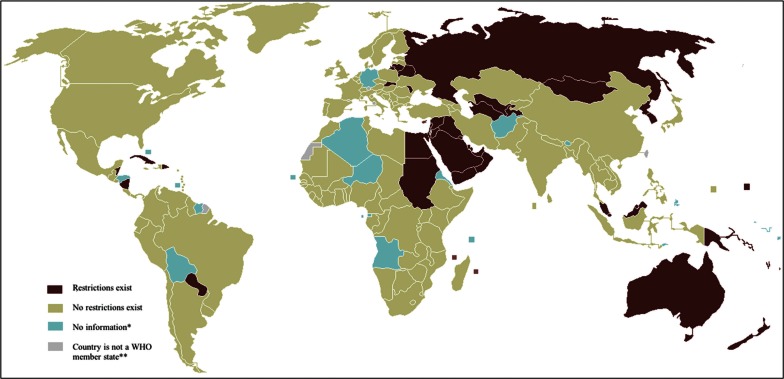
Introduction: Increasingly, HIV-seropositive individuals cross international borders. HIV-related restrictions on entry, stay, and residence imposed by countries have important consequences for this mobile population. Our aim was to describe the geographical distribution of countries with travel restrictions and to examine the trends and characteristics of countries with such restrictions.
Methods: In 2011, data presented to UNAIDS were used to establish a list of countries with and without HIV restrictions on entry, stay, and residence and to describe their geographical distribution. The following indicators were investigated to describe the country characteristics: population at mid-year, international migrants as a percentage of the population, Human Development Index, estimated HIV prevalence (age: 15-49), presence of a policy prohibiting HIV screening for general employment purposes, government and civil society responses to having non-discrimination laws/regulations which specify migrants/mobile populations, government and civil society responses to having laws/regulations/policies that present obstacles to effective HIV prevention, treatment, care, and support for migrants/mobile populations, Corruption Perception Index, and gross national income per capita.
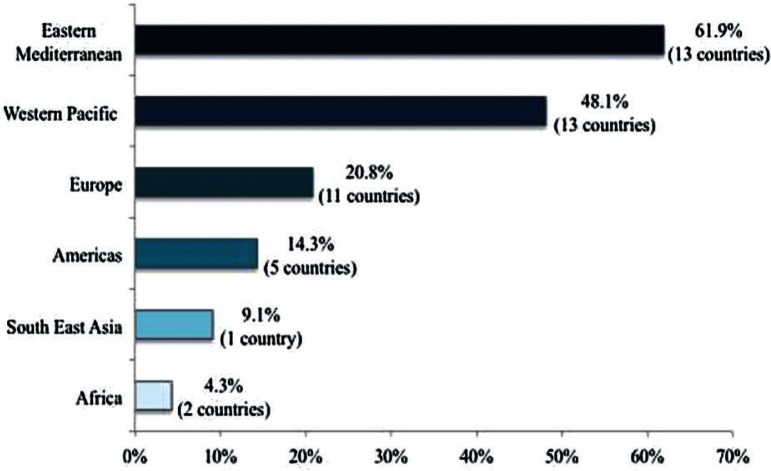
Results: HIV-related restrictions exist in 45 out of 193 WHO countries (23%) in all regions of the world. We found that the Eastern Mediterranean and Western Pacific Regions have the highest proportions of countries with these restrictions. Our analyses showed that countries that have opted for restrictions have the following characteristics: smaller populations, higher proportions of migrants in the population, lower HIV prevalence rates, and lack of legislation protecting people living with HIV from screening for employment purposes, compared with countries without restrictions.
Conclusion: Countries with a high proportion of international migrants tend to have travel restrictions - a finding that is relevant to migrant populations and travel medicine providers alike. Despite international pressure to remove travel restrictions, many countries continue to implement these restrictions for HIV-positive individuals on entry and stay. Since 2010, the United States and China have engaged in high profile removals. This may be indicative of an increasing trend, facilitated by various factors, including international advocacy and the setting of a UNAIDS goal to halve the number of countries with restrictions by 2015.
Keywords: HIV/AIDS; migrants; mobility; restrictions on entry; stay and residence; travel restrictions.
Figures
References
-
- UNAIDS. Geneva: UNAIDS; 2012. UNAIDS report on the global AIDS epidemic 2012.
-
- Kemper CA, Linett A, Kane C, Deresinski SC. Frequency of travel of adults infected with HIV. J Travel Med. 1995;2:85–8. - PubMed
-
- Mahto M, Ponnusamy K, Schuhwerk M, Richens J, Lambert N, Wilkins E, et al. Knowledge, attitudes and health outcomes in HIV-infected travellers to the USA. HIV Med. 2006;7:201–4. - PubMed
-
- Zenovich M, Kennedy K, MacPherson DW, Gushulak BD. Immigration medical screening and HIV infection in Canada. Int Journal of STD & AIDS. 2006;17:813–6. - PubMed
-
- Habib AG, Abdulmumini M, Dalhat MM, Hamza M, Iliyasu G. Anti-retroviral therapy among HIV infected travelers to Hajj pilgrimage. J Travel Med. 2010;17:176–81. - PubMed
MeSH terms
LinkOut - more resources
Full Text Sources
Other Literature Sources
Medical
