


Progress and prospects in stem cell therapy
- PMID: 23736002
- PMCID: PMC3674518
- DOI: 10.1038/aps.2013.77
Progress and prospects in stem cell therapy
Abstract
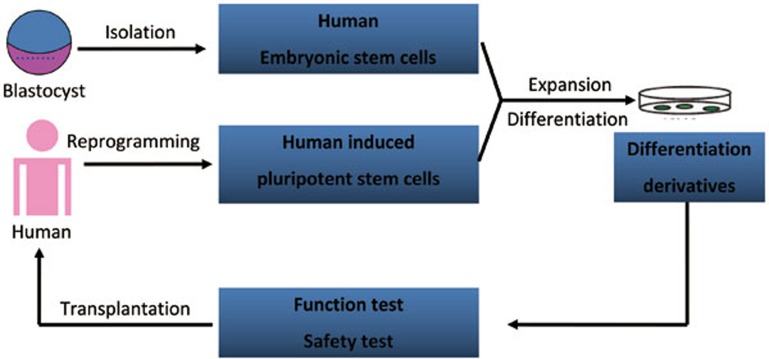
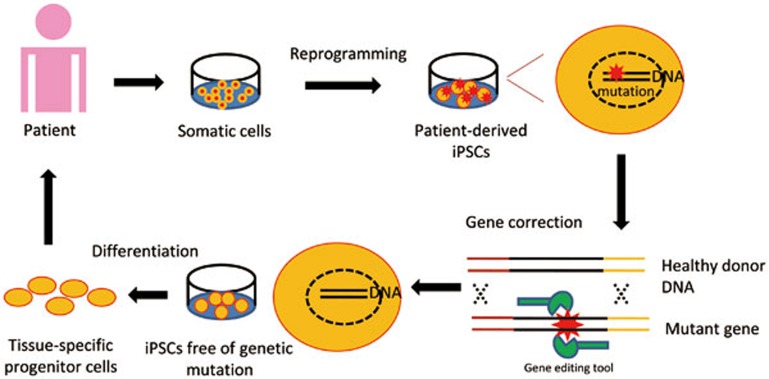
In the past few years, progress being made in stem cell studies has incontestably led to the hope of developing cell replacement based therapy for diseases deficient in effective treatment by conventional ways. The induced pluripotent stem cells (iPSCs) are of great interest of cell therapy research because of their unrestricted self-renewal and differentiation potentials. Proof of principle studies have successfully demonstrated that iPSCs technology would substantially benefit clinical studies in various areas, including neurological disorders, hematologic diseases, cardiac diseases, liver diseases and etc. On top of this, latest advances of gene editing technologies have vigorously endorsed the possibility of obtaining disease-free autologous cells from patient specific iPSCs. Here in this review, we summarize current progress of stem cell therapy research with special enthusiasm in iPSCs studies. In addition, we compare current gene editing technologies and discuss their potential implications in clinic application in the future.
Figures
References
-
- Kebriaei P, Poon LM. The role of allogeneic hematopoietic stem cell transplantation in the therapy of patients with acute lymphoblastic leukemia. Curr Hematol Malig Rep. 2012;7:144–52. - PubMed
-
- Ross CA, Poirier MA. Protein aggregation and neurodegenerative disease. Nat Med. 2004;10:S10–7. - PubMed
-
- Lindvall O, Widner H, Rehncrona S, Brundin P, Odin P, Gustavii B, et al. Transplantation of fetal dopamine neurons in Parkinson's disease: one-year clinical and neurophysiological observations in two patients with putaminal implants. Ann Neurol. 1992;31:155–65. - PubMed
Publication types
MeSH terms
LinkOut - more resources
Full Text Sources
Other Literature Sources
Miscellaneous
