


Longer weekly sleep duration predicts greater 3-month BMI reduction among obese adolescents attending a clinical multidisciplinary weight management program
- PMID: 23736120
- PMCID: PMC5644728
- DOI: 10.1159/000351819
Longer weekly sleep duration predicts greater 3-month BMI reduction among obese adolescents attending a clinical multidisciplinary weight management program
Abstract
Aims: To determine whether baseline levels of self-reported sleep and sleep problems among obese adolescents referred to an outpatient multidisciplinary family-based weight management program predict reduction in BMI 3 months later.
Methods: A retrospective medical chart review was conducted for 83 obese adolescents. The following baseline variables were extracted: self-reported sleep duration (weekdays and weekends), and presence of snoring, daytime fatigue, suspected sleep apnea, and physician-diagnosed sleep apnea. Anthropometric data at baseline and 3 months were also collected.
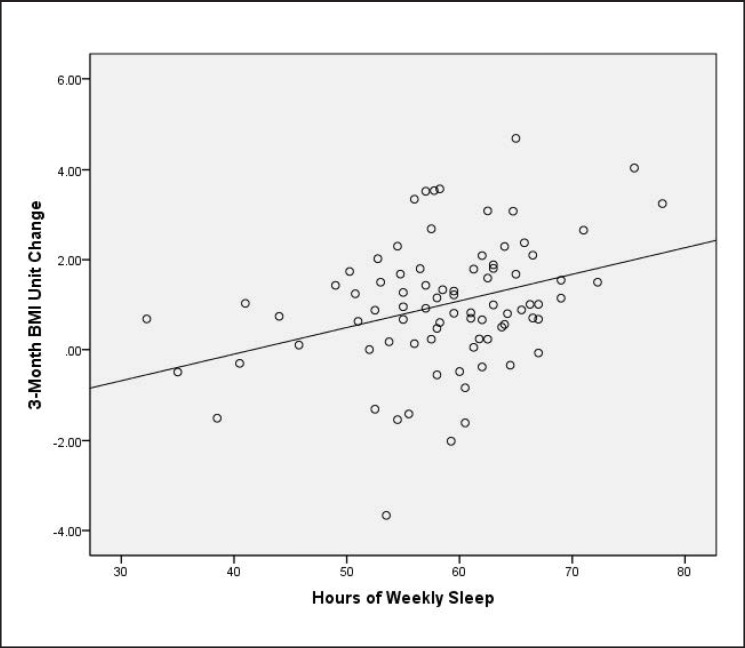
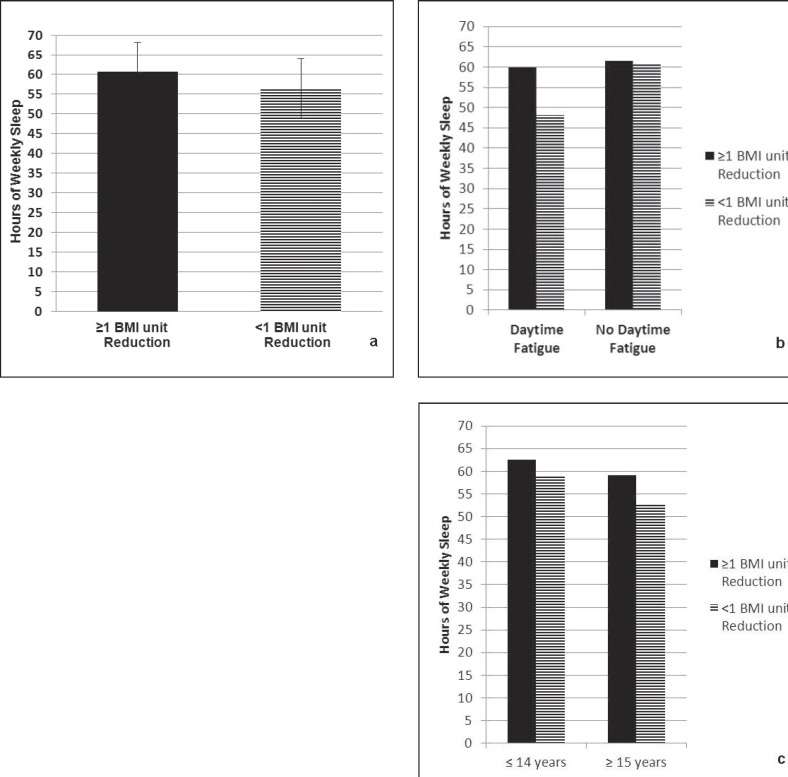
Results: On average, adolescents reported significantly less sleeping on weeknights (7.7 ± 1.3 h) compared to weekend nights (10.0 ± 1.8 h), t(82) = 10.5, p = 0.0001. Reduction in BMI after 3 months of treatment was predicted by more weekly sleep at baseline (R² = 0.113, F(1, 80) = 10.2, p = 0.002). Adolescents who reduced their BMI by ≥1 kg/m² reported greater weekly sleep at baseline compared to adolescents who experienced <1 kg/m² reduction (60.7 ± 7.5 h vs. 56.4 ± 8.6 h; F(1, 80) = 5.7, p = 0.02).
Conclusion: Findings from this study, though correlational, raise the possibility that increased duration of sleep may be associated with weight loss among obese adolescents enrolled in a weight management program. Evidence-based behavioral techniques to improve sleep hygiene and increase sleep duration should be explored in pediatric weight management settings.
Copyright © 2013 S. Karger GmbH, Freiburg
Figures
References
-
- Ogden CL, Carroll MD, Flegal KM. High body mass index for age among US children and adolescents, 2003-2006. JAMA. 2008;299:2401–2405. - PubMed
-
- Luzier JL, Berlin KS, Weeks JW. Behavioral treatment of pediatric obesity: review and future directions. Child Health Care. 2010;39:312–334.
-
- Hart CN, Jelalian E. Shortened sleep duration is associated with pediatric overweight. Behav Sleep Med. 2008;6:251–167. - PubMed
MeSH terms
LinkOut - more resources
Full Text Sources
Other Literature Sources
Medical
