Elevation of conjunctival epithelial CD45INTCD11b⁺CD16⁺CD14⁻ neutrophils in ocular Stevens-Johnson syndrome and toxic epidermal necrolysis
- PMID: 23737478
- PMCID: PMC3711386
- DOI: 10.1167/iovs.13-11859
Elevation of conjunctival epithelial CD45INTCD11b⁺CD16⁺CD14⁻ neutrophils in ocular Stevens-Johnson syndrome and toxic epidermal necrolysis
Abstract
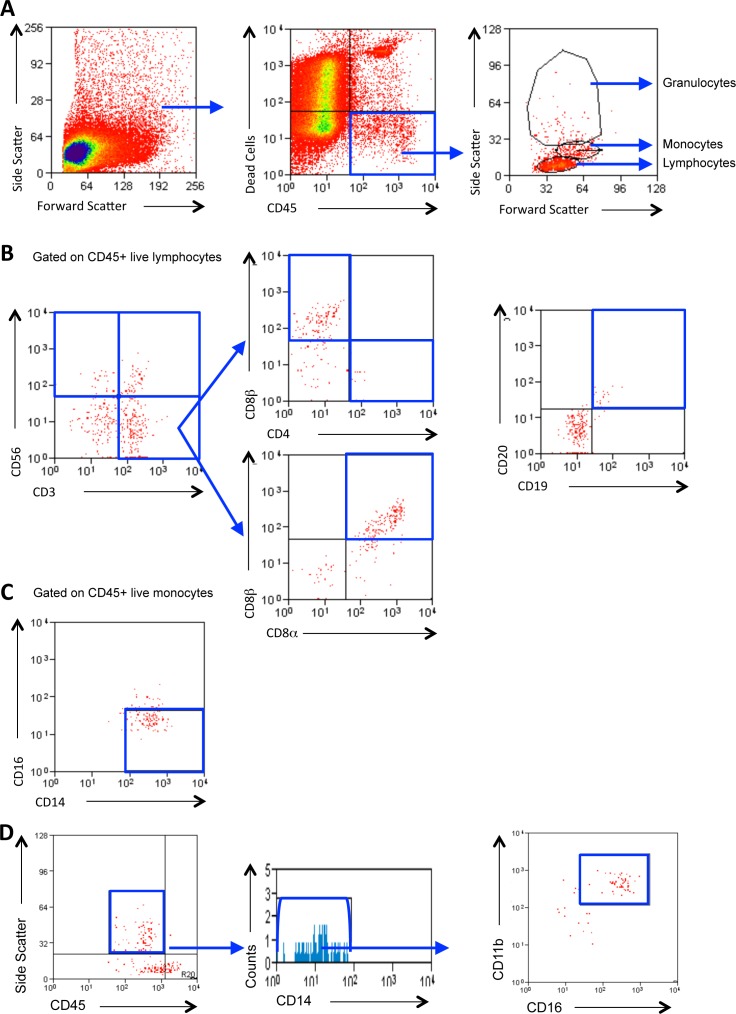
Purpose: Ocular complications related to Stevens-Johnson Syndrome (SJS)-Toxic Epidermal Necrolysis (TEN) may persist and progress after resolution of systemic disease. This is thought to be related in part to persistent ocular innate-immune signaling. In this study, our aim was to characterize infiltrative conjunctival cellular profiles during acute (<12 months) and chronic (>12 months) disease.
Methods: Consecutive patients presenting with SJS-TEN over a 12-month period were followed for 1 year. Detailed clinical examination and conjunctival impression cell recovery was analyzed by flow cytometry for the presence of intraepithelial leukocytes and compared with healthy controls (n = 21).
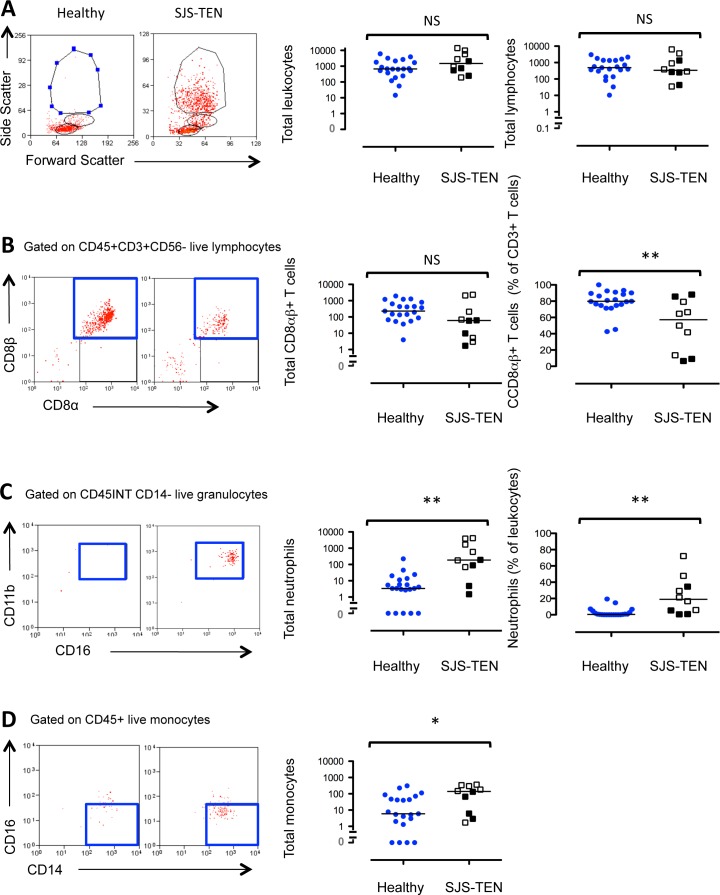
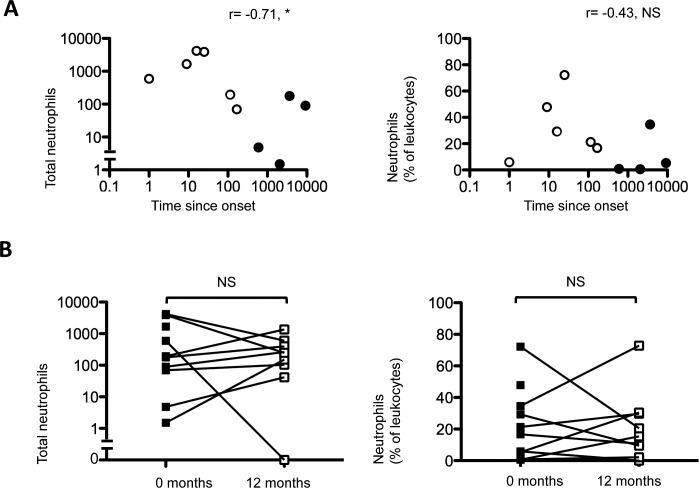
Results: Ten patients were recruited of whom six had acute disease and five were classified as TEN (SCORTEN = 1, n = 4). Conjunctival inflammation was graded as absent/mild in a total of nine patients; but despite this, evidence of fornix shrinkage was observed in nine subjects. This inversely correlated with disease duration (P < 0.05). A reduction in percentage of CD8αβ(+) T cells compared with controls (80% vs. 57%; P < 0.01) was associated with a corresponding increase in the number/percentage of CD45(INT)CD11b(+)CD16(+)CD14(-) neutrophils (186 vs. 3.4, P < 0.01, 31% vs. 0.8%, P < 0.001). Neutrophils inversely correlated with disease duration (r = -0.71, P = 0.03), yet there was no absolute change in the CD8αβ(+) or neutrophil populations during the study period (P = 1.0).
Conclusions: These data highlight that a neutrophilic infiltrate is present in mildly inflamed or clinically quiescent conjunctival mucosa in patients with ocular SJS-TEN, where neutrophil numbers inversely correlate with disease duration. Neutrophil persistence endorses the hypothesis of an unresolved innate-inflammatory process that might account for disease progression.
Keywords: SJS; TEN; innate immunity; neutrophils.
Figures
References
-
- Wojnarowska FT, Briggaman RA. Management of Blistering Diseases. London: Chapman and Hall Medical; 1990.
-
- Saw VP, Dart JK. Ocular mucous membrane pemphigoid: diagnosis and management strategies. Ocul Surf. 2008; 6: 128–142 - PubMed
-
- Bastuji-Garin S, Fouchard N, Bertocchi M, Roujeau JC, Revuz J, Wolkenstein P. SCORTEN: a severity-of-illness score for toxic epidermal necrolysis. J Invest Dermatol. 2000; 115: 149–153 - PubMed
-
- Schopf E, Stuhmer A, Rzany B, Victor N, Zentgraf R, Kapp JF. Toxic epidermal necrolysis and Stevens-Johnson syndrome. An epidemiologic study from West Germany. Arch Dermatol. 1991; 127: 839–842 - PubMed
-
- Bastuji-Garin S, Rzany B, Stern RS, Shear NH, Naldi L, Roujeau JC. Clinical classification of cases of toxic epidermal necrolysis, Stevens-Johnson syndrome, and erythema multiforme. Arch Dermatol. 1993; 129: 92–96 - PubMed
Publication types
MeSH terms
Substances
Grants and funding
LinkOut - more resources
Full Text Sources
Other Literature Sources
Research Materials
Miscellaneous