


Diabetic neuropathy and oxidative stress: therapeutic perspectives
- PMID: 23738033
- PMCID: PMC3655656
- DOI: 10.1155/2013/168039
Diabetic neuropathy and oxidative stress: therapeutic perspectives
Abstract
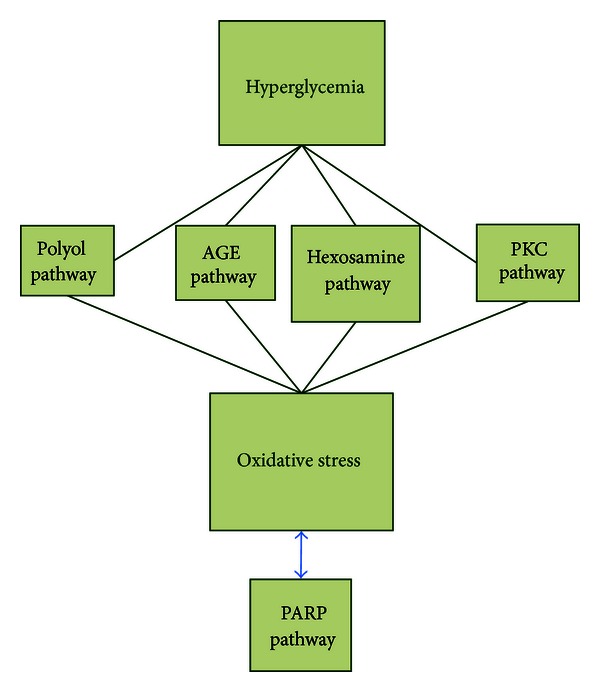
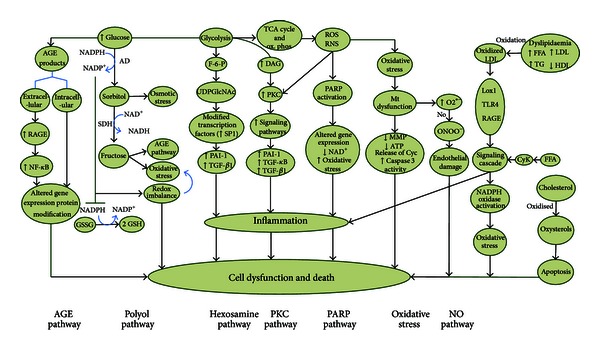
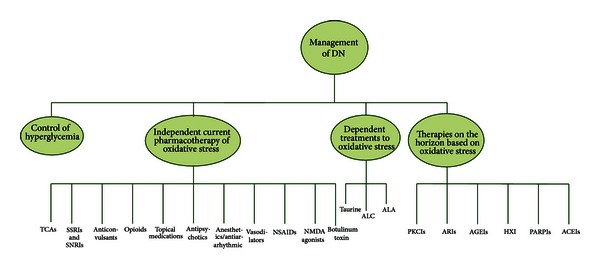
Diabetic neuropathy (DN) is a widespread disabling disorder comprising peripheral nerves' damage. DN develops on a background of hyperglycemia and an entangled metabolic imbalance, mainly oxidative stress. The majority of related pathways like polyol, advanced glycation end products, poly-ADP-ribose polymerase, hexosamine, and protein kinase c all originated from initial oxidative stress. To date, no absolute cure for DN has been defined; although some drugs are conventionally used, much more can be found if all pathophysiological links with oxidative stress would be taken into account. In this paper, although current therapies for DN have been reviewed, we have mainly focused on the links between DN and oxidative stress and therapies on the horizon, such as inhibitors of protein kinase C, aldose reductase, and advanced glycation. With reference to oxidative stress and the related pathways, the following new drugs are under study such as taurine, acetyl-L-carnitine, alpha lipoic acid, protein kinase C inhibitor (ruboxistaurin), aldose reductase inhibitors (fidarestat, epalrestat, ranirestat), advanced glycation end product inhibitors (benfotiamine, aspirin, aminoguanidine), the hexosamine pathway inhibitor (benfotiamine), inhibitor of poly ADP-ribose polymerase (nicotinamide), and angiotensin-converting enzyme inhibitor (trandolapril). The development of modern drugs to treat DN is a real challenge and needs intensive long-term comparative trials.
Figures
References
-
- Peripheral Neuropathy. http://courses.washington.edu/conj/neuron/peripheralNeuropathy.htm.
-
- Bril V. Treatments for DN. Journal of the Peripheral Nervous System. 2012;2:22–27. - PubMed
-
- Tesfaye S, Selvarajah D. Advances in the epidemiology, pathogenesis and management of diabetic peripheral neuropathy. Diabetes—Metabolism Research and Reviews. 2012;1:8–14. - PubMed
-
- Thomas PK. Classification, differential diagnosis, and staging of diabetic peripheral neuropathy. Diabetes. 1997;46(2):S54–S57. - PubMed
Publication types
MeSH terms
LinkOut - more resources
Full Text Sources
Other Literature Sources
Medical
