


Creatine for treating muscle disorders
- PMID: 23740606
- PMCID: PMC6492334
- DOI: 10.1002/14651858.CD004760.pub4
Creatine for treating muscle disorders
Abstract
Background: Progressive muscle weakness is a main symptom of most hereditary and acquired muscle diseases. Creatine improves muscle performance in healthy individuals. This is an update of our 2007 Cochrane review that evaluated creatine treatment in muscle disorders. Previous updates were in 2009 and 2011.
Objectives: To evaluate the efficacy of creatine compared to placebo for the treatment of muscle weakness in muscle diseases.
Search methods: On 11 September 2012, we searched the Cochrane Neuromuscular Disease Group Specialized Register, CENTRAL (2012, Issue 9 in The Cochrane Library), MEDLINE (January 1966 to September 2012) and EMBASE (January 1980 to September 2012) for randomised controlled trials (RCTs) of creatine used to treat muscle diseases.
Selection criteria: RCTs or quasi-RCTs of creatine treatment compared to placebo in hereditary muscle diseases or idiopathic inflammatory myopathies.
Data collection and analysis: Two authors independently applied the selection criteria, assessed trial quality and extracted data. We obtained missing data from investigators.
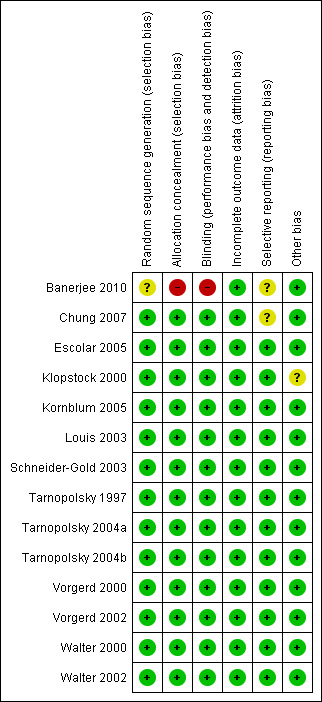
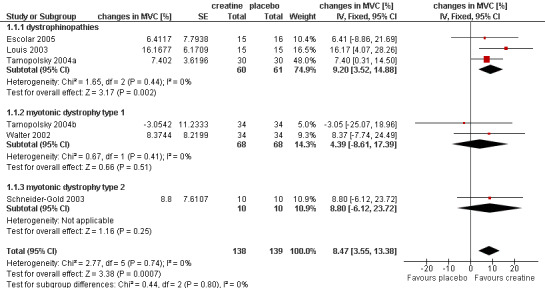
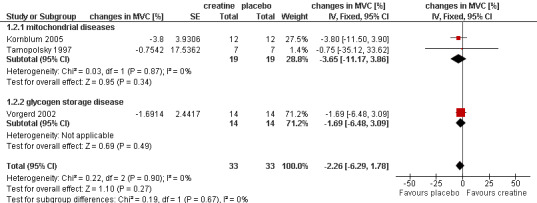
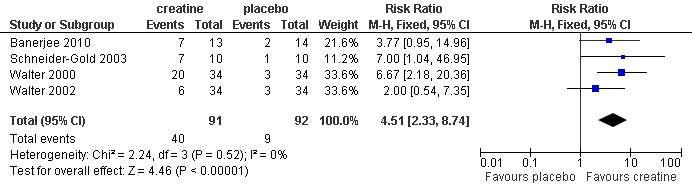
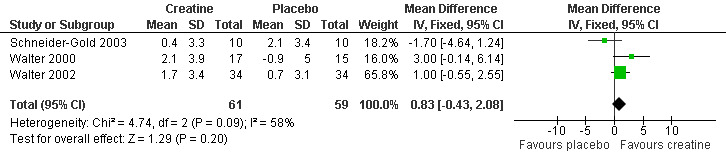
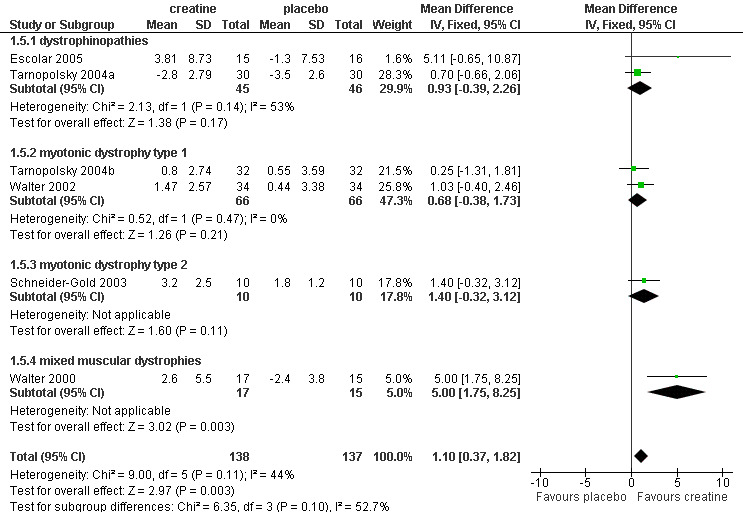
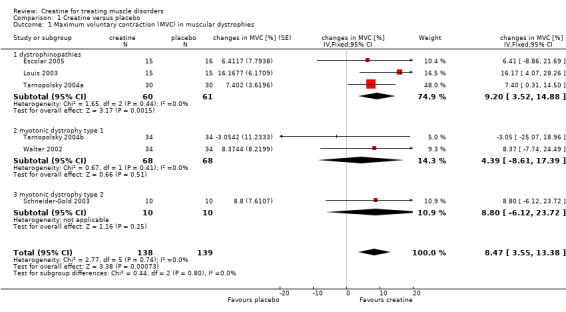
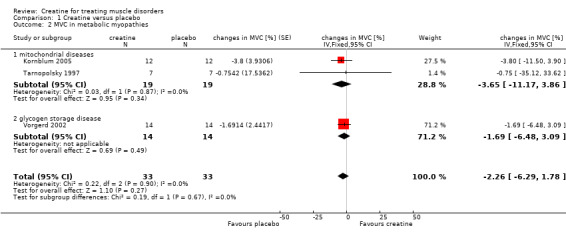
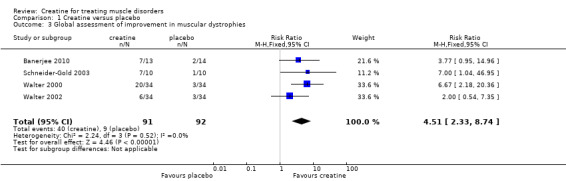
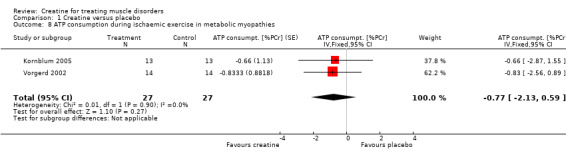
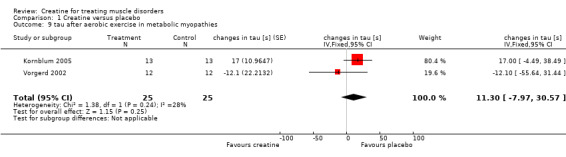
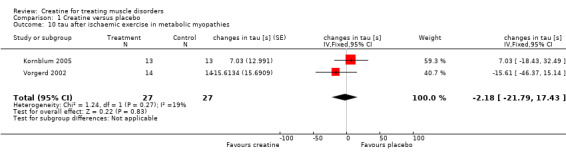
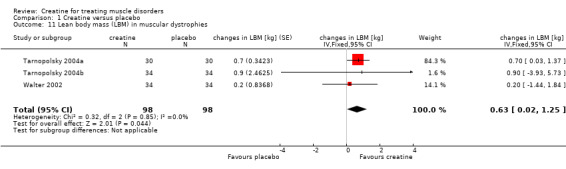
Main results: A total of 14 trials, including 364 randomised participants, met the selection criteria. The risk of bias was low in most studies. Only one trial had a high risk of selection, performance and detection bias. No new studies were identified at this update.Meta-analysis of six trials in muscular dystrophies including 192 participants revealed a significant increase in muscle strength in the creatine group compared to placebo, with a mean difference of 8.47%; (95% confidence intervals (CI) 3.55 to 13.38). Pooled data of four trials including 115 participants showed that a significantly higher number of participants felt better during creatine treatment compared to placebo with a risk ratio of 4.51 (95% CI 2.33 to 8.74). One trial in 37 participants with idiopathic inflammatory myopathies also showed a significant improvement in functional performance. No trial reported any clinically relevant adverse event.In metabolic myopathies, meta-analyses of three cross-over trials including 33 participants revealed no significant difference in muscle strength. One trial reported a significant deterioration of activities of daily living (mean difference 0.54 on a 1 to 10 scale; 95% CI 0.14 to 0.93) and an increase in muscle pain during high-dose creatine treatment in McArdle disease.
Authors' conclusions: High quality evidence from RCTs shows that short- and medium-term creatine treatment increases muscle strength in muscular dystrophies. There is also evidence that creatine improves functional performance in muscular dystrophy and idiopathic inflammatory myopathy. Creatine is well tolerated in these people. High quality but limited evidence from RCTs does not show significant improvement in muscle strength in metabolic myopathies. High-dose creatine treatment impaired activities of daily living and increased muscle pain in McArdle disease.
Conflict of interest statement
RAK was involved in one and MV in two double blinded trials with creatine supplementation in McArdle disease. Furthermore, MV was co‐author in a trial that examined the effect of creatine in participants with single mitochondrial DNA deletions.
MAT has coordinated a single blinded trial that studied efficacy of creatine in participants with neuromuscular disorders and three double blinded trials that compared creatine with placebo in participants with mitochondrial cytopathies, Duchenne muscular dystrophy and myotonic dystrophy type 1. He was on the scientific advisory board of a sports nutrition company, EAS (2001‐2005). Neither trial was industry funded. MAT is the Chief Scientific Officer for Life Science Nutritionals. This company makes gummie omega 3 supplements, vitamin D and multivitamins for children. It does not manufacture any product containing creatine and does not have plans to do so in the foreseeable future.
Figures

Update of
-
Creatine for treating muscle disorders.Cochrane Database Syst Rev. 2011 Feb 16;(2):CD004760. doi: 10.1002/14651858.CD004760.pub3. Cochrane Database Syst Rev. 2011. Update in: Cochrane Database Syst Rev. 2013 Jun 05;(6):CD004760. doi: 10.1002/14651858.CD004760.pub4. PMID: 21328269 Updated.
References
References to studies included in this review
Banerjee 2010 {published data only}
-
- Banerjee B, Sharma U, Balasubramanian K, Kalaivani M, Kalra V, Jagannathan NR. Effect of creatine monohydrate in improving cellular energetics and muscle strength in ambulatory Duchenne muscular dystrophy patients: a randomized, placebo‐controlled 31P MRS study. Magnetic Resonance Imaging 2010;28(5):698‐707. [PUBMED: 20395096] - PubMed
Chung 2007 {published and unpublished data}
-
- Chung YL, Alexanderson H, Pipitone N, Morrison C, Dastmalchi M, Stahl‐Hallengren C, et al. Creatine supplements in patients with idiopathic inflammatory myopathies who are clinically weak after conventional pharmacologic treatment: Six‐month, double‐blind, randomized, placebo‐controlled trial. Arthritis and Rheumatism 2007;57(4):694‐702. [PUBMED: 17471547] - PubMed
Escolar 2005 {published data only}
-
- Escolar DM, Buyse G, Henricson E, Leshner R, Florence J, Mayhew J, et al. CINRG randomized controlled trial of creatine and glutamine in Duchenne muscular dystrophy. Annals of Neurology 2005;58(1):151‐5. [PUBMED: 15984021] - PubMed
Klopstock 2000 {published and unpublished data}
-
- Klopstock T, Querner V, Schmidt F, Gekeler F, Walter M, Hartard M, et al. A placebo‐controlled crossover trial of creatine in mitochondrial diseases. Neurology 2000;55(11):1748‐51. [PUBMED: 11113239] - PubMed
Kornblum 2005 {published and unpublished data}
-
- Kornblum C, Schröder R, Müller K, Vorgerd M, Eggers J, Bogdanow M, et al. Creatine has no beneficial effect on skeletal muscle energy metabolism in patients with single mitochondrial DNA deletions: a placebo‐controlled, double‐blind 31P‐MRS cross‐over study. European Journal of Neurology 2005;12(4):300‐9. [PUBMED: 15804248] - PubMed
Louis 2003 {published and unpublished data}
-
- Louis M, Lebacq J, Poortmans JR, Belpaire‐Dethiou MC, Devogelaer JP, et al. Beneficial effects of creatine supplementation in dystrophic patients. Muscle and Nerve 2003;27(5):604‐10. [PUBMED: 12707981] - PubMed
Schneider‐Gold 2003 {published and unpublished data}
-
- Schneider‐Gold C, Beck M, Wessig C, George A, Kele H, Reiners K, et al. Creatine monohydrate in DM2/PROMM: a double‐blind placebo‐controlled clinical study. Proximal myotonic myopathy. Neurology 2003;60(3):500‐2. [PUBMED: 12578937] - PubMed
Tarnopolsky 1997 {published and unpublished data}
-
- Tarnopolsky MA, Roy BD, MacDonald JR. A randomized, controlled trial of creatine monohydrate in patients with mitochondrial cytopathies. Muscle and Nerve 1997;20(12):1502‐9. [PUBMED: 9390662] - PubMed
Tarnopolsky 2004a {published and unpublished data}
-
- Tarnopolsky MA, Mahoney DJ, Vajsar J, Rodriguez C, Doherty TJ, Roy BD, et al. Creatine monohydrate enhances strength and body composition in Duchenne muscular dystrophy. Neurology 2004;62(10):1771‐7. [PUBMED: 15159476] - PubMed
Tarnopolsky 2004b {published and unpublished data}
-
- Tarnopolsky M, Mahoney D, Thompson T, Naylor H, Doherty TJ. Creatine monohydrate supplementation does not increase muscle strength, lean body mass, or muscle phosphocreatine in patients with myotonic dystrophy type 1. Muscle and Nerve 2004;29(1):51‐8. [PUBMED: 14694498] - PubMed
Vorgerd 2000 {published and unpublished data}
-
- Vorgerd M, Grehl T, Jager M, Muller K, Freitag G, Patzold T, et al. Creatine therapy in myophosphorylase deficiency (McArdle disease): a placebo‐controlled cross‐over trial. Archives of Neurology 2000;57(7):956‐63. [PUBMED: 10891977] - PubMed
Vorgerd 2002 {published and unpublished data}
-
- Vorgerd M, Zange J, Kley R, Grehl T, Husing A, Jager M, et al. Effect of high‐dose creatine therapy on symptoms of exercise intolerance in McArdle disease: double‐blind, placebo‐controlled cross‐over study. Archives of Neurology 2002;59(1):97‐101. [PUBMED: 11790236] - PubMed
Walter 2000 {published and unpublished data}
-
- Walter MC, Lochmuller H, Reilich P, Klopstock T, Huber R, Hartard M, et al. Creatine monohydrate in muscular dystrophies: A double‐blind, placebo‐controlled clinical study. Neurology 2000;54(9):1848‐50. [PUBMED: 10802796] - PubMed
Walter 2002 {published and unpublished data}
-
- Walter MC, Reilich P, Lochmuller H, Kohnen R, Schlotter B, Hautmann H, et al. Creatine monohydrate in myotonic dystrophy: a double‐blind, placebo‐controlled clinical study. Journal of Neurology 2002;249(12):1717‐22. [PUBMED: 12529796] - PubMed
References to studies excluded from this review
Barisic 2002 {published data only}
-
- Barisic N, Bernert G, Ipsiroglu O, Stromberger C, Muller T, Gruber S, et al. Effects of oral creatine supplementation in a patient with MELAS phenotype and associated nephropathy. Neuropediatrics 2002;33(3):157‐61. [PUBMED: 1220074] - PubMed
Beurey 1967 {published data only}
-
- Beurey J, Duc M, Weber M, Gurecki H, Perello R. Trial therapy of acute polymyositis with phosphocreatine. [Essai de traitement de polymyosite aigue par phosphocreatine.]. Bulletin de la Societe Francaise de Dermatologie et de Syphiligraphie 1967;74(2):276‐80. - PubMed
Borchert 1999 {published data only}
-
- Borchert A, Wilichowski E, Hanefeld F. Supplementation with creatine monohydrate in children with mitochondrial encephalomyopathies. Muscle and Nerve 1999;22(9):1299‐300. - PubMed
Duperrat 1972 {published data only}
-
- Duperrat B, Puissant A, Mallard D, Jourdain JC, Thomas D. Dermatomyositis with cardiac involvement and trial treatment with phosphocreatine [Dermatomyosite avec atteinte cardiaque et essai de traitement par la phosphocréatine]. Bulletin de la Societe Francaise de Dermatologie et de Syphiligraphie 1972;79(3):208‐10. - PubMed
Felber 2000 {published data only}
-
- Felber S, Skladal D, Wyss M, Kremser C, Koller A, Sperl W. Oral creatine supplementation in Duchenne muscular dystrophy: a clinical and 31P magnetic resonance spectroscopy study. Neurological Research 2000;22(2):145‐50. - PubMed
Freddi 1979 {published data only}
-
- Freddi A, Paci A, DeCiantis R, Lancia G, DeSantis L. Phosphocreatinine in myotonic dystrophy (Steinert´s disease). Lancet 1979;1(8131):1400‐1. - PubMed
Hagenfeldt 1994 {published data only}
-
- Hagenfeldt L, Döbeln U, Solders G, Kaijser L. Creatine treatment in MELAS. Muscle and Nerve 1994;17(10):1236‐7. - PubMed
Komura 2003 {published data only}
-
- Komura K, Hobbiebrunken E, Wilichowski EK, Hanefeld FA. Effectiveness of creatine monohydrate in mitochondrial encephalomyopathies. Pediatric Neurology 2003;28(1):53‐8. - PubMed
Matsumura 2004 {published data only}
-
- Matusmura T, Yokoe M, Nakamori M, Hattori N, Saito T, Nozaki S, et al. A clinical trial of creatine monohydrate in muscular dystrophy patients. Rinsho Shinkeigaku 2004;44(10):661‐6. - PubMed
Rodriguez 2007 {published data only}
-
- Rodriguez MC, MacDonald JR, Mahoney DJ, Parise G, Beal MF, Tarnopolsky MA. Beneficial effects of creatine, CoQ10, and lipoic acid in mitochondrial disorders. Muscle and Nerve 2007;35(2):235‐42. - PubMed
Sejersen 2000 {published and unpublished data}
-
- Sejersen T, Hovmoller M, Hok L, Nordmark‐Andersson E, Winberg P, Nylander E, et al. Lack of detectable effect of creatine supplementation on skeletal muscle or cardiac function in Duchenne muscular dystrophy. Neuromuscular Disorders 2000;10:375.
Stout 2001 {published data only}
-
- Stout JR, Eckerson JM, May E, Coulter C, Bradley‐Popovich GE. Effects of resistance exercise and creatine supplementation on myasthenia gravis: a case study. Medicine and Science in Sports and Exercise 2001;33(6):869‐72. - PubMed
Tarnopolsky 1999 {published data only}
-
- Tarnopolsky M, Martin J. Creatine monohydrate increases strength in patients with neuromuscular disease. Neurology 1999;52(4):854‐7. - PubMed
Tarnopolsky 2004 {published data only}
-
- Tarnopolsky MA, Simon DK, Roy BD, Chorneyko K, Lowther SA, Johns DR, et al. Attenuation of free radical production and paracrystalline inclusions by creatine supplementation in a patient with a novel cytochrome b mutation. Muscle and Nerve 2004;29(4):537‐47. - PubMed
References to ongoing studies
NCT01217320 {published data only}
-
- NCT01217320. Creatine supplementation in pediatric rheumatology. http://www.clinicaltrials.gov/ct2/show/NCT01217320 (accessed 26 April 2013).
Additional references
Andreassen 2001
-
- Andreassen OA, Dedeoglu A, Ferrante RJ, Jenkins BG, Ferrante KL, Thomas M, et al. Creatine increase survival and delays motor symptoms in a transgenic animal model of Huntington's disease. Neurobiology of Disease 2001;8(3):479‐91. - PubMed
Brose 2003
-
- Brose A, Parise G, Tarnopolsky MA. Creatine supplementation enhances isometric strength and body composition improvements following strength exercise training in older adults. Journals of Gerontology. Series B, Psychological Sciences and Social Sciences 2003;58(1):11‐9. - PubMed
Burke 2003
-
- Burke DG, Chilibeck PD, Parise G, Candow DG, Mahoney D, Tarnopolsky M. Effect of creatine and weight training on muscle creatine and performance in vegetarians. Medicine and Science in Sports and Exercise 2003;35(11):1946‐55. - PubMed
Casey 1996
-
- Casey A, Constantin‐Teodosiu D, Howell S, Hultman E, Greenhaff PL. Creatine ingestion favorably affects performance and muscle metabolism during maximal exercise in humans. American Journal of Physiology 1996;271(1 Pt 1):E31‐7. - PubMed
Chetlin 2004
-
- Chetlin RD, Gutmann L, Tarnopolsky MA, Ullrich IH, Yeater RA. Resistance training exercise and creatine in patients with Charcot‐Marie‐Tooth disease. Muscle and Nerve 2004;30(1):69‐76. - PubMed
Chilibeck 2004
-
- Chilibeck PD, Stride D, Farthing JP, Burke DG. Effect of creatine ingestion after exercise on muscle thickness in males and females. Medicine and Science in Sports and Exercise 2004;36(10):1781‐8. - PubMed
Chilibeck 2005
-
- Chilibeck PD, Chrusch MJ, Chad KE, Shawn Davison K, Burke DG. Creatine monohydrate and resistance training increase bone mineral content and density in older men. Journal of Nutrition, Health and Aging 2005;9(5):352‐3. - PubMed
Chrusch 2001
-
- Chrusch MJ, Chilibeck PD, Chad KE, Davison KS, Burke DG. Creatine supplementation combined with resistance training in older men. Medicine and Science in Sports and Exercise 2001;33(12):2111‐7. - PubMed
Dechent 1999
-
- Dechent P, Pouwels PJ, Wilken B, Hanefeld F, Frahm J. Increase of total creatine in human brain after oral supplementation of creatine‐monohydrate. American Journal of Physiology 1999;277(3 Pt 2):R698‐704. - PubMed
Dedeoglu 2003
Deldicque 2008
-
- Deldicque L, Atherton P, Patel R, Theisen D, Nielens H, Rennie MJ, Francaux M. Effects of resistance exercise with and without creatine supplementation on gene expression and cell signaling in human skeletal muscle. Journal of Applied Physiology 2008;104(2):371‐8. - PubMed
Fenichel 2001
-
- Fenichel GM, Griggs RC, Kissel J, Kramer TI, Mendell JR, Moxley RT, et al. A randomized efficacy and safety trial of oxandrolone in the treatment of Duchenne dystrophy. Neurology 2001;56(8):1075‐9. [PUBMED: 11320181] - PubMed
Ferrante 2000
Greenwood 2003
-
- Greenwood M, Kreider RB, Melton C, Rasmussen C, Lancaster S, Cantler E, et al. Creatine supplementation during college football training does not increase the incidence of cramping or injury. Molecular and Cellular Biochemistry 2003;244(1‐2):83‐8. - PubMed
Groeneveld 2005
-
- Groeneveld GJ, Beijer C, Veldink JH, Kalmijn S, Wokke JH, Berg LH. Few adverse effects of long‐term creatine supplementation in a placebo‐controlled trial. International Journal of Sports Medicine 2005;26(4):307‐313. - PubMed
Gualano 2010
-
- Gualano B, Artioli GG, Poortmans JR, Lancha Junior AH. Exploring the therapeutic role of creatine supplementation. Amino Acids 2010;38(1):31‐44. - PubMed
Guimbal 1993
-
- Guimbal C, Kilimann MW. A Na(+)‐dependent creatine transporter in rabbit brain, muscle, heart, and kidney. cDNA cloning and functional expression. Journal of Biological Chemistry 1993;268(12):8418‐21. - PubMed
Guthmiller 1994
-
- Guthmiller P, Pilsum JF, Boen JR, McGuire DM. Cloning and sequencing of rat kidney L‐arginine: glycine amidinotransferase. Studies on the mechanism of regulation by growth hormone and creatine. Journal of Biological Chemistry 1994;269(26):17556‐60. - PubMed
Harris 1992
-
- Harris RC, Soderlund K, Hultman E. Elevation of creatine in resting and exercised muscle of normal subjects by creatine supplementation. Clinical Science 1992;83(3):367‐74. - PubMed
Hersch 2006
-
- Hersch SM, Gevorkian S, Marder K, Moskowitz C, Feigin A, Cox M, et al. Creatine in Huntington disease is safe, tolerable, bioavailable in brain and reduces serum 8OH2'dG. Neurology 2006;66(2):250‐2. - PubMed
Higgins 2011
-
- Higgins JPT, Altman DG, Sterne JAC (editors). Chapter 8: Assessing risk of bias in included studies. In: Higgins JPT, Green S (editors). Cochrane Handbook for Systematic Reviews of Interventions Version 5.1.0 (updated March 2011). The Cochrane Collaboration, 2011. Available from www.cochrane‐handbook.org.
Hultman 1996
-
- Hultman E, Soderlund K, Timmons JA, Cederlad G, Greenhaff PL. Muscle creatine loading in men. Journal of Applied Physiology 1996;81(1):232‐7. - PubMed
Josefson 1996
-
- Josefson A, Romanus E, Carlsson J. A functional index in myositis. Journal of Rheumatology 1996;23(8):1380‐4. - PubMed
Klivenyi 1999
-
- Klivenyi P, Ferrante RJ, Matthews RT, Bogdanov MB, Klein AM, Andreassen OA, et al. Neuroprotective effects of creatine in a transgenic animal model of amyotrophic lateral sclerosis. Nature Medicine 1999;5(3):347‐50. - PubMed
Klivenyi 2004
-
- Klivenyi P, Calingasan NY, Starkov A, Stavrovskaya IG, Kristal BS, Yang L, et al. Neuroprotective mechanisms of creatine occur in the absence of mitochondrial creatine kinase. Neurobiology of Disease 2004;15(3):610‐7. - PubMed
Kreider 2003
-
- Kreider RB, Melton C, Rasmussen CJ, Greenwood M, Lancaster S, Cantler EC, et al. Long‐term creatine supplementation does not significantly affect clinical markers of health in athletes. Molecular and Cellular Biochemistry 2003;244(1‐2):95‐104. - PubMed
Malcon 2000
-
- Malcon C, Kaddurah‐Daouk R, Beal MF. Neuroprotective effects of creatine administration against NMDA and malonate toxicity. Brain Research 2000;860(1‐2):195‐8. - PubMed
Manzur 2004
Matthews 1990
-
- Matthews PM, Arnold DL. Phosphorus magnetic resonance spectroscopy of brain in mitochondrial cytopathies. Annals of Neurology 1990;28(6):839‐40. - PubMed
Matthews 1991
-
- Matthews PM, Allaire C, Shoubridge EA, Karpati G, Carpenter S, Arnold DL. In vivo muscle magnetic resonance spectroscopy in the clinical investigation of mitochondrial disease. Neurology 1991;41(1):114‐20. - PubMed
Matthews 1998
Mihic 2000
-
- Mihic S, MacDonald JR, McKenzie S, Tarnopolsky MA. Acute creatine loading increases fat‐free mass, but does not affect blood pressure, plasma creatinine, or CK activity in men and women. Medicine and Science in Sports and Exercise 2000;32(2):291‐6. - PubMed
Parise 2001
-
- Parise G, Mihic S, MacLennan D, Yarasheski KE, Tarnopolsky MA. Effects of acute creatine monohydrate supplementation on leucine kinetics and mixed‐muscle protein synthesis. Journal of Applied Physiology 2001;91(3):1041‐7. - PubMed
Park 1994
-
- Park JH, Vital TL, Ryder NM, Hernanz‐Schulman M, Partain CL, Price RR, et al. Magnetic resonance imaging and P‐31 magnetic resonance spectroscopy provide unique quantitative data useful in the longitudinal management of patients with dermatomyositis. Arthritis and Rheumatism 1994;37(5):736‐46. - PubMed
Park 1995
-
- Park JH, Olsen NJ, King L, Jr, Vital T, Buse R, Kari S, et al. Use of magnetic resonance imaging and P‐31 magnetic resonance spectroscopy to detect and quantify muscle dysfunction in the amyopathic and myopathic variants of dermatomyositis. Arthritis and Rheumatism 1995;38(1):68‐77. - PubMed
Passaquin 2002
-
- Passaquin AC, Renard M, Kay L, Challet C, Mokhtarian A, Wallimann T, et al. Creatine supplementation reduces skeletal muscle degeneration and enhances mitochondrial function in mdx mice. Neuromuscular Disorders 2002;12(2):172‐82. - PubMed
Persky 2003
-
- Persky AM, Muller M, Derendorf H, Grant M, Brazeau GA, Hochhaus G. Single‐ and multiple‐dose pharmacokinetics of oral creatine. Journal of Clinical Pharmacology 2003;43(1):29‐37. - PubMed
Poortmans 1999
-
- Poortmans JR, Francaux M. Long‐term oral creatine supplementation does not impair renal function in healthy athletes. Medicine and Science in Sports and Exercise 1999;31(8):1108‐10. - PubMed
Poortmans 2000
-
- Poortmans JR, Francaux M. Adverse effects of creatine supplementation: fact or fiction?. Sports Medicine 2000;30(3):155‐70. [PUBMED: 10999421] - PubMed
Poortmans 2005
-
- Poortmans JR, Kumps A, Duez P, Fofonka A, Carpentier A, Francaux M. Effect of oral creatine supplementation on urinary methylamine, formaldehyde, and formate. Medicine and Science in Sports and Exercise 2005;37(10):1717‐20. - PubMed
Pulido 1998
-
- Pulido SM, Passaquin AC, Leijendekker WJ, Challet C, Wallimann T, Ruegg UT. Creatine supplementation improves intracellular Ca2+ handling and survival in mdx skeletal muscle cells. FEBS Letters 1998;439(3):357‐62. - PubMed
Rawson 2004
-
- Rawson ES, Persky AM, Price TB, Clarkson PM. Effects of repeated creatine supplementation on muscle, plasma, and urine creatine levels. Journal of Strength and Conditioning Research 2004;18(1):162‐7. - PubMed
RevMan 2012 [Computer program]
-
- The Nordic Cochrane Centre, The Cochrane Collaboration. Review Manager (RevMan). Version 5.2. Copenhagen: The Nordic Cochrane Centre, The Cochrane Collaboration, 2012.
Rose 2004
Roy 2002
-
- Roy BD, Bourgeois JM, Mahoney DJ, Tarnopolsky MA. Dietary supplementation with creatine monohydrate prevents corticosteroid‐induced attenuation of growth in young rats. Canadian Journal of Physiology and Pharmacology 2002;80(10):1008‐14. - PubMed
Safdar 2008
-
- Safdar A, Yardley NJ, Snow R, Melov S, Tarnopolsky MA. Global and targeted gene expression and protein content in skeletal muscle of young men following short‐term creatine monohydrate supplementation. Physiological Genomics 2008;32:219‐28. - PubMed
Scott 1982
-
- Scott OM, Hyde SA, Goddard C, Dubowitz V. Quantitation of muscle function in children: a prospective study in duchenne muscular dystrophy. Muscle and Nerve 1982;5(4):291‐301. - PubMed
Shao 2006
-
- Shao A, Hathcock JN. Risk assessment for creatine monohydrate. Regulatory Toxicology and Pharmacology 2006;45(3):242‐51. - PubMed
Shefner 2004
-
- Shefner JM, Cudkowicz ME, Schoenfeld D, Conrad T, Taft J, Chilton M, et al. A clinical trial of creatine in ALS. Neurology 2004;63(9):1656‐61. [PUBMED: 15534251] - PubMed
Soueidan 1993
-
- Soueidan SA, Dalakas MC. Treatment of inclusion‐body myositis with high‐dose intravenous immunglobulin. Neurology 1993;43(5):876‐9. - PubMed
Sullivan 2000
-
- Sullivan PG, Geiger JD, Mattson MP, Scheff SW. Dietary supplement creatine protects against traumatic brain injury. Annals of Neurology 2000;48(5):723‐9. - PubMed
Tarnopolsky 1999a
-
- Tarnopolsky MA, Parise G. Direct measurement of high‐energy phosphate compounds in patients with neuromuscular disease. Muscle and Nerve 1999;22(9):1228‐33. - PubMed
Tarnopolsky 1999b
-
- Tarnopolsky M, Martin J. Creatine monohydrate increases strength in patients with neuromuscular disease. Neurology 1999;52(4):854‐7. - PubMed
Tarnopolsky 2000
-
- Tarnopolsky MA, MacLennan DP. Creatine monohydrate supplementation enhances high‐intensity exercise performance in males and females. International Journal of Sport Nutrition and Exercise Metabolism 2000;10(4):452‐63. - PubMed
Tarnopolsky 2001
-
- Tarnopolsky MA, Parshad A, Walzei B, Schlattner U, Wallimann T. Creatine transporter and mitochondrial creatine kinase protein content in myopathies. Muscle & Nerve 2001;24(5):682‐8. - PubMed
Terjung 2000
-
- Terjung RL, Clarkson P, Eichner ER, Greenhaff PL, Hespel PJ, Israel RG, et al. American College of Sports Medicine round table. The physiological and health effects of oral creatine supplementation. Medicine and Science in Sports and Exercise 2000;32(3):706‐17. - PubMed
Verbessem 2003
-
- Verbessem P, Lemiere J, Eijnde BO, Swinnen S, Vanhees L, Leemputte M, et al. Creatine supplementation in Huntington's disease: a placebo‐controlled pilot trial. Neurology 2003;61(7):925‐30. - PubMed
Wyss 1992
-
- Wyss M, Smeitink J, Wevers RA, Wallimann T. Mitochondrial creatine kinase: a key enzyme of aerobic energy metabolism. Biochimica et Biophysica Acta 1992;1102(2):119‐66. - PubMed
Wyss 1998
-
- Wyss M, Felber S, Skladal D, Koller A, Kremser C, Sperl W. The therapeutic potential of oral creatine supplementation in muscle disease. Medical Hypotheses 1998;51(4):333‐6. [PUBMED: 9824841] - PubMed
Wyss 2000
-
- Wyss M, Kaddurah‐Daouk R. Creatine and creatinine metabolism. Physiological Reviews 2000;80(3):1107‐213. [PUBMED: 10893433] - PubMed
References to other published versions of this review
Kley 2004
Kley 2007
Publication types
MeSH terms
Substances
LinkOut - more resources
Full Text Sources
Other Literature Sources
Medical
Miscellaneous
