


Antibiotic prophylaxis for preventing burn wound infection
- PMID: 23740764
- PMCID: PMC11303740
- DOI: 10.1002/14651858.CD008738.pub2
Antibiotic prophylaxis for preventing burn wound infection
Abstract
Background: Infection of burn wounds is a serious problem because it can delay healing, increase scarring and invasive infection may result in the death of the patient. Antibiotic prophylaxis is one of several interventions that may prevent burn wound infection and protect the burned patient from invasive infections.
Objectives: To assess the effects of antibiotic prophylaxis on rates of burn wound infection.
Search methods: In January 2013 we searched the Wounds Group Specialised Register; The Cochrane Central Register of Controlled Trials (CENTRAL); Ovid MEDLINE; Ovid MEDLINE - In-Process & Other Non-Indexed Citations (2013); Ovid EMBASE; EBSCO CINAHL and reference lists of relevant articles. There were no restrictions with respect to language, date of publication or study setting.
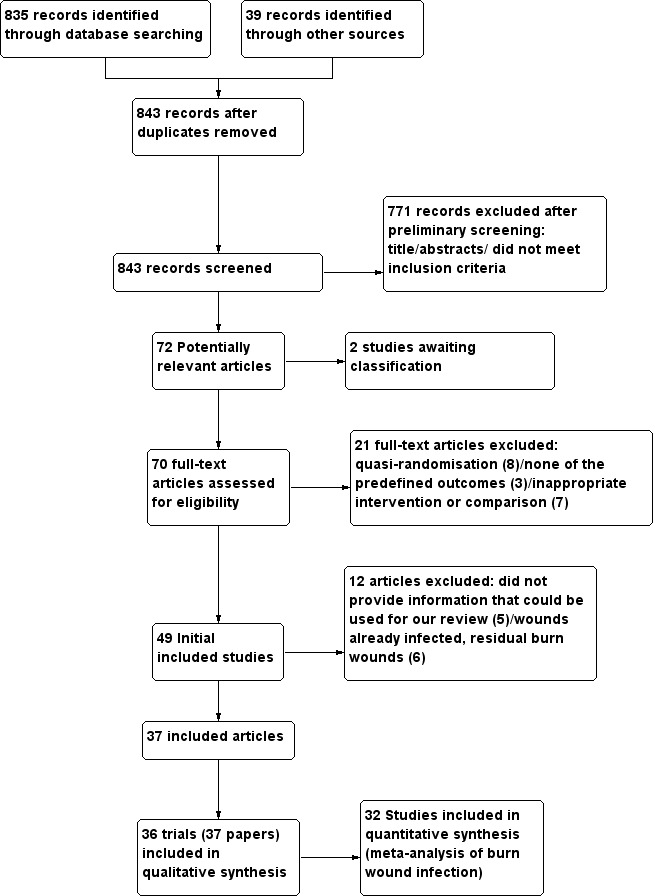
Selection criteria: All randomised controlled trials (RCTs) that evaluated the efficacy and safety of antibiotic prophylaxis for the prevention of BWI. Quasi-randomised studies were excluded.
Data collection and analysis: Two review authors independently selected studies, assessed the risk of bias, and extracted relevant data. Risk ratio (RR) and mean difference (MD) were estimated for dichotomous data and continuous data, respectively. When sufficient numbers of comparable RCTs were available, trials were pooled in a meta-analysis to estimate the combined effect.
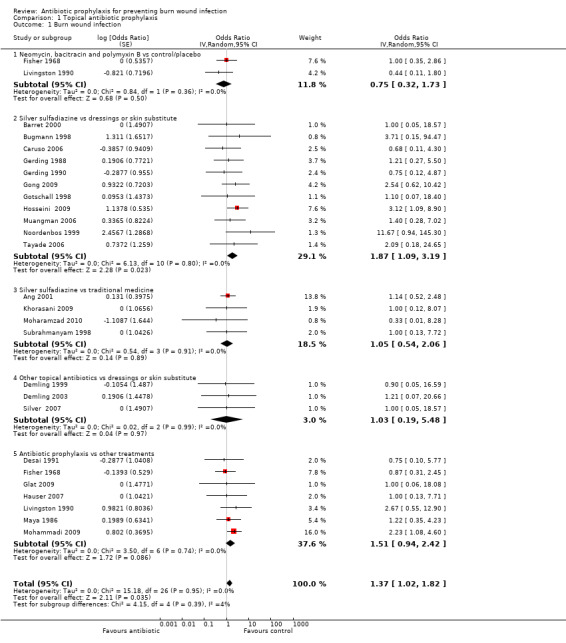
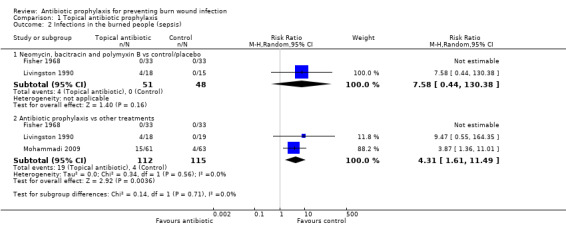
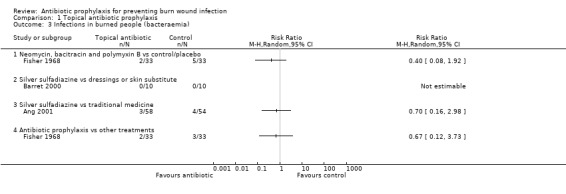
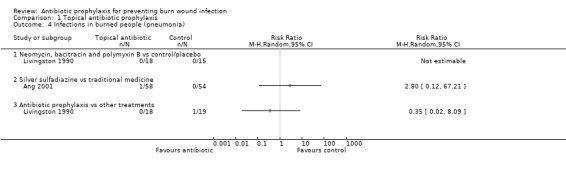
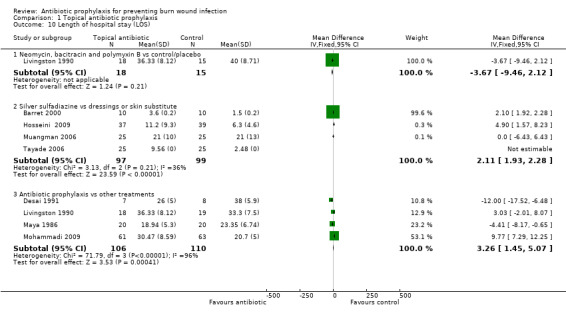
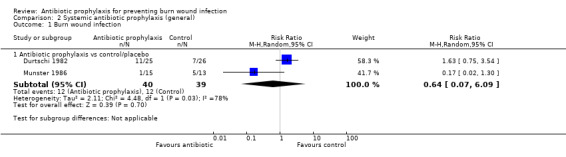
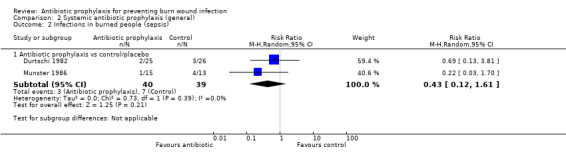
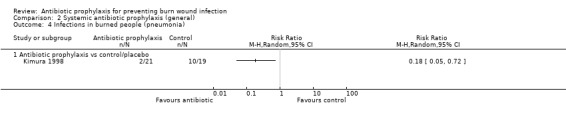
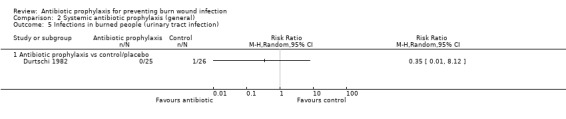
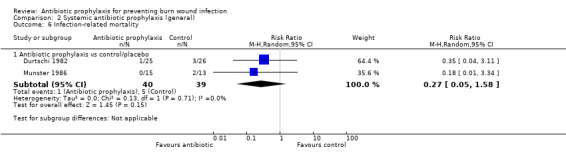
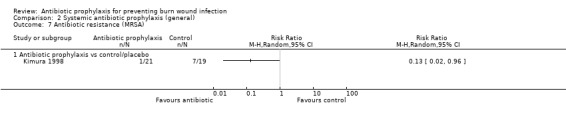
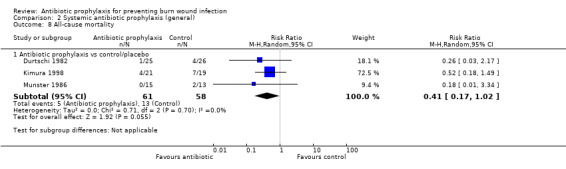
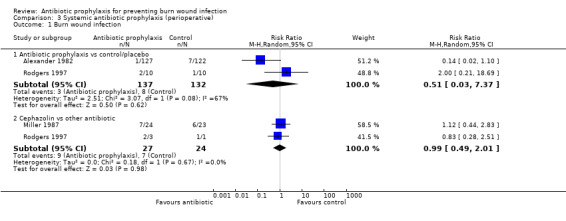
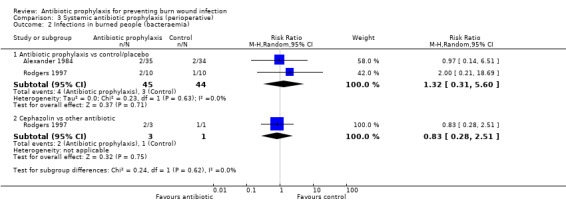
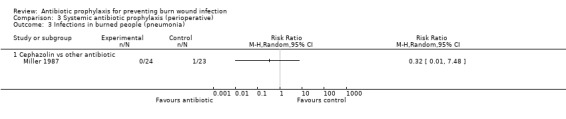
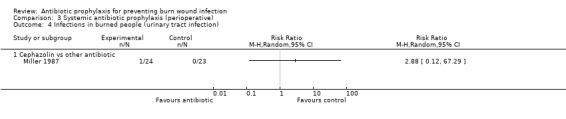
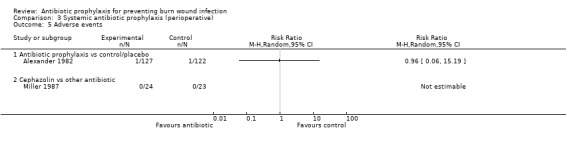
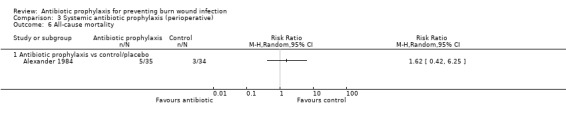
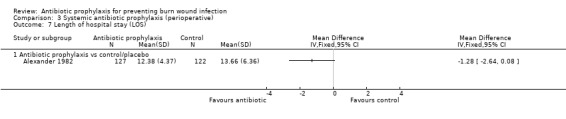
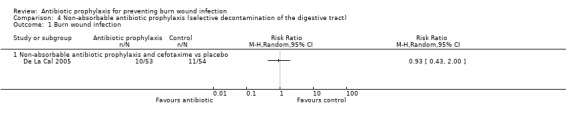
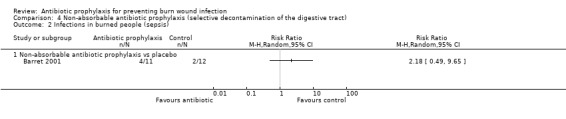
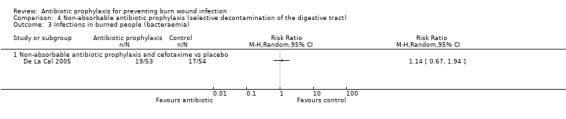
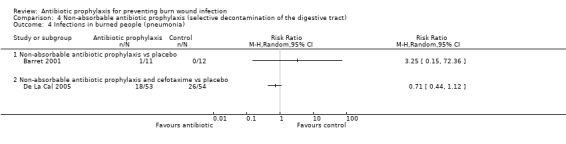
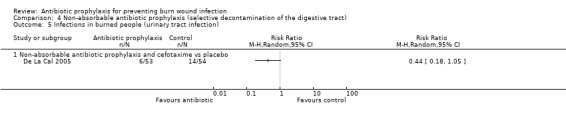
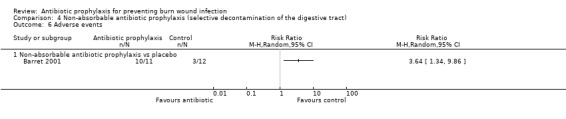
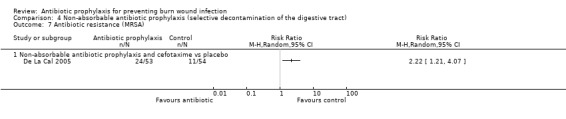
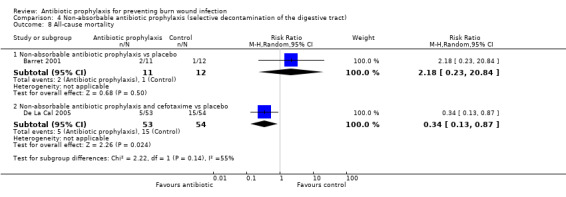
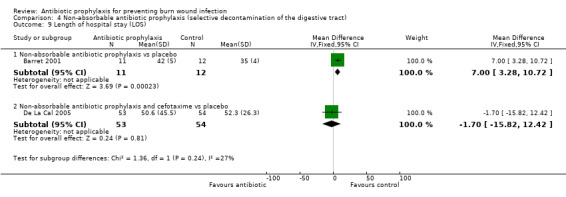
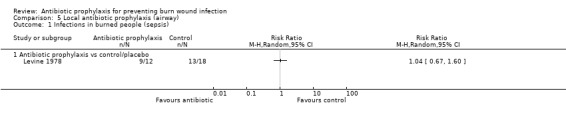
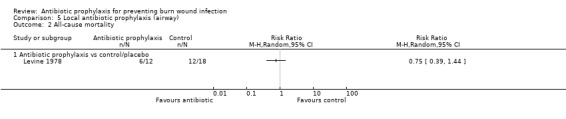
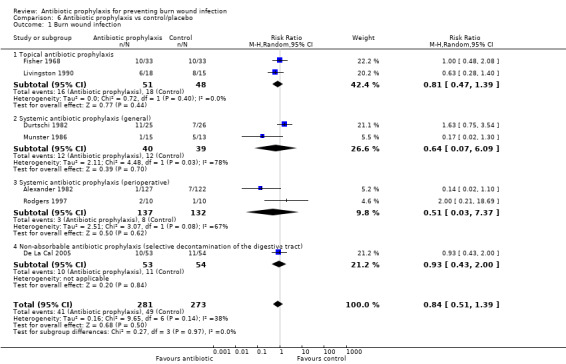
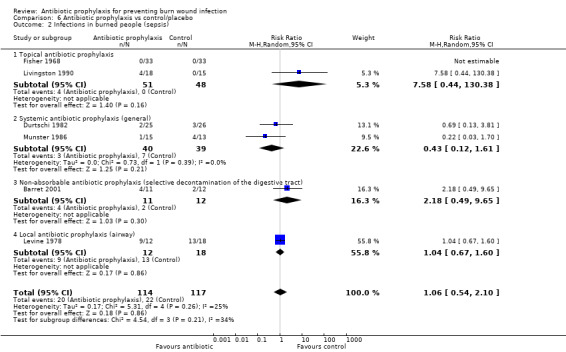
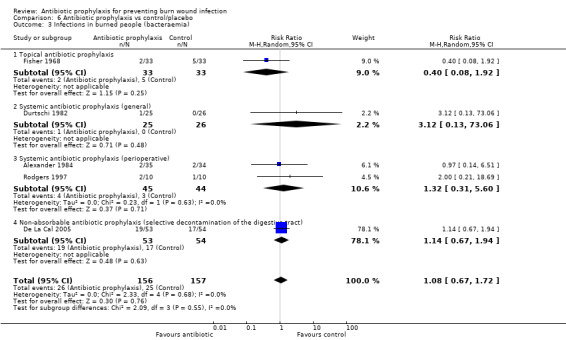
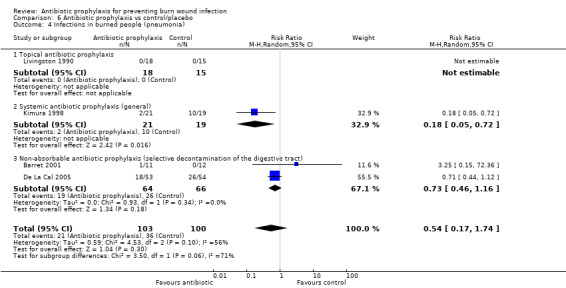
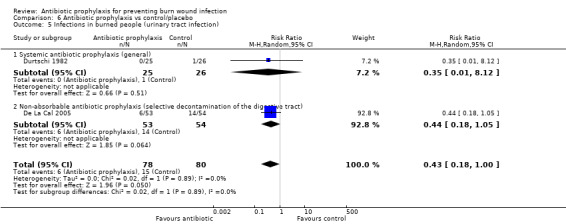
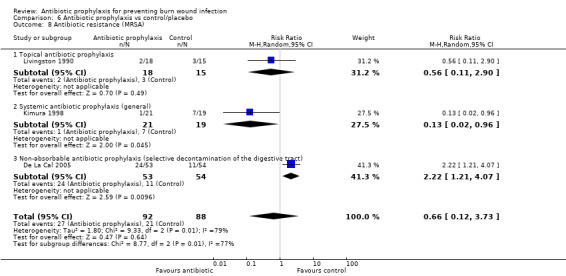
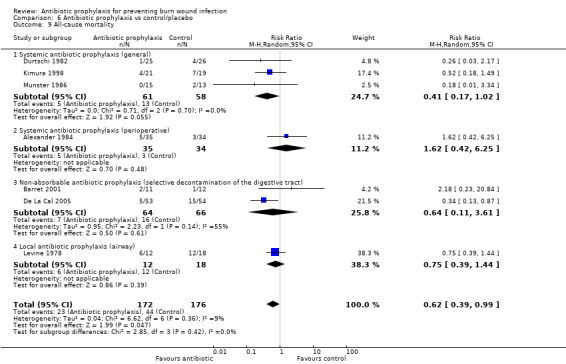
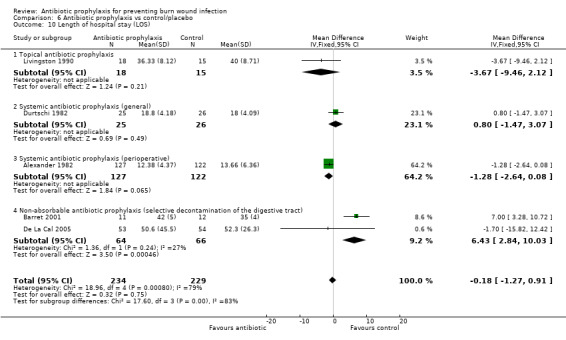
Main results: This review includes 36 RCTs (2117 participants); twenty six (72%) evaluated topical antibiotics, seven evaluated systemic antibiotics (four of these administered the antibiotic perioperatively and three administered upon hospital admission or during routine treatment), two evaluated prophylaxis with non absorbable antibiotics, and one evaluated local antibiotics administered via the airway.The 11 trials (645 participants) that evaluated topical prophylaxis with silver sulfadiazine were pooled in a meta analysis. There was a statistically significant increase in burn wound infection associated with silver sulfadiazine compared with dressings/skin substitute (OR = 1.87; 95% CI: 1.09 to 3.19, I(2) = 0%). These trials were at high, or unclear, risk of bias. Silver sulfadiazine was also associated with significantly longer length of hospital stay compared with dressings/skin substitute (MD = 2.11 days; 95% CI: 1.93 to 2.28).Systemic antibiotic prophylaxis in non-surgical patients was evaluated in three trials (119 participants) and there was no evidence of an effect on rates of burn wound infection. Systemic antibiotics (trimethoprim-sulfamethoxazole) were associated with a significant reduction in pneumonia (only one trial, 40 participants) (RR = 0.18; 95% CI: 0.05 to 0.72) but not sepsis (two trials 59 participants) (RR = 0.43; 95% CI: 0.12 to 1.61).Perioperative systemic antibiotic prophylaxis had no effect on any of the outcomes of this review.Selective decontamination of the digestive tract with non-absorbable antibiotics had no significant effect on rates of all types of infection (2 trials, 140 participants). Moreover, there was a statistically significant increase in rates of MRSA associated with use of non-absorbable antibiotics plus cefotaxime compared with placebo (RR = 2.22; 95% CI: 1.21 to 4.07).There was no evidence of a difference in mortality or rates of sepsis with local airway antibiotic prophylaxis compared with placebo (only one trial, 30 participants).
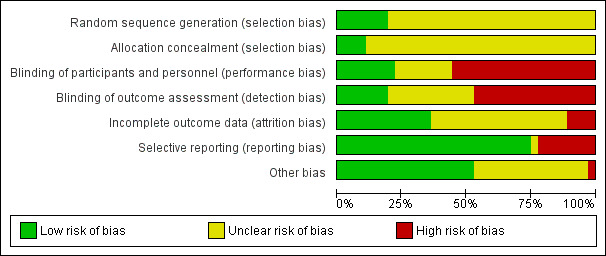
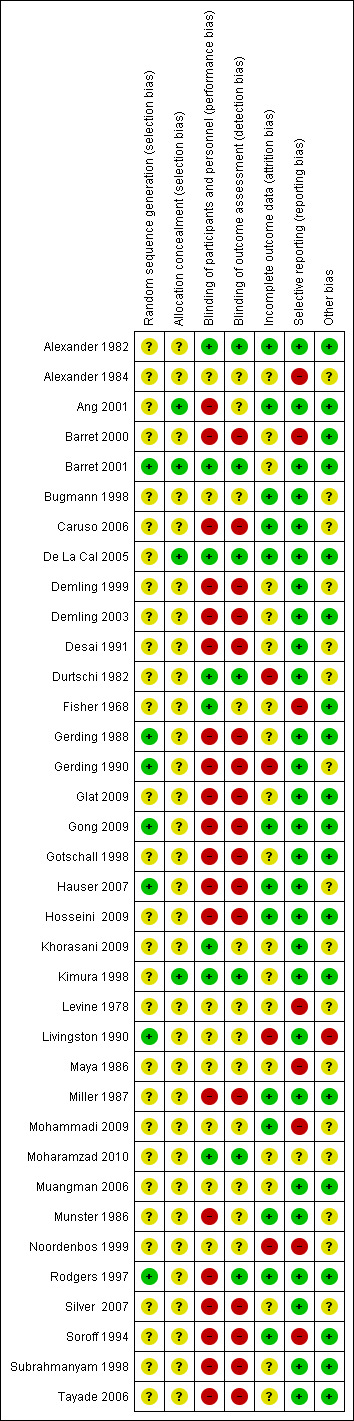
Authors' conclusions: The conclusions we are able to draw regarding the effects of prophylactic antibiotics in people with burns are limited by the volume and quality of the existing research (largely small numbers of small studies at unclear or high risk of bias for each comparison). The largest volume of evidence suggests that topical silver sulfadiazine is associated with a significant increase in rates of burn wound infection and increased length of hospital stay compared with dressings or skin substitutes; this evidence is at unclear or high risk of bias. Currently the effects of other forms of antibiotic prophylaxis on burn wound infection are unclear. One small study reported a reduction in incidence of pneumonia associated with a specific systematic antibiotic regimen.
Conflict of interest statement
Leticia Andrea Barajas Nava: None known. Jesús López Alcalde: None known. Ivan Solà Arnau: None known. Marta Roqué: None known. Xavier Bonfill Cosp: None known.
Figures
Update of
References
References to studies included in this review
Alexander 1982 {published data only}
-
- Alexander JW, MacMillan BG, Law EJ, Krummel R. Prophylactic antibiotics as an adjunct for skin grafting in clean reconstructive surgery following burn injury. Journal of Trauma 1982;22(8):687‐90. - PubMed
Alexander 1984 {published data only}
-
- Alexander JW, MacMillan BG, Law EJ, Kern R. Lack of beneficial effects of restricted prophylactic antibiotics for debridement and/or grafting of seriously burned patients. Bulletin and Clinical Review of Burn Injuries 1984;1:20.
Ang 2001 {published data only}
-
- Ang ES, Lee ST, Gan CS, See P, Chan YH, Ng LH, et al. The role of alternative therapy in the management of partial thickness burns of the face ‐ experience with the use of moist exposed burn ointment (MEBO)compared with silver sulphadiazine. Annals of the Academy of Medicine 2002;29(1):7‐10. - PubMed
-
- Ang ES, Lee ST, Gan CS, See PG, Chan YH, Ng LH, et al. Evaluating the role of alternative therapy in burn wound management: randomized trial comparing moist exposed burn ointment with conventional methods in the management of patients with second‐degree burns. Medscape General Medicine 2001;3(12):3‐18. - PubMed
Barret 2000 {published data only}
-
- Barret JP, Dziewulski P, Ramzy PI, Wolf SE, Desai MH, Herndon DN. Biobrane versus 1% silver sulfadiazine in second‐degree pediatric burns. Plastic and Reconstructive Surgery 2000;105(1):62‐5. - PubMed
Barret 2001 {published data only}
-
- Barret JP, Jeschke MG, Herndon DN. Selective decontamination of the digestive tract in severely burned pediatric patients. Burns 2001;27(5):439‐45. - PubMed
Bugmann 1998 {published data only}
-
- Bugmann P, Taylor S, Gyger D, Lironi A, Genin B, Vunda A, et al. A silicone‐coated nylon dressing reduces healing time in burned paediatric patients in comparison with standard sulfadiazine treatment: a prospective randomized trial. Burns 1998;24(7):609‐12. - PubMed
Caruso 2006 {published data only}
-
- Caruso DM, Foster KN, Blome‐Eberwein SA, Twomey JA, Herndon DN, Luterman A, et al. Randomized clinical study of Hydrofiber dressing with silver or silver sulfadiazine in the management of partial‐thickness burns. Journal of Burn Care and Research 2006;27(3):298‐309. - PubMed
De La Cal 2005 {published data only}
Demling 1999 {published data only}
-
- Demling RH, DeSanti L. Management of partial thickness facial burns (comparison of topical antibiotics and bio‐engineered skin substitutes). Burns 1999;25(3):256‐61. - PubMed
Demling 2003 {published data only}
-
- Demling RH, DeSanti L. The potential benefits of a temporary bioactive skin substitute to treat partial‐thickness burns of the feet. Wounds: A Compendium of Clinical Research and Practice 2003;15(1):10‐5.
Desai 1991 {published data only}
-
- Desai MH, Rutan RL, Heggers JP, Alvarado MI, McElroy K, Henrdon DN. The role of gentamicin iontophoresis in the treatment of burned ears. Journal of Burn Care and Rehabilitation 1991;12(6):521‐4. - PubMed
Durtschi 1982 {published data only}
-
- Durtschi MB, Orgain C, Counts GW, Heimbach DM. A prospective study of prophylactic penicillin in acutely burned hospitalized patients. Journal of Trauma 1982;22(1):11‐4. - PubMed
Fisher 1968 {published data only}
-
- Fisher AJ, Morrison G, Riet Rle S. A blind trial of two aerosol sprays in the exposure treatment of burns. South African Medical Journal 1968;42(34):903‐5. - PubMed
Gerding 1988 {published data only}
-
- Gerding RL, Imbembo AL, Fratianne RB. Biosynthetic skin substitute vs 1% silver sulfadiazine for treatment of inpatient partial‐thickness thermal burns. Journal of Trauma 1988;28(8):1265‐9. - PubMed
Gerding 1990 {published data only}
-
- Gerding RL, Emerman CL, Effron D, Lukens T, Imbembo AL, Fratianne RB. Outpatient management of partial‐thickness burns: Biobrane versus 1% silver sulfadiazine. Annals of Emergency Medicine 1990;19(2):121‐4. - PubMed
Glat 2009 {published data only}
-
- Glat PM, Kubat WD, Hsu JF, Copty T, Burkey BA, Davis W, et al. Randomized clinical study of SilvaSorb gel in comparison to Silvadene silver sulfadiazine cream in the management of partial‐thickness burns. Journal of Burn Care and Research 2009;30(2):262‐67. - PubMed
Gong 2009 {published data only}
-
- Gong Z‐H, Yao J, Ji J‐F, Yang J, Xiang T. Effect of ionic silver dressing combined with hydrogel on degree II burn wound healing [in Chinese]. Journal of Clinical Rehabilitative Tissue Engineering Research 2009;13(42):8373‐6.
Gotschall 1998 {published data only}
-
- Gotschall CS, Morrison MIS, Eichelberger MR. Prospective randomized study of the efficacy of Mepitel on children with partial‐thickness scalds. Journal of Burn Care and Rehabilitation 1998;19(4):279‐83. - PubMed
Hauser 2007 {published data only}
-
- Hauser J, Rossbach O, Langer S, Vogt P, Germann G, Steinau HU, et al. Local therapy of grade IIa burns: Efficacy and tolerability of a new hydrosome wound gel for the local treatment of grade IIa burns as compared with silver sulfadiazine ointment [Lokale Behandlung von Grad‐IIa‐Verbrennungen. Wirksamkeit und Verträglichkeit eines neuartigen hydrosomalen Wundgels im Vergleich zu Silbersulfadiazin‐Creme]. Unfallchirurg 2007;110(11):988‐94. - PubMed
Hosseini 2009 {published data only}
-
- Hosseini SN, Karimian A, Mousavinasab SN, Rahmanpour H, Yamini M, Zahmatkesh SH. Xenoderm versus 1% silver sulfadiazine in partial‐thickness burns. Asian Journal of Surgery 2009;32(4):234‐9. - PubMed
Khorasani 2009 {published data only}
-
- Khorasani G, Hosseinimehr SJ, Azadbakht M, Zamani A, Mahdavi MR. Aloe versus silver sulfadiazine creams for second‐degree burns: A randomized controlled study. Surgery Today 2009;39(7):587‐91. - PubMed
Kimura 1998 {published data only}
-
- Kimura A, Mochizuki T, Nishizawa K, Mashiko K, Yamamoto Y, Otsuka T. Trimethoprim‐sulfamethoxazole for the prevention of methicillin‐resistant Staphylococcus aureus pneumonia in severely burned patients. Journal of Trauma 1998;45(2):383‐7. - PubMed
Levine 1978 {published data only}
-
- Levine BA, Petroff PA, Slade CL, Pruitt BA Jr. Prospective trials of dexamethasone and aerosolized gentamicin in the treatment of inhalation injury in the burned patient. Journal of Trauma 1978;18(3):188‐93. - PubMed
Livingston 1990 {published data only}
-
- Livingston DH, Cryer HG, Miller FB, Malangoni MA, Polk HC Jr, Weiner LJ. A randomized prospective study of topical antimicrobial agents on skin grafts after thermal injury. Plastic and Reconstructive Surgery 1990;86(6):1059‐64; discussion 1065. - PubMed
Maya 1986 {published data only}
-
- Maya BJ, Covarrubias BA, Romero PA, Licona VL, Claesson BE, Filipsson S, et al. Spray rifamycin and amniotic membranes in second degree burns [Rifamicina spray y membranas amnióticas en quemaduras de segundo grado]. Compendium de Investigaciones Clinicas Latinoamericanas 1986;6(2):73‐80.
Miller 1987 {published data only}
-
- Miller LM, Carboll WB, Hansbrough JF. The effect of antimicrobial prophylaxis for burn wound excision: Ceforanide versus cefazolin. Current Therapeutic Research, Clinical and Experimental 1987;41(6):946‐51.
Mohammadi 2009 {published data only}
-
- Mohammadi AA, Riazi H, Hasheminasab MJ, Sabet B, Mohammadi MK, Abbasi S, et al. Amniotic membrane dressing vs conventional topical antibiotic dressing in hospitalized burn patients. Iranian Red Crescent Medical Journal 2009;11(1):66‐70.
Moharamzad 2010 {published data only}
-
- Moharamzad Y, Panahi Y, Beiraghdar F, Feizi I. Focused Conference Group: P16 ‐ Natural products: Past and future? Clinical efficacy of a topical herbal cream (Aloe vera, Geranium robertianum and Lavandula stoechas) in second‐degree burn wounds. Basic and Clinical Pharmacology and Toxicology 2010;107(Suppl. 1):162–69.
Muangman 2006 {published data only}
-
- Muangman P, Chuntrasakul C, Silthram S, Suvanchote S, Benjathanung R, Kittidacha S, et al. Comparison of efficacy of 1% silver sulfadiazine and Acticoat for treatment of partial‐thickness burn wounds. Journal of The Medical Association of Thailand 2006;89(7):953‐8. - PubMed
Munster 1986 {published data only}
-
- Munster AM, Winchurch RA, Thupari JN, Ernst CB. Reversal of postburn immunosuppression with low‐dose polymyxin B. Journal of Trauma 1986;26(11):995‐8. - PubMed
Noordenbos 1999 {published data only}
-
- Noordenbos J, Dore C, Hansbrough JF. Safety and efficacy of TransCyte for the treatment of partial‐thickness burns. Journal of Burn Care and Rehabilitation 1999;20(4):275‐81. - PubMed
Rodgers 1997 {published data only}
-
- Rodgers GL, Fisher MC, Lo A, Cresswell A, Long SS. Study of antibiotic prophylaxis during burn wound debridement in children. Journal of Burn Care and Rehabilitation 1997;18(4):342‐6. - PubMed
Silver 2007 {published data only}
-
- Silver GM, Robertson SW, Halerz MM, Conrad P, Supple KG, Gamelli RL. A silver‐coated antimicrobial barrier dressing used postoperatively on meshed autografts: a dressing comparison study. Journal of Burn Care and Research 2007;28(5):715‐9. - PubMed
Soroff 1994 {published data only}
-
- Soroff HS, Sasvary DH. Collagenase ointment and polymyxin B sulfate/bacitracin spray versus silver sulfadiazine cream in partial‐thickness burns: a pilot study. Journal of Burn Care and Rehabilitation 1994;15(1):13‐7. - PubMed
Subrahmanyam 1998 {published data only}
-
- Subrahmanyam M. A prospective randomised clinical and histological study of superficial burn wound healing with honey and silver sulfadiazine. Burns 1998;24(2):157‐61. - PubMed
Tayade 2006 {published data only}
-
- Tayade MB, Bakhshi GD, Haobijam N. A comparative study of collagen sheet cover versus 1% silver sulphadiazine in partial thickness burns. Bombay Hospital Journal 2006;48(2):http://www.bhj.org/journal/2006_4802_april/html/org_res_263‐267.html.
References to studies excluded from this review
Abdel‐Razek 2000 {published data only}
-
- Abdel‐Razek SM, Abdel‐Khalek AH, Allam AM, Shalaby H, Mandoor S, Higazi M. Impact of selective gastrointestinal decontamination on mortality and morbidity in severely burned patients. Annals of Burns and Fire Disasters 2000;XIII(4):1‐5.
Afilalo 1992 {published data only}
-
- Afilalo M, Dankoff J, Guttman A, Lloyd J. DuoDERM hydroactive dressing versus silver sulphadiazine/Bactigras in the emergency treatment of partial skin thickness burns. Burns 1992;18(4):313‐6. - PubMed
Ahuja 2009 {published data only}
-
- Ahuja RB, Gupta A, Gur R. A prospective double‐blinded comparative analysis of framycetin and silver sulphadiazine as topical agents for burns: A pilot study. Burns 2009;35(5):672‐6. - PubMed
Baghel 2009 {published data only}
Branski 2008 {published data only}
-
- Branski LK, Herndon DN, Celis MM, Norbury WB, Masters OE, Jeschke MG. Amnion in the treatment of pediatric partial‐thickness facial burns. Burns 2008;34(3):393‐9. - PubMed
Carneiro 2002 {published data only}
-
- Carneiro PM, Rwanyuma LR, Mkony CA. A comparison of topical Phenytoin with Silverex in the treatment of superficial dermal burn wounds. Central African Journal of Medicine 2002;48(9‐10):105‐8. - PubMed
Cason 1966 {published data only}
De Gracia 2001 {published data only}
-
- Gracia CG. An open study comparing topical silver sulfadiazine and topical silver sulfadiazine‐cerium nitrate in the treatment of moderate and severe burns. Burns 2001;27(1):67‐74. - PubMed
Deutsch 1990 {published data only}
-
- Deutsch DH, Miller SF, Finley RK. The use of intestinal antibiotics to delay or prevent infections in patients with burns. Journal of Burn Care and Rehabilitation 1990;11(5):436‐42. - PubMed
Donati 1994 {published data only}
-
- Donati L, Periti P. Antibiotic treatment of burned patients: an Italian multicentre study. Intensive Care Medicine 1994;20(Suppl 4):S30‐4. - PubMed
Fang 1987 {published data only}
-
- Fang CH, Nathan P, Robb EC, Alexander JW, MacMillan BG. Prospective clinical study of Hydron, a synthetic dressing, in delivery of an antimicrobial drug to second‐degree burns. Journal of Burn Care and Rehabilitation 1987;8(3):206‐9. - PubMed
Grippaudo 2010 {published data only}
-
- Grippaudo FR, Carini L, Baldini R. Procutase versus 1% silver sulphadiazine in the treatment of minor burns. Burns 2010;36(6):871‐5. - PubMed
Huang 2006 {published data only}
-
- Huang YS, Li XL, Liao ZJ, Zhang GA, Liu Q, Tang J, et al. Multi‐center clinical study of acticoat (nanocrystalline silver dressing) for the management of residual burn wounds: Summary report. Zhonghua Shao Shang Za Zhi 2006;22(1):15‐8. - PubMed
Huang 2007 {published data only}
-
- Huang Y, Li X, Liao Z, Zhang G, Liu Q, Tang J, et al. A randomized comparative trial between Acticoat and SD‐Ag in the treatment of residual burn wounds, including safety analysis. Burns 2007;33(2):161‐6. - PubMed
Hunter 1976 {published data only}
-
- Hunter GR, Chang FC. Outpatient burns: a prospective study. Journal of Trauma 1976;16(3):191‐5. - PubMed
Inman 1984 {published data only}
-
- Inman RJ, Snelling CF, Roberts FJ, Shaw K, Boyle JC. Prospective comparison of silver sulfadiazine 1 per cent plus chlorhexidine digluconate 0.2 per cent (Silvazine) and silver sulfadiazine 1 per cent (Flamazine) as prophylaxis against burn wound infection. Burns, Including Thermal Injury 1984;11(1):35‐40. - PubMed
Li XL 2006 {published data only}
-
- Li XL, Huang YS, Peng YZ, Liao ZJ, Zhang GA, Liu Q, et al. Multi‐center clinical study of acticoat (nanocrystalline silver dressing) for the management of residual burn wounds. Zhonghua Shao Shang Za Zhi 2006;22(1):15‐8. - PubMed
Lowbury 1968 {published data only}
-
- Lowbury EJ, Jackson DM. Local chemoprophylaxis for burns with gentamicin and other agents. Lancet 1968;1(7544):654‐7. - PubMed
Malik 2010 {published data only}
Manuskiatti 1999 {published data only}
-
- Manuskiatti W, Fitzpatrick RE, Goldman MP, Krejci‐Papa N. Prophylactic antibiotics in patients undergoing laser resurfacing of the skin. Journal of the American Academy of Dermatology 1999;40(1):77‐84. - PubMed
Mashhood 2006 {published data only}
-
- Mashhood AA, Khan TA, Sami AN. Honey compared with 1% silver sulfadiazine cream in the treatment of superficial and partial thickness burns. Journal of Pakistan Association of Dermatologists 2006;16(1):14‐9.
Miller 1990 {published data only}
-
- Miller L, Hansbrough J, Slater H, Goldfarb IW, Kealey P, Saffle J, et al. Sildimac: a new delivery system for silver sulfadiazine in the treatment of full‐thickness burn injuries. Journal of Burn Care and Rehabilitation 1990;11(1):35‐41. - PubMed
Munster 1989 {published data only}
-
- Munster AM, Xiao GX, Guo Y, Wong LA, Winchurch RA. Control of endotoxemia in burn patients by use of polymyxin B. Journal of Burn Care and Rehabilitation 1989;10(4):327‐30. - PubMed
Oen 2012 {published data only}
-
- Oen IM, van Baar ME, Middelkoop E, Nieuwenhuis MK. Facial Burns Group. Effectiveness of cerium nitrate‐silver sulfadiazine in the treatment of facial burns: a multicenter, randomized,controlled trial. Plastic and Reconstructive Surgery 2012;130(2):274e‐283e. - PubMed
Ostlie 2012 {published data only}
-
- Ostlie DJ, Juang D, Aguayo P, Pettiford‐Cunningham JP, Erkmann EA, Rash DE, et al. Topical silver sulfadiazine vs collagenase ointment for the treatment of partial thickness burns in children: a prospective randomized trial. Journal of Pediatric Surgery 2012;47(6):1204‐7. - PubMed
Piel 1985 {published data only}
-
- Piel P, Scarnati S, Goldfarb IW, Slater H. Antibiotic prophylaxis in patients undergoing burn wound excision. Journal of Burn Care and Rehabilitation 1985;6(5):422‐4. - PubMed
Proctor 1971 {published data only}
-
- Proctor DS. The treatment of burns: a comparative trial of antibiotic dressings. South African Medical Journal 1971;45(2):231‐6. - PubMed
Ramos 2008 {published data only}
-
- Ramos G, Resta M, Machare Delgado E, Durlach R, Fernandez Canigia L, Benaim F. Systemic perioperative antibiotic prophylaxis may improve skin autograft survival in patients with acute burns. Journal of Burn Care and Research 2008;29(6):917‐23. - PubMed
Steer 1997 {published data only}
-
- Steer JA, Papini RP, Wilson AP, McGrouther DA, Nakhla LS, Parkhouse N. Randomized placebo‐controlled trial of teicoplanin in the antibiotic prophylaxis of infection following manipulation of burn wounds. British Journal of Surgery 1997;84(6):848‐53. - PubMed
Subrahmanyam 1991 {published data only}
-
- Subrahmanyam M. Topical application of honey in treatment of burns. British Journal of Surgery 1991;78(4):497‐8. - PubMed
Ugburo 2004 {published data only}
-
- Ugburo AO, Atoyebi OA, Oyeneyin JO, Sowemimo GO. An evaluation of the role of systemic antibiotic prophylaxis in the control of burn wound infection at the Lagos University Teaching Hospital. Burns 2004;30(1):43‐8. - PubMed
Varas 2005 {published data only}
-
- Varas RP, O'Keeffe T, Namias N, Pizano LR, Quintana OD, Herrero Tellachea M, et al. A prospective, randomized trial of Acticoat versus silver sulfadiazine in the treatment of partial‐thickness burns: which method is less painful?. Journal of Burn Care and Rehabilitation 2005;26(4):344‐7. - PubMed
Waffle 1988 {published data only}
-
- Waffle C, Simon RR, Joslin C. Moisture‐vapour‐permeable film as an outpatient burn dressing. Burns, Including Thermal Injury 1988;14(1):66‐70. - PubMed
References to studies awaiting assessment
Maghsoudi 2011 {published data only}
Panahi 2012 {published data only}
-
- Panahi Y, Beiraghdar F, Akbari H, Bekhradi H, Taghizadeh M, Sahebkar A. A herbal cream consisting of Aloe vera, Lavandulastoechas, and Pelargonium roseum as an alternative for silver sulfadiazine in burn management. Asian Biomedicine 2012;6(2):273‐8.
Additional references
Alexander 2009
-
- Alexander JW. When should prophylactic antibiotics be given?. Annals of Surgery 2009;249(4):557‐8. - PubMed
Alp 2012
-
- Alp E, Coruh A, Gunay GK, Yontar Y, Doganay M. Risk factors for nosocomial infection and mortality in burn patients: 10 years of experience at a university hospital. Journal of Burn Care and Research 2012;33(3):379‐85. - PubMed
Alsbjörn 2007
-
- Alsbjörn B, Gilbert P, Hartmann B, Kaźmierski M, Monstrey S, Palao R, et al. Guidelines for the management of partial‐thickness burns in a general hospital or community setting recommendations of a European working party. Burns 2007;33(2):155‐60. - PubMed
Altoparlak 2004
-
- Altoparlak U, Erol S, Akcay MN, Celebi F, Kadanali A. The time‐related changes of antimicrobial resistance patterns and predominant bacterial profiles of burn wounds and body flora of burned patients. Burns 2004;30(7):660‐4. - PubMed
Ansermino 2004
Atoyebi 1992
-
- Atoyebi OA, Sowemimo GO, Odugbemi T. Bacterial flora of burn wounds in Lagos, Nigeria: a prospective study. Burns 1992;18(6):448‐51. - PubMed
Avni 2010
Bang 2002
-
- Bang RL, Sharma PN, Sanyal SC, Al Naijadah I. Septicaemia after burn injury: a comparative study. Burns 2002;28(8):746‐51. - PubMed
Boutron 2008
-
- Boutron I, Moher D, Altman DG, Schulz KF, Ravaud P, CONSORT Group. Extending the CONSORT statement to randomized trials of nonpharmacologic treatment: explanation and elaboration. Annals of Internal Medicine 2008;148(4):295‐309. - PubMed
Brychta 2011
-
- Brychta P, Magnette A. . European Practice Guidelines for Burn Care. The Netherlands, 2011.
Church 2006
Curtin 2002
-
- Curtin F, Elbourne D, Altman DG. Meta‐analysis combining parallel and cross‐over clinical trials. II: Binary outcomes. Statistics in Medicine 2002;21(5):2145‐59. - PubMed
De Macedo 2005
-
- Macedo JL, Santos JB. Bacterial and fungal colonization of burn wounds. Memórias do Instituto Oswaldo Cruz 2005;100(5):535‐9. - PubMed
Deeks 2011
-
- Deeks JJ, Higgins JPT, Altman DG (editors). Chapter 9: Analysing data and undertaking meta‐analyses. In: Higgins JPT, Green S (editors). Cochrane Handbook for Systematic Reviews of Interventions Version 5.1.0 [updated March 2011]. The Cochrane Collaboration, 2011. Available from www.cochrane‐handbook.org.
DeSanti 2005
-
- DeSanti L. Pathophysiology and current management of burn injury. Advances in Skin and Wound Care 2005;18(6):323‐32; quiz 332‐4. - PubMed
Edwards 2004
-
- Edwards R, Harding KG. Bacteria and wound healing. Current Opinion in Infectious Diseases 2004;17(2):91‐6. - PubMed
Ergün 2004
-
- Ergün O, Celik A, Ergun G, Ozok G. Prophylactic antibiotic use in pediatric burn units. European Journal of Pediatric Surgery 2004;14(6):422‐6. - PubMed
Erol 2004
-
- Erol S, Altoparlak U, Akcay MN, Celebi F, Parlak M. Changes of microbial flora and wound colonization in burned patients. Burns 2004;30(4):357‐61. - PubMed
Haq 1990
-
- Haq A. Pattern of burn injuries at a Kenyan provincial hospital. Burns 1990;16(3):185‐9. - PubMed
Higgins 2003
Higgins 2011a
-
- Higgins JPT, Altman DG, Sterne JAC (editors). Chapter 8: Assessing risk of bias in included studies. In: Higgins JPT, Green S (editors). Cochrane Handbook for Systematic Reviews of Interventions Version 5.1.0 [updated March 2011]. The Cochrane Collaboration, 2011. Available from www.cochrane‐handbook.org.
Higgins 2011b
-
- Higgins JPT, Deeks JJ, Altman DG (editors). Chapter 16: Special topics in statistics. In: Higgins JPT, Green S (editors). Cochrane Handbook for Systematic Reviews of Interventions Version 5.1.0 (updated March 2011). The Cochrane Collaboration, 2011. Available from www.cochrane‐handbook.org.
Hoogewerf 2013
Hospenthal 2011
-
- Hospenthal DR, Murray CK, Andersen RC, Bell RB, Calhoun JH, Cancio LC, et al. Guidelines for the prevention of infections associated with combat‐related injuries: 2011 update: endorsed by the Infectious Diseases Society of America and the Surgical Infection Society. Journal of Trauma 2011;71(Suppl 2):S210‐34. - PubMed
Hyder 2009
-
- Hyder AA, Peden M, Krug E. Child health must include injury prevention. Lancet 2009;373(9658):102‐3. - PubMed
Kumar 2006
-
- Kumar P. Prophylactic antibiotics in burns. Burns 2006;32(5):655‐6. - PubMed
Latarjet 1995
-
- Latarjet J. A simple guide to burn treatment. International Society for Burn Injuries in collaboration with the World Health Organization. Burns 1995;21(3):221‐5. - PubMed
Latenser 2007
-
- Latenser BA, Miller SF, Bessey PQ, Browning SM, Caruso DM, Gomez M, et al. National Burn Repository 2006: a ten‐year review. Journal of Burn Care and Research 2007;28(5):635‐58. - PubMed
Lee 2009
-
- Lee F, Wong P, Hill F, Burgner D, Taylor R. Evidence behind the WHO guidelines: Hospital care for children: What is the role of prophylactic antibiotics in the management of burns?. Journal of Tropical Pediatrics 2009;55(2):73‐7. - PubMed
Lefebvre 2011
-
- Lefebvre C, Manheimer E, Glanville J. Chapter 6: Searching for studies. In: Higgins JPT, Green S (editors). Cochrane Handbook for Systematic Reviews of Interventions Version 5.1.0 (updated March 2011). The Cochrane Collaboration, 2011. Available from www.cochrane‐handbook.org.
Louis 1984
-
- Louis TA, Lavori PW, Bailar JC, Polansky M. Crossover and self‐controlled designs in clinical research. New England Journal of Medicine 1984;310:24‐31. - PubMed
Mathers 2003
-
- Mathers CD, Bernard C, Iburg KM, Inoue M, Ma Fat D, Shibuya K, et al. Global burden of disease in 2002: data sources, methods and results. World Health Organization. Geneva, 2003.
Mayhall 2003
-
- Mayahall CG. The epidemiology of burn wound infections: then and now. Clinical Infectious Diseases 2003;37(4):543‐50. - PubMed
Merriam‐Webster 2012
-
- Merriam‐Webster's Collegiate® Dictionary, Eleventh Edition. Available from www.merriam‐webster.com/ (accessed 2 May 2012).
Miles 2005
Mills 2009
Miniño 2006
-
- Miniño AM, Anderson RN, Fingerhut LA, Boudreault MA, Warner M. Deaths: injuries, 2002. National Vital Statistics Reports 2006;54(10):1‐124. - PubMed
Mock 2008
-
- Mock C, Peck M, Peden M, Krug E, Ahuja R, Albertyn H, et al. A WHO plan for burn prevention and care. World Health Organization. Geneva, 2008.
Moher 2001
-
- Moher D, Schulz KF, Altman D, CONSORT Group (Consolidated Standards of Reporting Trials). The CONSORT statement: revised recommendations for improving the quality of reports of parallel‐group randomized trials. JAMA 2001;285(15):1987‐91. - PubMed
Munster 1984
-
- Munster AM. Immunologic response of trauma and burns. An overview. American Journal of Medicine 1984;76(3A):142‐5. - PubMed
Murphy 2003
-
- Murphy KD, Lee JO, Herndon DN. Current pharmacotherapy for the treatment of severe burns. Expert Opinion on Pharmacotherapy 2003;4(3):369‐84. - PubMed
Murray 2008
-
- Murray C, Hospenthal DR. Burn Wound Infections. eMedicine Infectious Diseases (http://emedicine.medscape.com/article/213595‐overview) 2008.
NSW Severe Burn Injury Service 2008
-
- NSW Severe Burn Injury Service (SBIS). Clinical Practice Guidelines Burn Wound Management. New South Wales, 2008.
NZGG 2007
-
- New Zealand Guidelines Group (NZGG). Management of burns and scalds in primary care. Wellington, NZ., 2007.
Onuba 1987
-
- Onuba O, Udoidiok E. Hospital management of massive burns in the developing countries. Burns, Including Thermal Injury 1987;13(5):386‐90. - PubMed
Peden 2002
-
- Peden M, McGee K, Sharma G. The injury chart book: a graphical overview of the global burden of injuries. World Health Organization, 2002.
Peden 2008
-
- Peden M, Oyegbite K, Ozanne‐Smith J, Hyder AA, Branche C, Fazlur Rahman AKM, et al. World report on child injury prevention. World Health Organization. Geneva, 2008. - PubMed
Polavarapu 2008
-
- Polavarapu N, Ogilvie MP, Panthaki ZJ. Microbiology of burn wound infections. Journal of Craniofacial Surgery 2008;19(4):899‐902. - PubMed
Pruitt 1998
-
- Pruitt BA Jr, McManus AT, Kim SH, Goodwin CW. Burn wound infections: current status. World Journal of Surgery 1998;22(2):135‐45. - PubMed
RevMan 2011 [Computer program]
-
- The Nordic Cochrane Centre, The Cochrane Collaboration. Review Manager (RevMan) Version 5.1.. Copenhagen, Denmark: The Nordic Cochrane Centre, The Cochrane Collaboration, 22 March 2011.
Rosanova 2012
-
- Rosanova MT, Stamboulian D, Lede R. Systematic review: which topical agent is more efficacious in the prevention of infections in burn patients? [Revisión sistemática: ¿Cuál es el agente tópicomás eficaz en la prevención de infeccionesen el paciente quemado?]. Archivos Argentinos de Pediatría 2012;110(4):298‐303. - PubMed
Schulz 2010
-
- Schulz KF, Altman DG, Moher D, CONSORT Group. CONSORT 2010 statement: updated guidelines for reporting parallel group randomized trials. Annals of Internal Medicine 2010;152(11):726‐32. - PubMed
SEMPSPH 2008
-
- Sociedad Española de Medicina Preventiva, Salud Pública e Higiene (SEMPSPH). Estudio de prevalencia de las infecciones nosocomiales en España EPINE 1990‐2007: 18 años. Madrid, 2012:59 p.
Sharma 2007
-
- Sharma BR. Infection in patients with severe burns: causes and prevention thereof. Infectious Disease Clinics of North America 2007;21(3):745‐59, ix. - PubMed
Sheridan 2005
-
- Sheridan RL. Sepsis in pediatric burn patients. Pediatric Critical Care Medicine 2005;6(3 Suppl):S112‐9. - PubMed
SIGN 2011
-
- Scottish Intercollegiate Guidelines Network (SIGN). Search filters. http://www.sign.ac.uk/methodology/filters.html#random (accessed 8 June 2011).
Singer 2002
-
- Singer AJ, McClain SA. Persistent wound infection delays epidermal maturation and increases scarring in thermal burns. Wound Repair and Regeneration 2002;10(6):372‐7. - PubMed
Soares 2006
-
- Soares de Macedo JL, Santos JB. Nosocomial infections in a Brazilian burn unit. Burns 2006;32(4):477‐81. - PubMed
Sterne 2011
-
- Sterne JAC, Egger M, Moher D (editors). Chapter 10: Addressing reporting biases. In: Higgins JPT, Green S (editors). Cochrane Handbook for Systematic Reviews of Intervention. Version 5.1.0 (updated March 2011). The Cochrane Collaboration, 2011. Available from www.cochrane‐handbook.org..
Still 2002
-
- Still J, Law E, Friedman B, Newton T, Wilson J. Clostridium difficile diarrhea on a burn unit. Burns 2002;28(4):398‐9. - PubMed
Wasiak 2008
Weber 2002
-
- Weber JM, Sheridan RL, Schulz JT, Tompkins RG, Ryan CM. Effectiveness of bacteria controlled nursing units in preventing cross‐colonization with resistant bacteria in severely burned children. Infection Control and Hospital Epidemiology 2002;23(9):549‐51. - PubMed
Weber 2004
-
- Weber J, McManus A. Infection control in burn patients. Burns 2004;30(8):A16‐24. - PubMed
WHO 2006
-
- Facts about injuries: burns. World Health Organization and International Society for Burns Injuries. Geneva, 2006.
WLDI 2008
-
- Work Loss Data Institute (WLDI). Burns. Corpus Christi, Texas, 2008.
Wurtz 1995
-
- Wurtz R, Karajovic M, Dacumos E, Jovanovic B, Hanumadass M. Nososcomial Infections in a burns intensive care unit. Burns 1995;21(3):181‐4. - PubMed
Publication types
MeSH terms
Substances
Grants and funding
LinkOut - more resources
Full Text Sources
Other Literature Sources
Medical
