Protective effect on normal brain tissue during a combinational therapy of 2-deoxy-d-glucose and hypofractionated irradiation in malignant gliomas
- PMID: 23741257
- PMCID: PMC3667464
- DOI: 10.4103/1793-5482.110274
Protective effect on normal brain tissue during a combinational therapy of 2-deoxy-d-glucose and hypofractionated irradiation in malignant gliomas
Abstract
Purpose: To investigate the effect of 2-deoxy-D-glucose (2-DG), an inhibitor of glucose transport and glycolysis, on glioblastoma and the normal brain tissue during combined treatment with hypofractionated radiotherapy.
Materials and methods: Twenty patients with malignant gliomas (18 Glioblastoma Multiformae, 2 Anasplastic Astrocytoma grade III) following surgery were treated weekly (once) with 2-DG, (250 mg/kg body weight), followed by 5 Gy of radiation to the tumor bed per fraction for 7 weeks. Clinical evaluation, complete hemogram, and random blood sugar levels were carried out in each cycle. Follow-up computed tomography (CT)/magnetic resonance imaging (MRI) was done to evaluate radiation-induced changes. Kernofsky Performance scale (KPS) was recorded preoperatively; postoperatively, and post-therapy till the last follow-up.
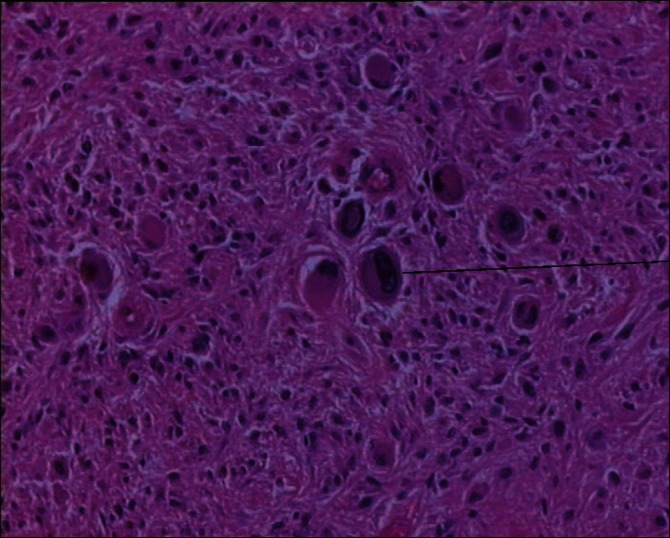
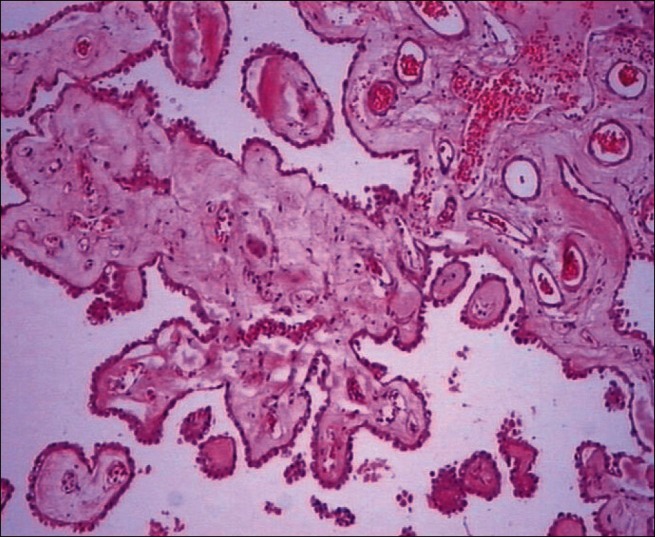
Results: Twenty patients were recruited for this trail; 19 of them completed the treatment and 1 discontinued. The survival period ranged between 6 and 36 months after the treatment, with a median survival of 14 months. CT and MRI revealed significant tumor necrosis. Histological evidence from the tissue during reexploration confirms the hypothesis of protective effect of 2-DG on normal brain. KPS was above 80% in majority of the patients, 6 months after the surgery.
Conclusion: Radiotherapy coupled with 2-DG enhances tumor necrosis selectively and significantly while the normal brain gets relatively protected. This has been reflected in our study both clinically by preservation of quality-of-life and pathologically by retaining the integrity of normal brain architecture.
Keywords: 2-deoxy-D-glucose; malignant gliomas; neural protection; quality-of-life; radionecrosis; radiotherapy.
Conflict of interest statement
Figures



References
-
- Alexander E., III Glioblastoma revisited. Do clinical observation match basic science theory. J Neurooncol. 1993;17:169–73. - PubMed
-
- Jain VK, Kalia VK, Gopinath PM, Narqui S, Kucheria K. Optimization of cancer therapy: Part Ш-Effects of combining 2 Deoxy-D-Glucose treatment with Gama radiation in normal mice. Indian J Exp Biol. 1979;17:1320–5. - PubMed
-
- Suit HD, Baumann M, Shates S, Convery K. clinical interest in determination of cellular radiation sensitivity. Int J Radiat Biol. 1989;56:725–37. - PubMed
-
- Yang S, Darlilng JL, Mc Millian TJ, Peacock JH, Steel G. Radio sensitivity, recovery and dose rate effect in three glioma cell lines. Radiother Oncol. 1990;19:49–56. - PubMed
-
- Kaplan RS. Supratentorial malignant gliomas: Risk patterns and therapy. J Natl Cancer Inst. 1993;85:690–1. - PubMed
LinkOut - more resources
Full Text Sources
Other Literature Sources