Case Reports
. 2013 Jun 6:6:222.
doi: 10.1186/1756-0500-6-222.

Early aggressive macrovascular disease and type 1 diabetes mellitus without chronic complications: a case report

Case Reports

Early aggressive macrovascular disease and type 1 diabetes mellitus without chronic complications: a case report

Alessandra Saldanha de Mattos Matheus et al. BMC Res Notes. .

Abstract

Background: Type 1 diabetes (T1DM) is considered to be one of the most significant risk factors for the development of coronary artery disease (CAD). However, the specific risk predictor models for T1DM are subject to many limitations.

Case presentation: We report the case of a 42-year-old Caucasian woman presenting with T1DM for 26 years. During her chronic hyperglycemic evolution (mean of HbA1c > 3 percentage points above the superior limit) without microvascular complications, this patient presented with early and aggressive coronary artery disease, despite the lack of classical risk factors for CAD CONCLUSIONS: The rapidly progressive macrovascular disease observed in this case demonstrates the different degrees of aggressiveness and unpredictable clinical evolution observed in some cases. It also confirms the need for a multi-factorial, early and optimized clinical management regime.


Figures
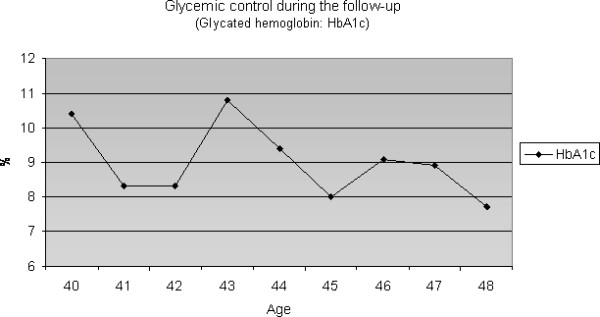
Figure 1
Figure 1
Glycemic control during the follow up.
Figure 2
Figure 2
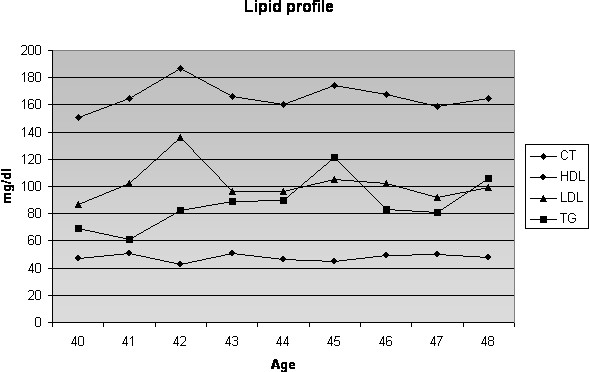
Lipid profile. Note that prior to coronary event at 42 years-old, she had a normal lipid profile.
Figure 3
Figure 3
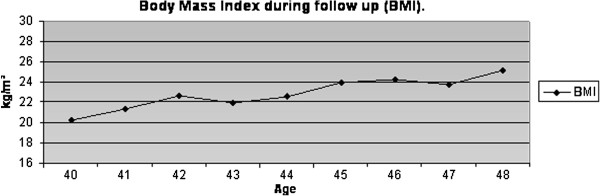
BMI during follow up.
Figure 4
Figure 4
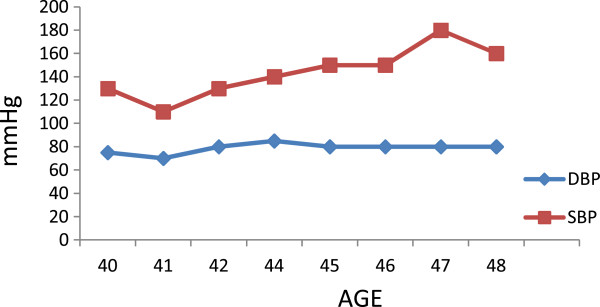
Blood pressure levels during follow up.
Figure 5
Figure 5
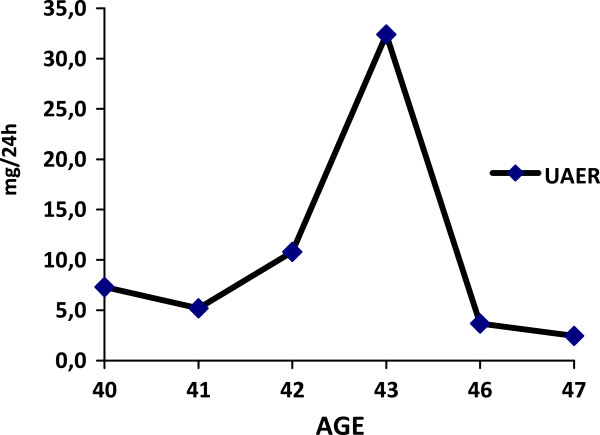
UAER levels during follow up.
Figure 6
Figure 6
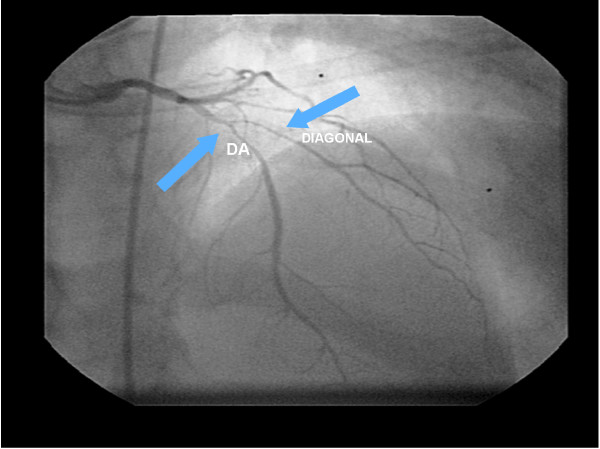
The cineangiocornariography of the first acute myocardial infarction. The left coronary artery disclosed extended stenosis of 90% at the Anterior Descending Artery (DA) after the first diagonal branch, and of 80% at the proximal segment of the diagonal artery.
Figure 7
Figure 7
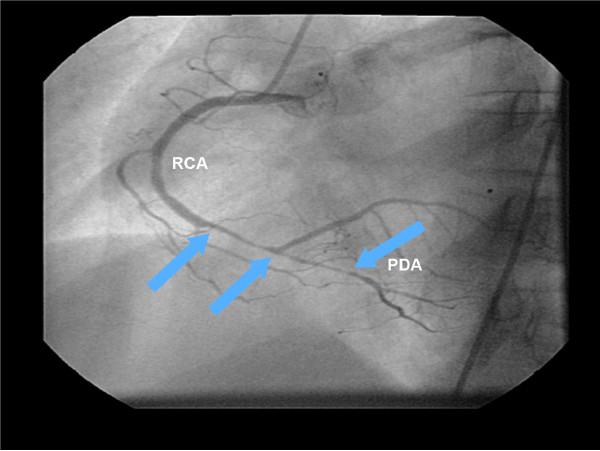
The cineangiocornariography of the first acute myocardial infarction. The right coronary artery presented an extended stenosis of 90% before its bifurcation and its posterior branches showed a stenosis of 90% at the medium segment. PDA: Posterior descending artery. RCA: right coronary artery.
Figure 8
Figure 8
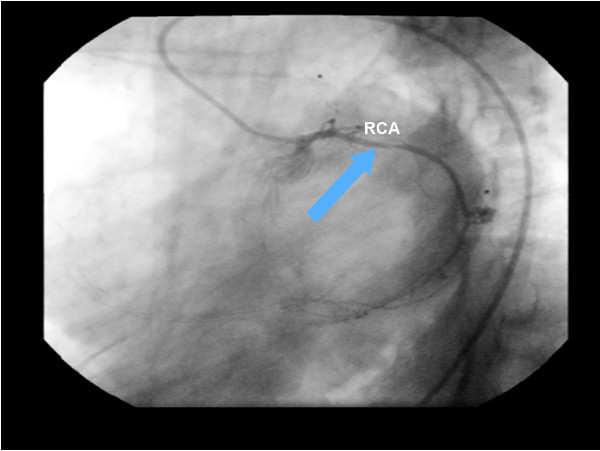
The cineangiocornariography of the second acute myocardial infarction. The Right Coronary Artery (RCA) in the proximal portion with obstruction of 80-90%.

References

    1. Lehto S. et al.Poor glycemic control predicts coronary heart disease events in patients with type 1 diabetes without nephropathy. Arterioscler Thromb Vasc Biol. 1999;19(4):1014–1019. doi: 10.1161/01.ATV.19.4.1014. - DOI - PubMed
    1. Zgibor JC. et al.Deficiencies of cardiovascular risk prediction models for type 1 diabetes. Diabetes Care. 2006;29:1860–1865. doi: 10.2337/dc06-0290. - DOI - PubMed
    1. Haffner SM, Lehto S, Rönnemaa T, Pyörälä K, Laakso M. Mortality from coronary heart disease in subjects with type 2 diabetes and in nondiabetic subjects with and without prior myocardial infarction. N Engl J Med. 1998;339(4):229–234. doi: 10.1056/NEJM199807233390404. - DOI - PubMed
    1. Yusuf S, Hawken S, Ôunpuu S, Dans T, Avezum A, Lanas F. et al.Effect of potentially modifiable risk factors associated with myocardial infarction in 52 countries (the INTERHEART study): case-control study. Lancet. 2004;364:937–952. doi: 10.1016/S0140-6736(04)17018-9. - DOI - PubMed
    1. Piegas LS, Avezum A, Pereira JCR, Rossi Neto JM, Hoepfner C, Farran JA. AFIRMAR study investigators et al.Risk factors for myocardial infarction in Brazil. Am Heart J. 2003;146:331–338. doi: 10.1016/S0002-8703(03)00181-9. - DOI - PubMed

Publication types

Substances