


Endoscopic management of an esophagopericardial fistula after radiofrequency ablation for atrial fibrillation
- PMID: 23745039
- PMCID: PMC3671089
- DOI: 10.3748/wjg.v19.i21.3352
Endoscopic management of an esophagopericardial fistula after radiofrequency ablation for atrial fibrillation
Abstract
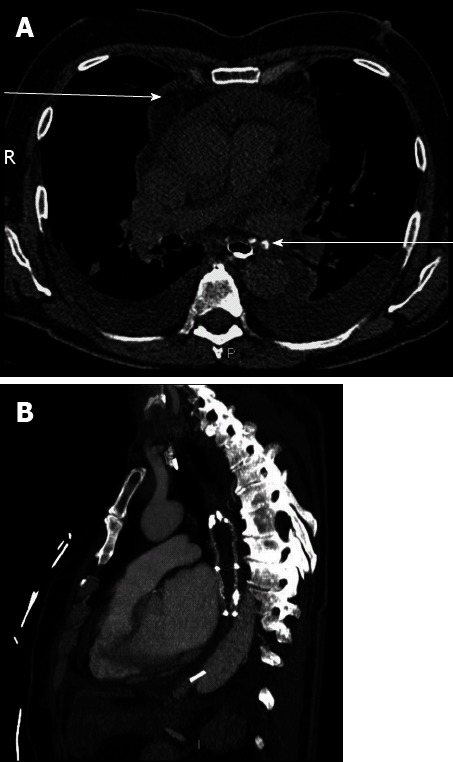
A case is reported of a 76-year-old man with a past history of atrial fibrillation. A radiofrequency ablation procedure was suggested following several failed cardioversion attempts. However, an esophagopericardial fistula complicated the procedure. This life-threatening complication was successfully managed using both the placement of a covered esophageal stent and surgical pericardial and mediastinal drainage. In fact, no persisting fistula could be detected when the esophageal stent was removed seven weeks later. Atrioesophageal and esophagopericardial fistulas are two of the most severe complications associated with cardiological radiofrequency ablation procedures. They are responsible for majority of the deaths associated with this procedure. Despite the extremely high morbimortality associated with cardiothoracic surgery in such conditions, this treatment is the gold-standard for the management of such complications. This case report emphasizes the importance and efficacy of the endoscopic approach as part of a multidisciplinary management approach to this serious adverse event following radiofrequency ablation for atrial fibrillation.
Keywords: Atrial fibrillation; Complication; Endoscopy; Esophageal stent; Fistula; Radiofrequency ablation.
Figures
References
-
- Cappato R, Calkins H, Chen SA, Davies W, Iesaka Y, Kalman J, Kim YH, Klein G, Natale A, Packer D, et al. Prevalence and causes of fatal outcome in catheter ablation of atrial fibrillation. J Am Coll Cardiol. 2009;53:1798–1803. - PubMed
-
- Shalaby A, Refaat M, Sebastien G, Zenati M. Conservative management of pericardial-esophageal fistula complicating robotic atrial fibrillation ablation. Heart Rhythm. 2011;8:905–908. - PubMed
-
- Cazavet A, Muscari F, Marachet MA, Léobon B. Successful surgery for atrioesophageal fistula caused by transcatheter ablation of atrial fibrillation. J Thorac Cardiovasc Surg. 2010;140:e43–e45. - PubMed
-
- Bunch TJ, Nelson J, Foley T, Allison S, Crandall BG, Osborn JS, Weiss JP, Anderson JL, Nielsen P, Anderson L, et al. Temporary esophageal stenting allows healing of esophageal perforations following atrial fibrillation ablation procedures. J Cardiovasc Electrophysiol. 2006;17:435–439. - PubMed
Publication types
MeSH terms
LinkOut - more resources
Full Text Sources
Other Literature Sources
Medical
Miscellaneous
