


Maintaining a Sense of Control in the Context of Cognitive Challenge: Greater Stability in Control Beliefs Benefits Working Memory
- PMID: 23745114
- PMCID: PMC3670199
- DOI: 10.1024/1662-9647/a000078
Maintaining a Sense of Control in the Context of Cognitive Challenge: Greater Stability in Control Beliefs Benefits Working Memory
Abstract
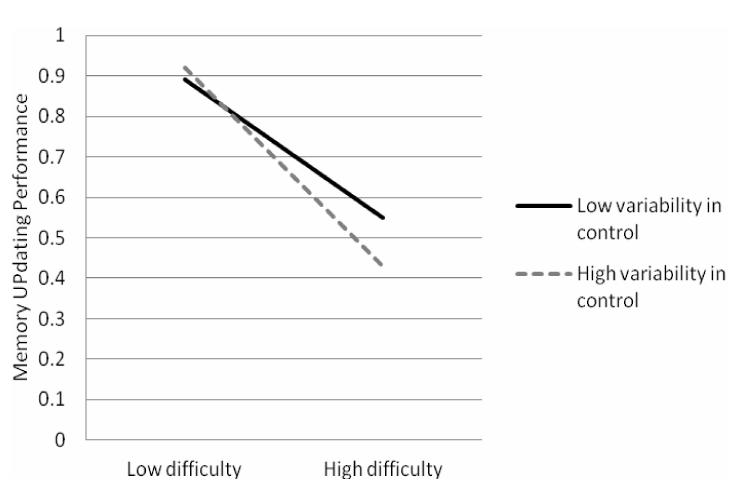
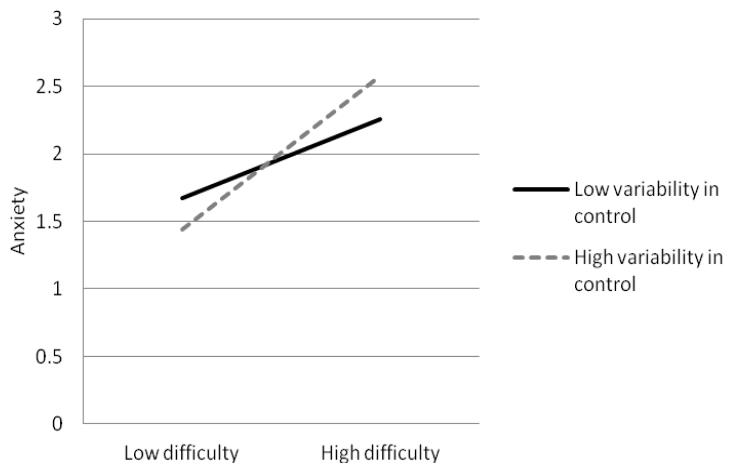
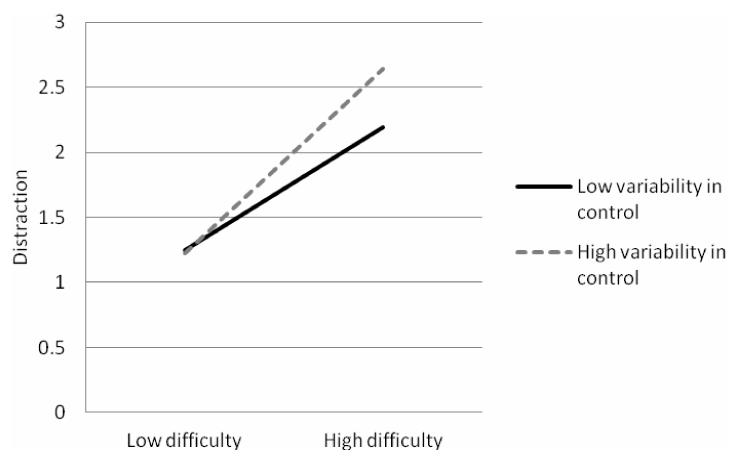
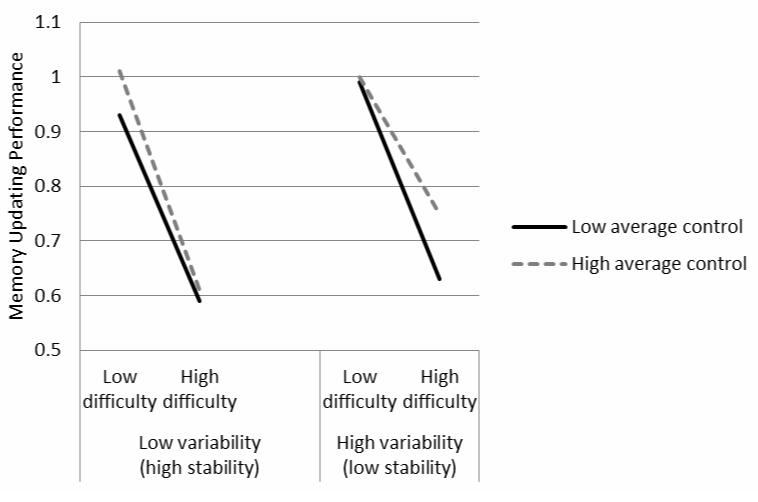
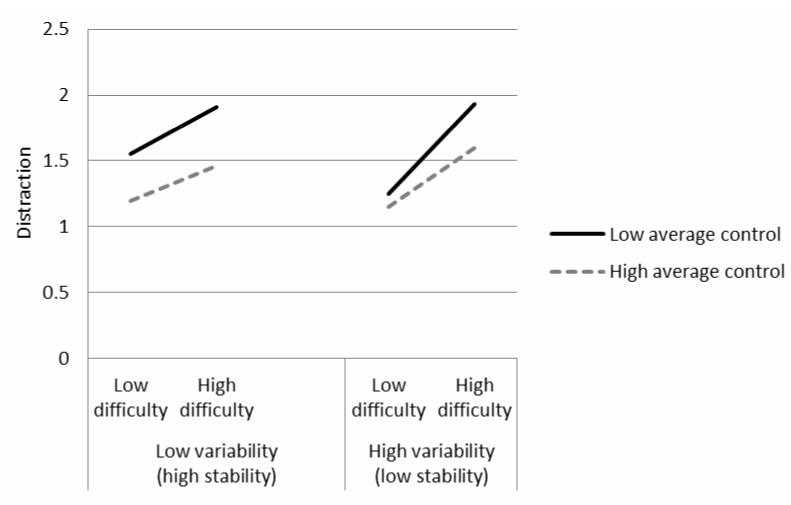
We considered the functional role of control beliefs for cognitive performance by focusing on patterns of stability across multiple trials increasing in level of difficulty. We assessed 56 adults aged 18-88 on working memory tasks. We examined stability vs. lability (intraindividual variability, IIV) in control beliefs and the relationships with anxiety, distraction, and performance. Age was positively associated with IIV in control and performance, and IIV increased with task difficulty. Those maintaining stable control beliefs had better performance, and showed less anxiety and distraction. Those with lower stability and less control showed steeper declines in performance and increases in distraction. The findings suggest that stability of control beliefs may serve a protective function in the context of cognitively challenging tasks.
Keywords: control beliefs; intraindividual variability; working memory.
Figures
References
-
- Bielak AAM, Hultsch DF, Levy-Ajzenkopf J, MacDonald SWS, Hunter MA, Strauss E. Short-term changes in general and memory-specific control beliefs and their relationship to cognition in younger and older adults. International Journal of Aging and Human Development. 2007;65:53–71. - PubMed
-
- Bisconti TL, Bergeman CS, Boker SM. Social support as a predictor of variability: An examination of the adjustment trajectories of recent widows. Psychology and Aging. 2006;21:590–599. - PubMed
-
- Caplan LJ, Schooler C. The roles of fatalism, self-confidence, and intellectual resources in the disablement process in older adults. Psychology and Aging. 2003;18:551–561. doi: 10.1037/0882-7974.18.3.551. - PubMed
-
- Eizenman DR, Nesselroade JR, Featherman DL, Rowe JW. Intraindividual variability in perceived control in an older sample: The MacArthur successful aging studies. Psychology and Aging. 1997;12:489–502. doi: 10.1037/0882-7974.12.3.489. - PubMed
Grants and funding
LinkOut - more resources
Full Text Sources
Other Literature Sources