Neurodegeneration in the pathogenesis of diabetic retinopathy: molecular mechanisms and therapeutic implications
- PMID: 23745549
- PMCID: PMC4071765
- DOI: 10.2174/09298673113209990027
Neurodegeneration in the pathogenesis of diabetic retinopathy: molecular mechanisms and therapeutic implications
Abstract
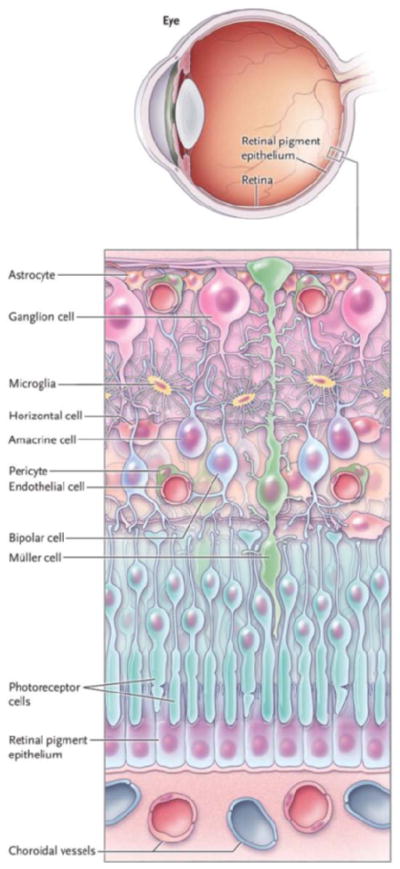
Diabetic retinopathy (DR), commonly classified as a microvascular complication of diabetes, is now recognized as a neurovascular complication or sensory neuropathy resulting from disruption of the neurovascular unit. Current therapies for DR target the vascular complication of the disease process, including neovascularization and diabetic macular edema. Since neurodegeneration is an early event in the pathogenesis of DR, it will be important to unravel the mechanisms that contribute to neuroretinal cell death in order to develop novel treatments for the early stages of DR. In this review we comment on how inflammation, the metabolic derangements associated with diabetes, loss of neuroprotective factors, and dysregulated glutamate metabolism may contribute to retinal neurodegeneration during diabetes. Promising potential therapies based on these specific aspects of DR pathophysiology are also discussed. Finally, we stress the importance of developing and validating new markers of visual function that can be used to shorten the duration of clinical trials and accelerate the delivery of novel treatments for DR to the public.
Figures
References
-
- Aiello LM. Perspectives on diabetic retinopathy. Am J Ophthalmol. 2003;136(1):122–135. - PubMed
-
- Wilkinson CP, Ferris FL, 3rd, Klein RE, Lee PP, Agardh CD, Davis M, Dills D, Kampik A, Pararajasegaram R, Verdaguer JT. Proposed international clinical diabetic retinopathy and diabetic macular edema disease severity scales. Ophthalmology. 2003;110(9):1677–1682. - PubMed
-
- Wolter JR. Diabetic retinopathy. Am J Ophthalmol. 1961;51:1123–1141. - PubMed
-
- Bloodworth JM., Jr Diabetic retinopathy. Diabetes. 1962;11:1–22. - PubMed
-
- Cunha-Vaz J. Neurodegeneration as an early event in the pathogenesis of Diabetic Retinopathy: A multicentric, prospective, phase II–III, randomised controlled trial to assess the efficacy of neuroprotective drugs administered topically to prevent or arrest Diabetic Retinopathy. EUROCONDOR – EU FP7 Project. Acta Ophthalmol. 2012;90(249):0.
Publication types
MeSH terms
Grants and funding
LinkOut - more resources
Full Text Sources
Other Literature Sources
Medical