Review
. 2013 Aug;13(4):632-40.
doi: 10.1016/j.coph.2013.05.012. Epub 2013 Jun 6.

Resolution phase lipid mediators of inflammation: agonists of resolution

Affiliations
Review

Resolution phase lipid mediators of inflammation: agonists of resolution

Charles N Serhan et al. Curr Opin Pharmacol. 2013 Aug.

Abstract

Lipid mediators are appreciated for their roles in leukocyte traffic required in host defense. With identification of novel resolution phase mediators, resolvins, protectins and maresins, these three families and their aspirin-triggered forms, given their potent stereoselective actions with human cells and animal disease models, are coined specialized pro-resolving mediators (SPM). Stereochemistries of key SPM are established and several groups reported organic synthesis. Given increased availability, this two-year-review period expands their potent pro-resolving and non-redundant actions. Collectively, they support the concept that return of acute inflammation involves active biosynthesis and SPM signaling toward homeostasis.


Conflict of interest statement

Disclosure: C.N.S. is an inventor on patents [resolvins] assigned to BWH and licensed to Resolvyx Pharmaceuticals. C.N.S. was scientific founder of Resolvyx Pharmaceuticals and owns equity in the company. C.N.S.’s interests were reviewed and are managed by the Brigham and Women’s Hospital and Partners HealthCare in accordance with their conflict of interest policies.

Figures
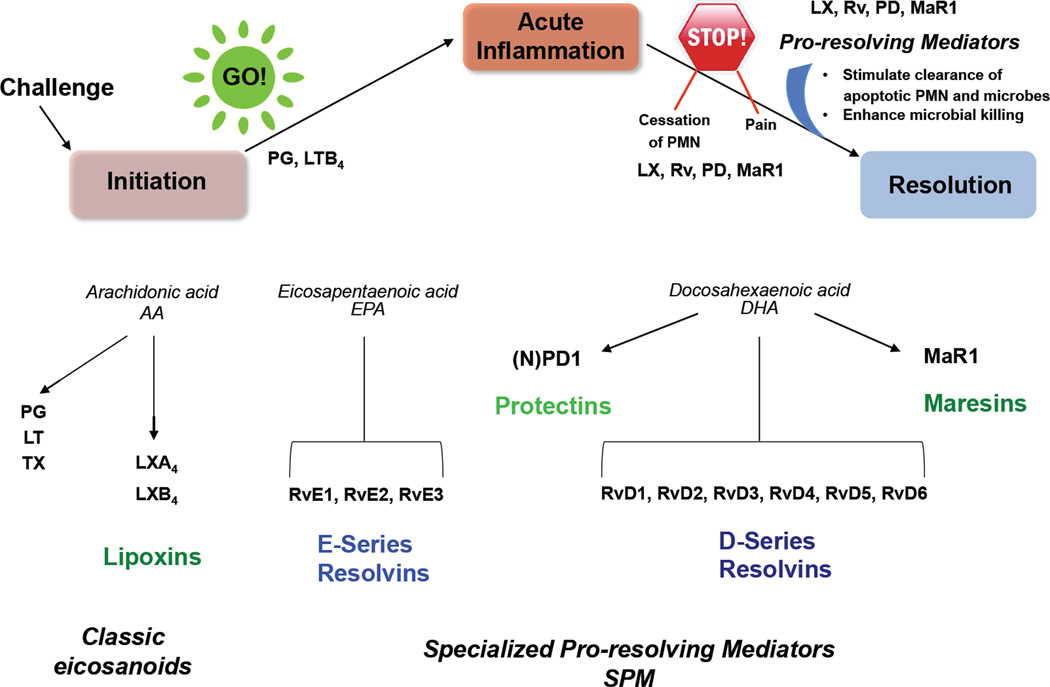
Figure 1
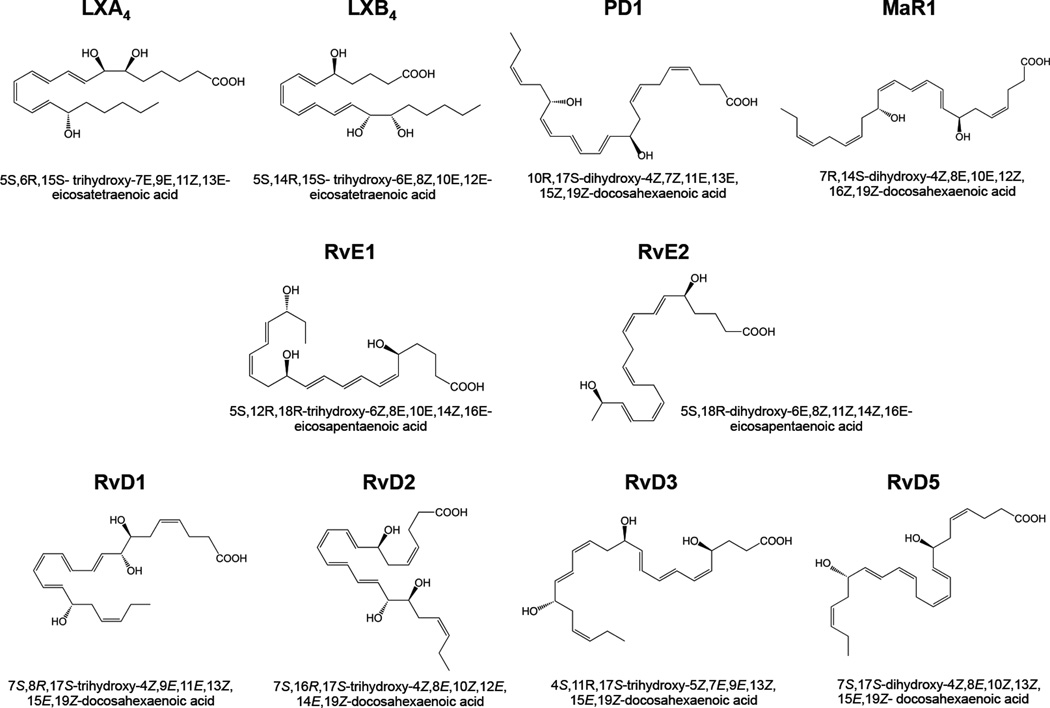
Figure 1. Specialized pro-resolving mediators (SPM): chemical structures
Among chemical signals at the site of an acute inflammatory response, those that originate from host essential fatty acids are of particular interest because of their nutritional regulation of the response via essential fatty acids EPA and DHA and the potential to design small molecule mimetics of these molecules. Those produced from arachidonic acid, including prostaglandins and leukotriene B4, are involved in the initiating steps that permit leukocytes to leave post-capillary venules, i.e. diapedesis. Mediators produced from EPA and DHA, i.e. SPM, possess potent pro-resolving actions that include cessation of PMN tissue infiltration, counter-regulation of chemokines and cytokines, reduction in pain [40] and stimulation of macrophage-mediated actions, i.e. efferocytosis, phagocytosis of microbes [10**,60].
Figure 2
Figure 2. Structures of SPM
Classic eicosanoids each carry established stereoselectivity in their actions [61]. Establishing the complete stereochemical assignment for each of the separate resolvin, protectin and maresin (SPM) structures shown herein was key to affirming novel actions on leukocytes. In this period 2010–2012, the structures of RvD1, its aspirin-triggered 17R-epimer, RvD2 [62], aspirin-triggered (AT)-protectin D1 [12] and MaR1 [9*] were assigned and several were made commercially available. Recently, using LC-MS/MS-based metabololipidomics we matched RvD3 with 4S,11R,17S-trihydroxydocosa-5Z,7E,9E,13Z,15E,19Z-hexaenoic acid, and AT-RvD3 matched 4S,11R,17R-trihydroxydocosa-5Z,7E,9E,1ZE,15E,19Z-hexaenoic acid. In this period, we also established the stereochemical assignments for AT-PD1 [12] and that of maresin 1 (MaR1; 7R,14S-dihydroxydocosa-4Z,8E,10E,12Z,16Z,19Z-hexaenoic acid) [9*]. The total organic syntheses of MaR1 and additional SPM were also achieved by Rodriguez and Spur using Sonogashira coupling [63]; these investigators also reported resolvin D6 [64] and synthesis of resolvin E2 [65]. Kobayashi et al. reported stereoselective total synthesis of protectin D1 [66], resolvin E2 [67] and resolvin E1 [68]. See reference [8] for further details.
Figure 3
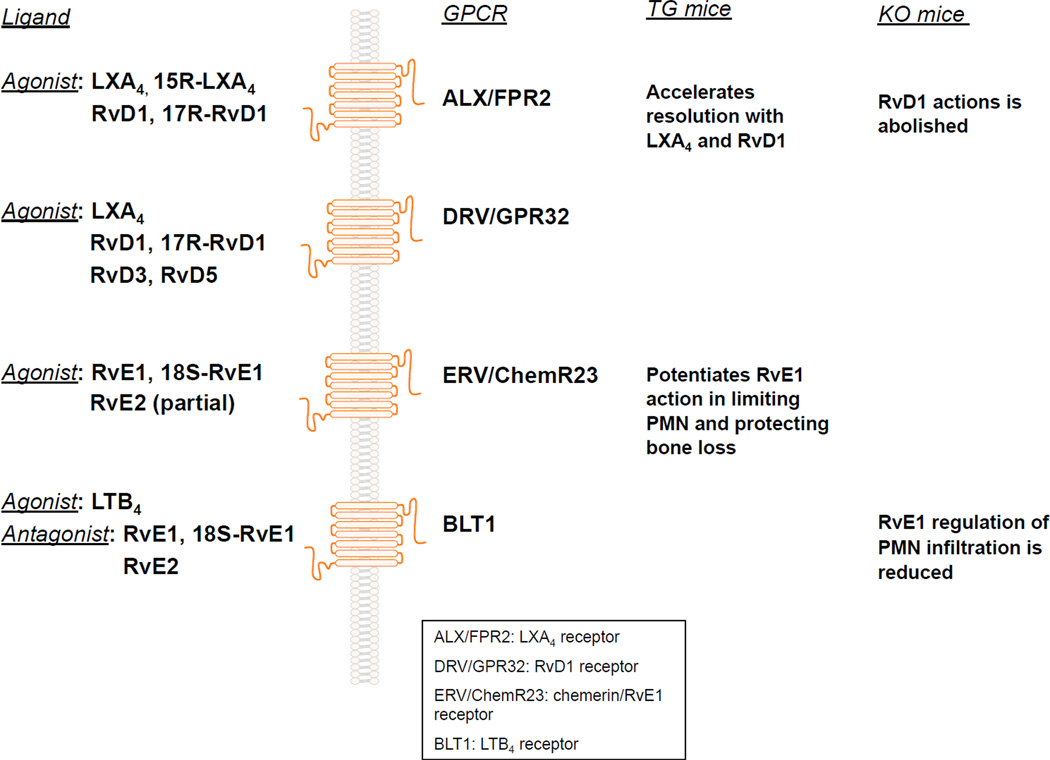
Figure 3. SPM and their receptors
ALX and GPR32, 2 GPCRs for RvD1 on human phagocytes. ALX is a lipoxin A4 receptor and GPR32. RvD1 displays specific binding, reduces actin polymerization and CD11b on PMN, as well as stimulates macrophage phagocytosis in an ALX and GPR32-dependent manner [21]. The aspirin-triggered epimer 17R-RvD1 and stable analog 17-R/S-methyl-RvD1 each dose-dependently activate ALX/FPR2 and GPR32 in GPCR-overexpressing β-arrestin systems and electric cell-substrate impedance sensing [23]. RvD5 also activates human GPR32-β-arrestin systems and stimulates macrophage phagocytosis of E.coli enhanced by GPR32 [10**]. RvD3 and AT-RvD3 each activate this GPCR, contributing to their pro-resolving actions in stimulating macrophage phagocytosis [11]. ChemR23, a specific receptor for RvE1, is related to lipoxin and leukotriene receptors in deduced amino acid sequences. ChemR23 specifically binds tritiated RvE1 and signals to activate monocytes, reduce dendritic cell migration and IL-12 production [18]. RvE1-ChemR23 interactions also stimulate macrophage phagocytosis via phosphorylation signaling pathways including ribosomal protein S6, a downstream target of PI3K/Akt signaling and the Raf/ERK pathways [69]. 18S-RvE1 also binds to ChemR23 with increased affinity and potency compared with the R-epimer, but is rapidly inactivated [70]. RvE2 is a partial agonist for ChemR23 [71]. BLT1, a leukotriene B4 receptor, also directly interacts with RvE1, which inhibits calcium mobilization, NF-kB activation and PMN infiltration in vivo [19]. Both 18S-RvE1 and RvE2 also bind to BLT1 [70,71] demonstrating ligand specificity and related structural features of resolvins. TG mice. We constructed mice overexpressing human ALX. The pro-resolving actions of RvD1 were further enhanced in ALX-TG mice. Transgenic mice were also prepared overexpressing human ChemR23, the RvE1 receptor, on myeloid cells. In these TG mice, RvE1 is 10-fold more potent in limiting PMN infiltration in zymosan-initiated peritonitis, and ligature-induced alveolar bone loss was diminished in ChemR23tg mice. Hence, RvE1 modulates osteoclast differentiation and bone remodeling by direct actions on bone, in addition to anti-inflammation and pro-resolution [23]. KO mice. In fpr2/ALX-deficient mice (mouse orthologue of human ALX), anti-inflammatory actions of RvD1 are lost [24]. RvD1 regulates acute inflammation in part via human ALX and GPR-32 receptors. In BLT1 knockout mice, anti-inflammatory actions of RvE1 were sharply reduced when given at low doses (100 ng i.v.) in peritonitis. In contrast, higher doses of RvE1 (1.0 µg i.v.) reduce PMN infiltration in a BLT1-independent manner. Taken together, RvE1 binds to BLT1 as a partial agonist and serves as a local damper of BLT1 signals on leukocytes along with ChemR23-mediated counter-regulatory actions to mediate the resolution of inflammation [19].

References

    1. Majno G. Inflammation and infection: historic highlights. In: Majno G, Cotran RS, Kaufman N, editors. Current Topics in Inflammation and Infection. Williams & Wilkins; 1982. pp. 1–17.
    1. Serhan CN. A search for endogenous mechanisms of anti-inflammation uncovers novel chemical mediators: missing links to resolution. Histochem. Cell Biol. 2004;122:305–321. - PubMed
    1. Serhan CN, Clish CB, Brannon J, Colgan SP, Chiang N, Gronert K. Novel functional sets of lipid-derived mediators with antiinflammatory actions generated from omega-3 fatty acids via cyclooxygenase 2-nonsteroidal antiinflammatory drugs and transcellular processing. J. Exp. Med. 2000;192:1197–1204. - PMC - PubMed
    1. Serhan CN, Hong S, Gronert K, Colgan SP, Devchand PR, Mirick G, Moussignac R-L. Resolvins: a family of bioactive products of omega-3 fatty acid transformation circuits initiated by aspirin treatment that counter pro-inflammation signals. J. Exp. Med. 2002;196:1025–1037.. **This article reports the original identification of DHA-derived resolvins that are generated in inflammatory exudates, vascular, leukocytes and neural cells, which are potent regulators stimulating resolution of acute inflammation.

    1. Hong S, Gronert K, Devchand P, Moussignac R-L, Serhan CN. Novel docosatrienes and 17S-resolvins generated from docosahexaenoic acid in murine brain, human blood and glial cells: autacoids in anti-inflammation. J. Biol. Chem. 2003;278:14677–14687. - PubMed

Publication types