Review
. 2013 Aug;13(4):555-64.
doi: 10.1016/j.coph.2013.05.013. Epub 2013 Jun 7.

Changes in macrophage phenotype as the immune response evolves

Affiliations
Review

Changes in macrophage phenotype as the immune response evolves

Julia Lichtnekert et al. Curr Opin Pharmacol. 2013 Aug.

Abstract

Mononuclear phagocytic cells (MPCs), including macrophages and dendritic cells (DCs), are widely distributed throughout our organs where they perform important homeostatic, surveillance and regenerative tasks. In response to infection or injury, the composition and number of MPCs change remarkably, in part due to the recruitment of inflammatory monocytes from bone marrow. In infection or injury, macrophages and DCs perform important innate and adaptive immune roles from the initial insult through repair and regeneration of the tissue and resolution of inflammation. Evidence from mouse models of disease has shown increasing complexity and subtlety to the mononuclear phagocytic system, which will be reviewed here. New studies show that in addition to monocytes, the resident populations of mononuclear phagocytes expand in disease states and play distinct but important roles in the immune response. Finally, new insights into these functionally diverse cells are now translating into therapeutics to treat human disease.


Figures

Figure 1
Figure 1
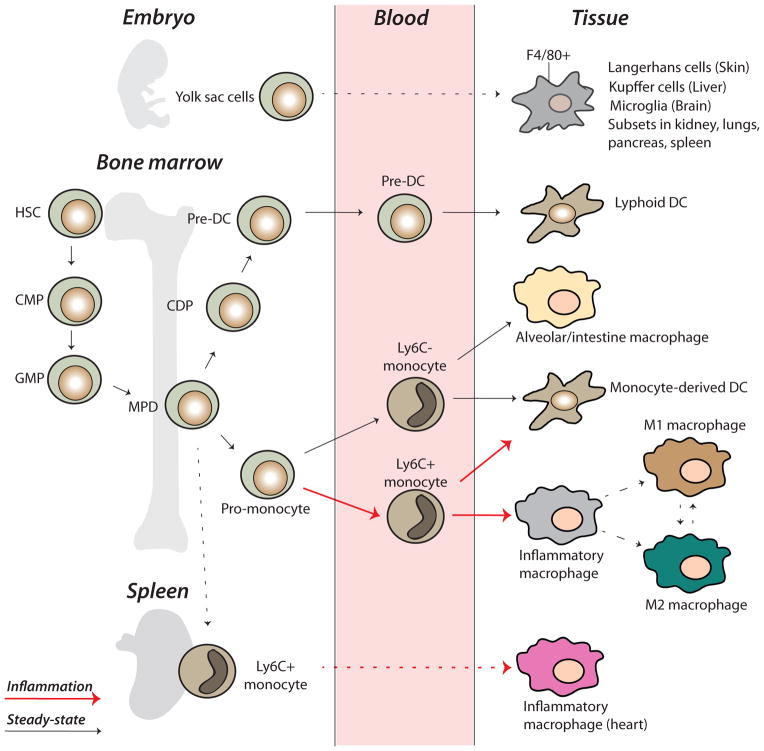
Origin and development of the mononuclear phagocyte system. The mononuclear phagocyte system (MPS) encompasses monocytes, macrophages and dendritic cells (DC). The MPS is generated from hematopoietic stem cells (HSC) in the bone marrow, but a recent identified new lineage of macrophages (F4/80+) develops from the yolk sac before the appearance of HSCs. These macrophages traffic to epithelial tissues to become permanently residing cells, e.g., Kupffer cells, Langerhans cells or microglia. Subsets are also found in kidney, spleen and lungs. Bone marrow precursors are differentiated into the macrophage and DC common progenitors (MDP) that give rise to common DC progenitors (CDP) or monocytes. CDPs further commit to plasmacytoid DCs or preDCs resulting in DCs. Monocytes are able to give rise to macrophages or DCs. In steady state conditions Ly6Clow monocytes remain around the vascular endothelium. In inflammation Ly6C high monocytes are recruited and differentiate into inflammatory macrophages. The spleen supplies Ly6Chigh monocytes to inflamed heart after myocardial infarction.
Figure 2
Figure 2
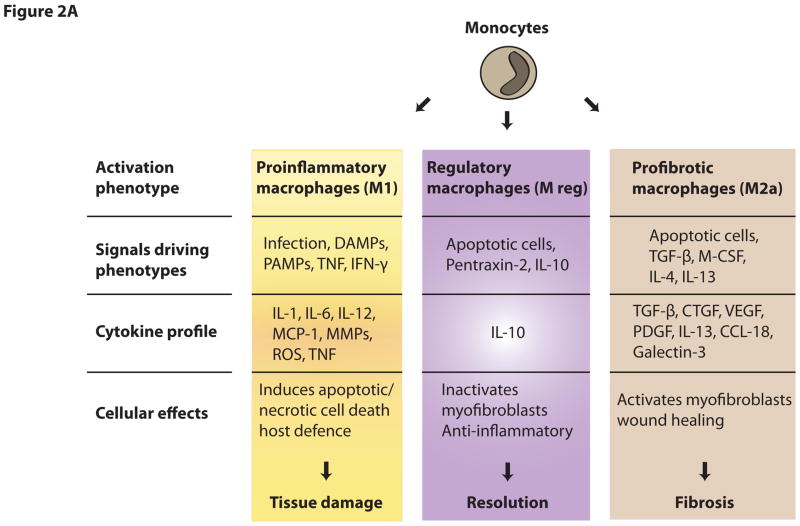
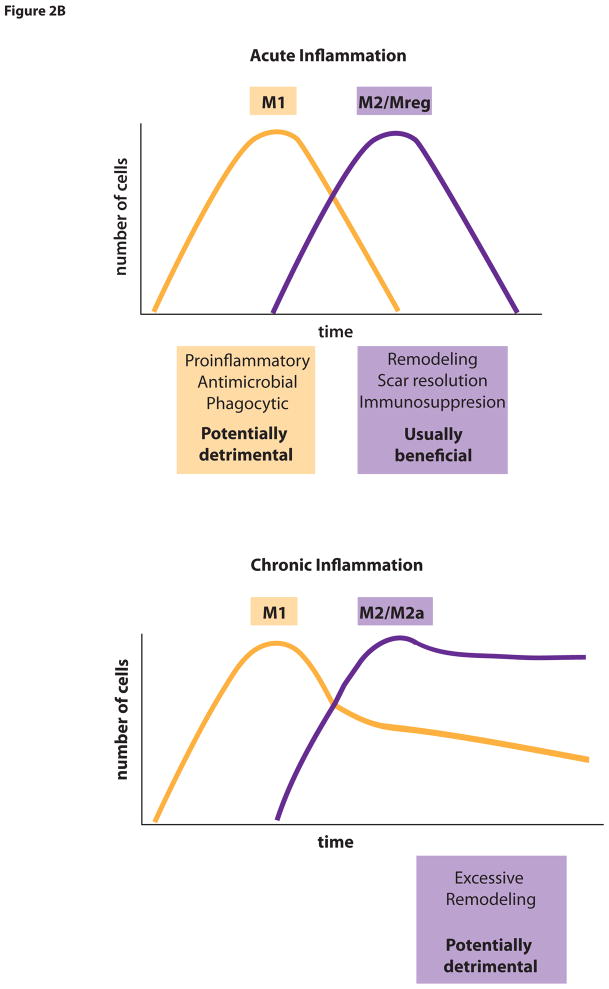
Figure 2A. Functional phenotypes of macrophage subpopulations. Dependent on the microenvironment macrophages can differentiate into specific subpopulations with distinct phenotype and function. Figure 2B. Macrophage polarization in acute and chronic inflammation. Mreg macrophages are usually beneficial for prevention of tissue function as immunosuppressant and in resolution in acute inflammation. In chronic inflammation, other types of M2 macrophages (M2a) stimulate excessive tissue remodeling, which results in fibrosis.
Figure 2
Figure 2
Figure 2A. Functional phenotypes of macrophage subpopulations. Dependent on the microenvironment macrophages can differentiate into specific subpopulations with distinct phenotype and function. Figure 2B. Macrophage polarization in acute and chronic inflammation. Mreg macrophages are usually beneficial for prevention of tissue function as immunosuppressant and in resolution in acute inflammation. In chronic inflammation, other types of M2 macrophages (M2a) stimulate excessive tissue remodeling, which results in fibrosis.
Figure 3
Figure 3
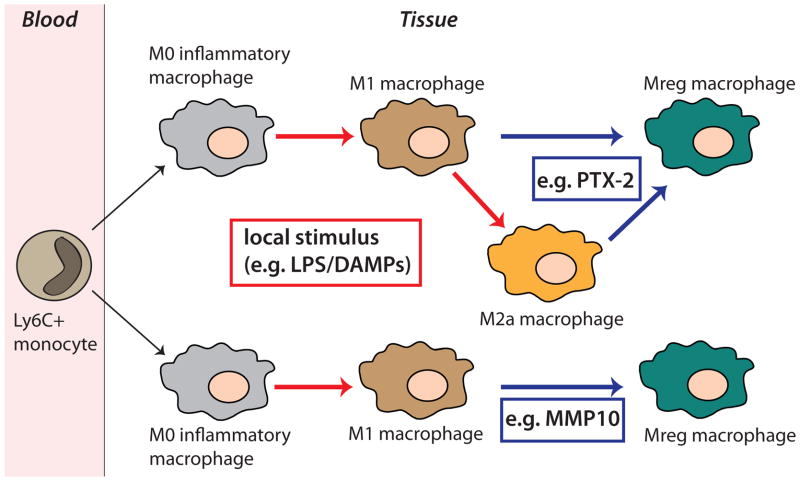
Macrophage reprogramming in vivo. During activation by innate immune stimuli co-ligation of certain macrophage receptors can induce a phenotype conversion of the different types of inflammatory macrophages. Pentraxin 2 reduces fibrosis and promotes resolution by stimulating phenotype switch towards Mreg macrophages. MMP10 inhibits inflammation and tissue damage by stimulating M1 to Mreg macrophage conversion.
Figure 4
Figure 4
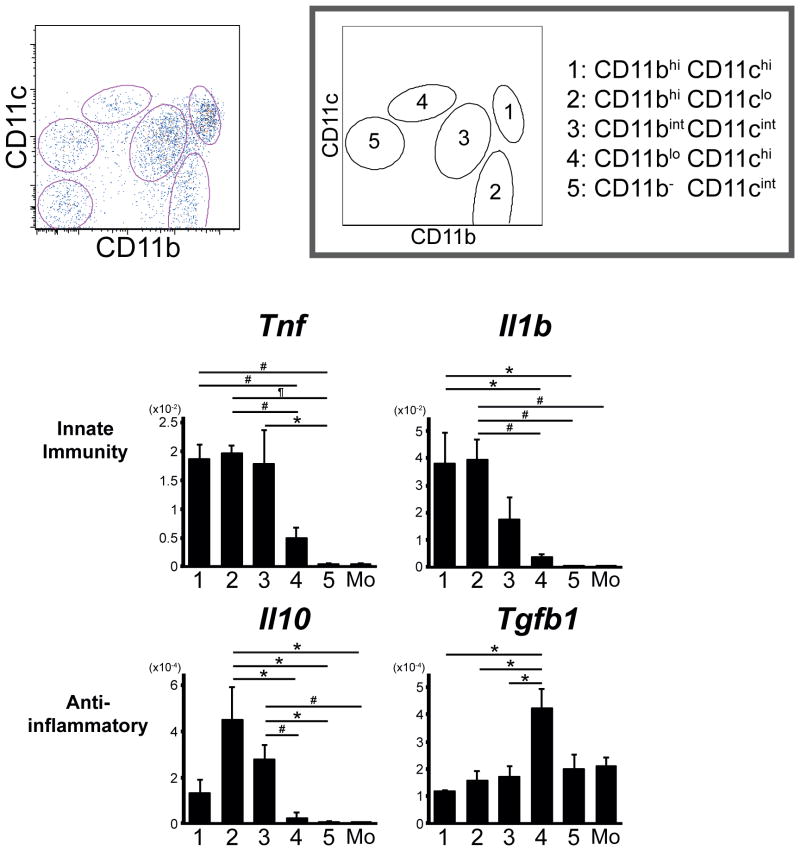
Resident kidney mononuclear phagocytes with functionally different phenotypes. Flow cytometry plots showing five subpopulations in the kidney. Quantitative RT-PCR analysis showed different cytokine expression profile after LPS stimulation.

References

    1. Nelson PJ, et al. The renal mononuclear phagocytic system. J Am Soc Nephrol. 2012;23(2):194–203. - PMC - PubMed
    1. Sica A, Mantovani A. Macrophage plasticity and polarization: in vivo veritas. J Clin Invest. 2012;122(3):787–95. A comprehensive review about macrophage populations and their role in health and disease. - PMC - PubMed
    1. Chow A, Brown BD, Merad M. Studying the mononuclear phagocyte system in the molecular age. Nat Rev Immunol. 2011;11(11):788–98. - PubMed
    1. Satpathy AT, et al. Zbtb46 expression distinguishes classical dendritic cells and their committed progenitors from other immune lineages. J Exp Med. 2012;209(6):1135–52. - PMC - PubMed
    1. Schulz C, et al. A lineage of myeloid cells independent of Myb and hematopoietic stem cells. Science. 2012;336(6077):86–90. Evidence for a macrophage lineage derived from the yolksac independent from hematopoietic progenitors. - PubMed

Publication types