


Humanized mice for the study of infectious diseases
- PMID: 23751490
- PMCID: PMC3775881
- DOI: 10.1016/j.coi.2013.05.012
Humanized mice for the study of infectious diseases
Abstract
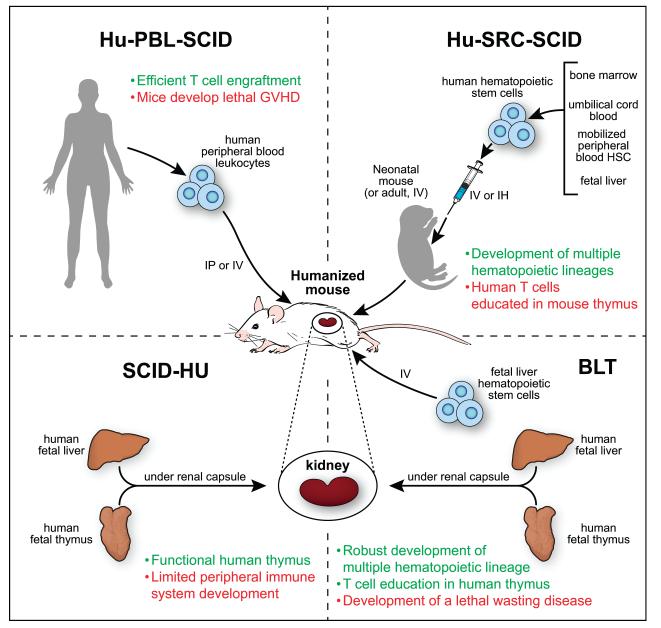
Many of the pathogens that cause human infectious diseases do not infect rodents or other mammalian species. Small animal models that allow studies of the pathogenesis of these agents and evaluation of drug efficacy are critical for identifying ways to prevent and treat human infectious diseases. Immunodeficient mice engrafted with functional human cells and tissues, termed 'humanized' mice, represent a critical pre-clinical bridge for in vivo studies of human pathogens. Recent advances in the development of humanized mice have allowed in vivo studies of multiple human infectious agents providing novel insights into their pathogenesis that was otherwise not possible.
Copyright © 2013 Elsevier Ltd. All rights reserved.
Figures
References
-
- Belser JA, Szretter KJ, Katz JM, Tumpey TM. Use of animal models to understand the pandemic potential of highly pathogenic avian influenza viruses. Adv.Virus Res. 2009;73:55–97. - PubMed
-
- Mestas J, Hughes CC. Of mice and not men: differences between mouse and human immunology. J.Immunol. 2004;172:2731–2738. - PubMed
Publication types
MeSH terms
Grants and funding
LinkOut - more resources
Full Text Sources
Other Literature Sources
Medical
