


Prospective assessment of lymphedema incidence and lymphedema-associated symptoms following lymph node surgery for melanoma
- PMID: 23752305
- PMCID: PMC3881422
- DOI: 10.1097/CMR.0b013e3283632c83
Prospective assessment of lymphedema incidence and lymphedema-associated symptoms following lymph node surgery for melanoma
Abstract
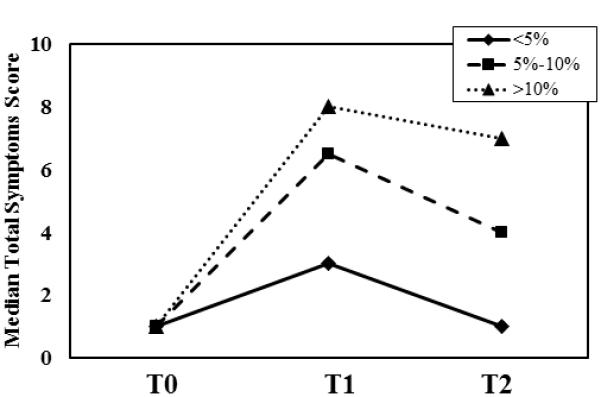
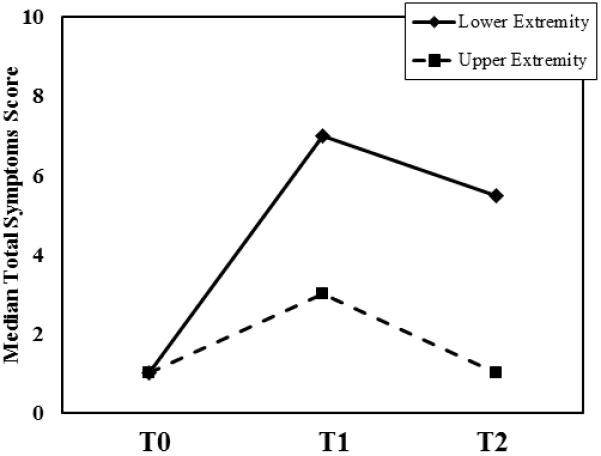
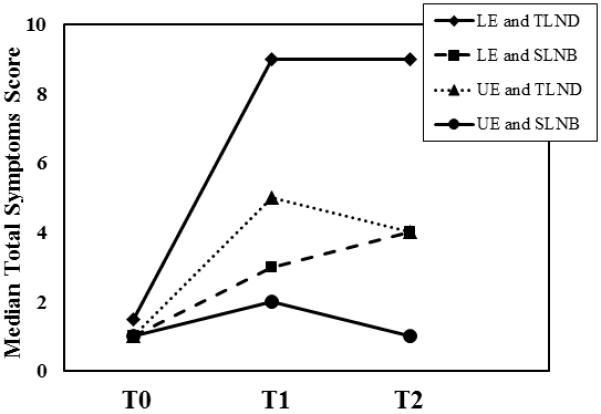
We aimed to prospectively assess limb volume change (LVC) and associated symptoms in patients with melanoma undergoing sentinel lymph node biopsy and/or therapeutic lymph node dissection. Limb volume was measured preoperatively and postoperatively at 6 and 12 months using a perometer (1000 mol/l). LVC was calculated and used to define three groups: less than 5%, 5-10%, and greater than 10%. A 19-item lymphedema symptom questionnaire was administered at baseline, 6, and 12 months. One hundred and eighty-two patients were enrolled. Twelve months after axillary surgery, 9% had LVC 5-10% and 13% had LVC greater than 10%. Twelve months after inguinofemoral surgery, 10% had LVC 5-10% and 13% had LVC greater than 10%. There was a significant seven- to nine-fold increase in symptoms for patients with LVC greater than 10% compared with those with LVC less than 5% (P<0.05). On multivariate analysis, therapeutic lymph node dissection versus sentinel lymph node biopsy (odds ratio=3.18; P<0.01) and borderline significance for lower-extremity versus upper-extremity procedures (odds ratio=1.72; P=0.07) were associated with LVC greater than 5%. LVC greater than 5% is common at 12 months following nodal surgery for melanoma and is associated with symptoms. Informed consent for melanoma patients undergoing lymph node surgery should include a discussion of the risks of postoperative lymphedema.
Figures
References
-
- Cormier JN, Askew RL, Mungovan KS, Xing Y, Ross MI, Armer JM. Lymphedema beyond breast cancer: a systematic review and meta-analysis of cancer-related secondary lymphedema. Cancer. 2010;116:5138–5149. - PubMed
-
- de Vries M, Vonkeman WG, van Ginkel RJ, Hoekstra HJ. Morbidity after inguinal sentinel lymph node biopsy and completion lymph node dissection in patients with cutaneous melanoma. Eur J Surg Oncol. 2006;32:785–789. - PubMed
-
- Wrightson WR, Wong SL, Edwards MJ, Chao C, Reintgen DS, Ross MI, et al. Complications associated with sentinel lymph node biopsy for melanoma. Ann Surg Oncol. 2003;10:676–680. - PubMed
-
- Burmeister BH, Smithers BM, Davis S, Spry N, Johnson C, Krawitz H, Baumann KC. Radiation therapy following nodal surgery for melanoma: an analysis of late toxicity. ANZ J Surg. 2002;72:344–348. - PubMed
Publication types
MeSH terms
Grants and funding
LinkOut - more resources
Full Text Sources
Other Literature Sources
Medical
