


Genetic and archaeological perspectives on the initial modern human colonization of southern Asia
- PMID: 23754394
- PMCID: PMC3696785
- DOI: 10.1073/pnas.1306043110
Genetic and archaeological perspectives on the initial modern human colonization of southern Asia
Abstract
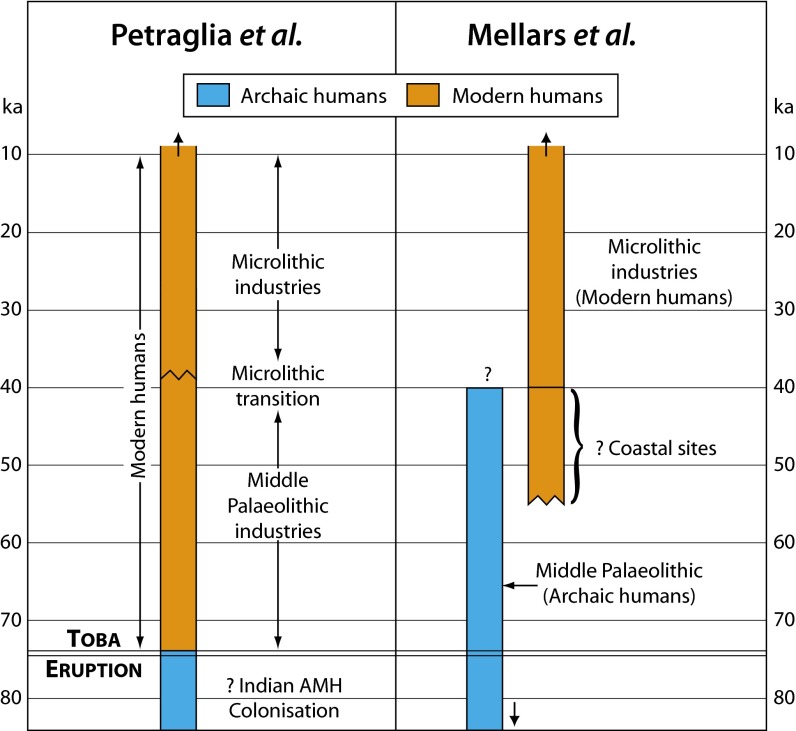
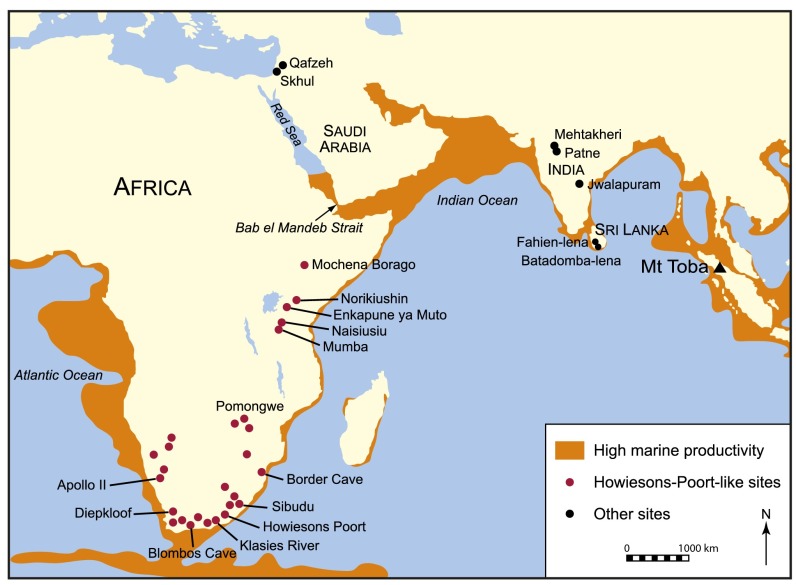
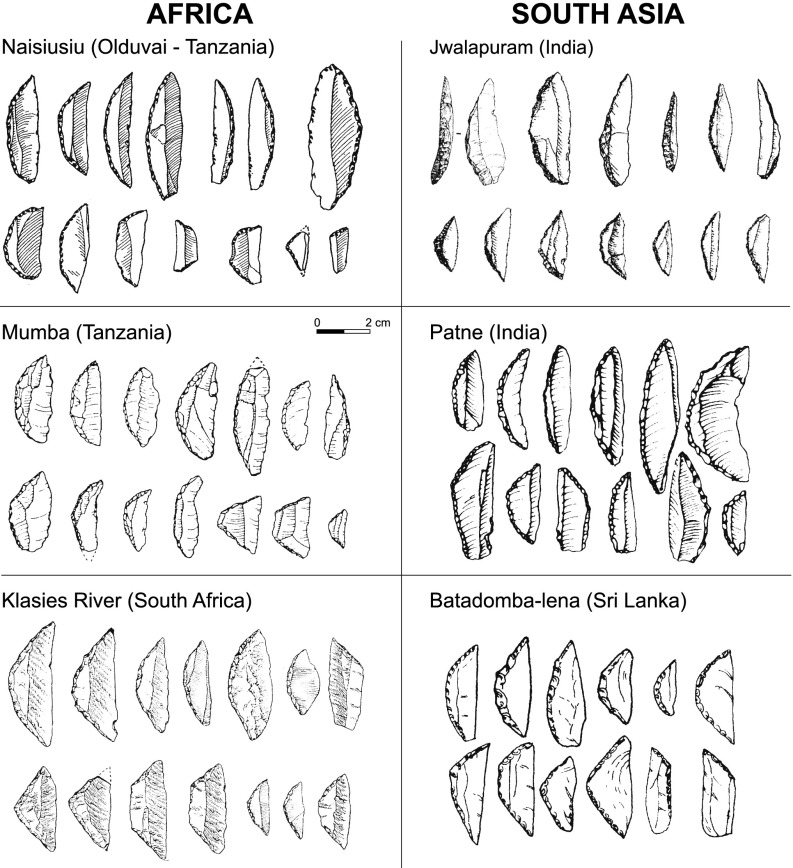
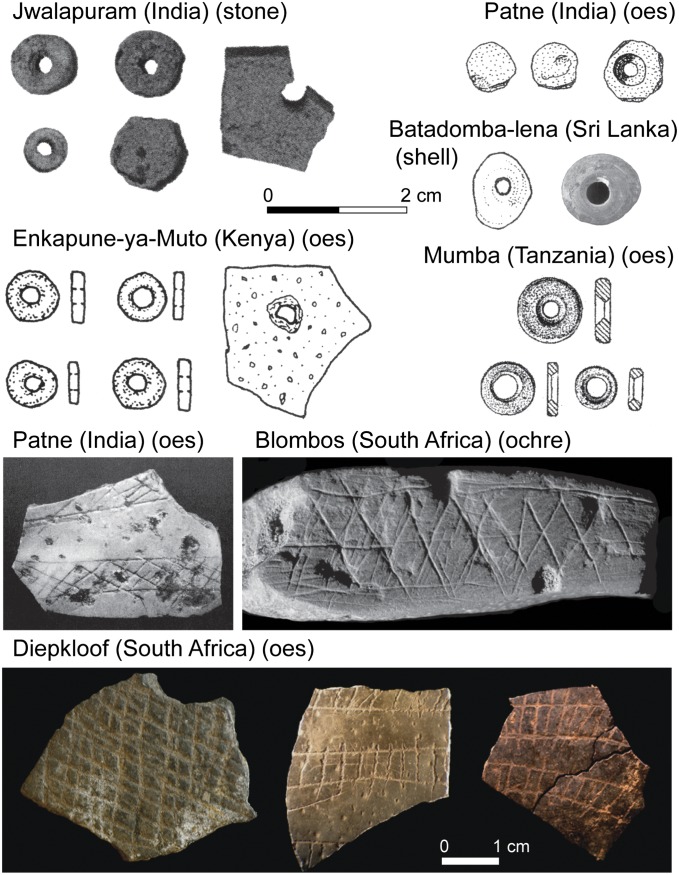
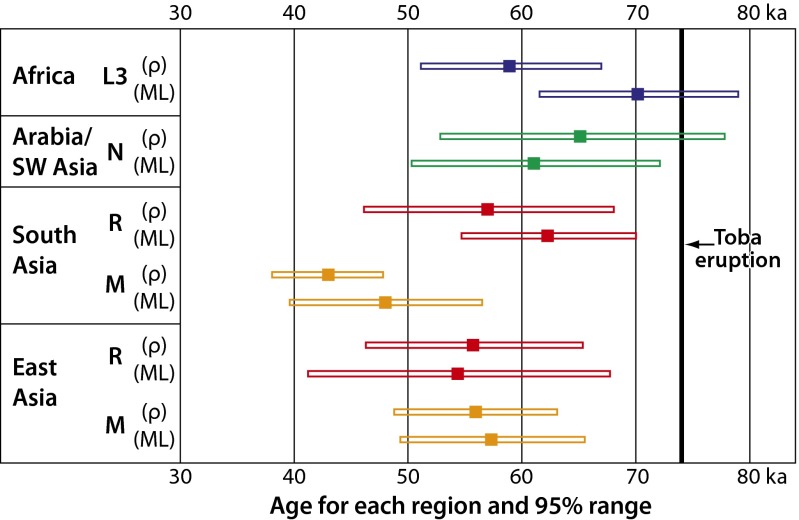
It has been argued recently that the initial dispersal of anatomically modern humans from Africa to southern Asia occurred before the volcanic "supereruption" of the Mount Toba volcano (Sumatra) at ∼74,000 y before present (B.P.)-possibly as early as 120,000 y B.P. We show here that this "pre-Toba" dispersal model is in serious conflict with both the most recent genetic evidence from both Africa and Asia and the archaeological evidence from South Asian sites. We present an alternative model based on a combination of genetic analyses and recent archaeological evidence from South Asia and Africa. These data support a coastally oriented dispersal of modern humans from eastern Africa to southern Asia ∼60-50 thousand years ago (ka). This was associated with distinctively African microlithic and "backed-segment" technologies analogous to the African "Howiesons Poort" and related technologies, together with a range of distinctively "modern" cultural and symbolic features (highly shaped bone tools, personal ornaments, abstract artistic motifs, microblade technology, etc.), similar to those that accompanied the replacement of "archaic" Neanderthal by anatomically modern human populations in other regions of western Eurasia at a broadly similar date.
Keywords: India; Paleolithic; archaeogenetics; mtDNA.
Conflict of interest statement
The authors declare no conflict of interest.
Figures
References
-
- Petraglia M, et al. Middle Paleolithic assemblages from the Indian subcontinent before and after the Toba super-eruption. Science. 2007;317(5834):114–116. - PubMed
-
- Clarkson C, et al. The oldest and longest enduring microlithic sequence in India: 35,000 years of modern human occupation at the Jwalapuram Locality 9 rockshelter. Antiquity. 2009;83:326–348.
-
- Haslam M, et al. The 74 ka super-eruption and southern Indian hominins: Archaeology, lithic technology and environments at Jwalapuram locality 3. J Archaeol Sci. 2010;37:3370–3384.
-
- Petraglia MD, Haslam M, Fuller DQ, Boivin N, Clarkson C. Out of Africa: New hypotheses and evidence for the dispersal of Homo sapiens along the Indian Ocean rim. Ann Hum Biol. 2010;37(3):288–311. - PubMed
Publication types
MeSH terms
Substances
LinkOut - more resources
Full Text Sources
Other Literature Sources
