


Patterns and Outcomes of Induction of Labour in Africa and Asia: a secondary analysis of the WHO Global Survey on Maternal and Neonatal Health
- PMID: 23755259
- PMCID: PMC3670838
- DOI: 10.1371/journal.pone.0065612
Patterns and Outcomes of Induction of Labour in Africa and Asia: a secondary analysis of the WHO Global Survey on Maternal and Neonatal Health
Abstract
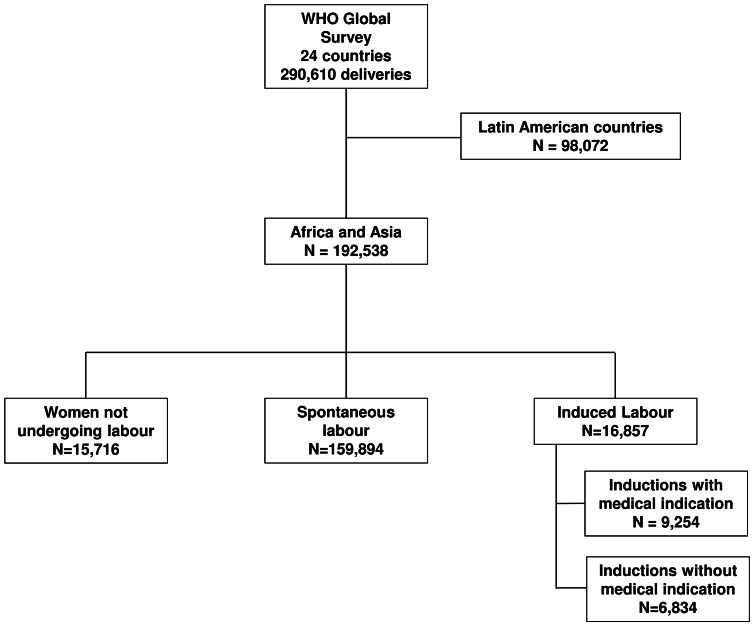
Background: Labour induction should be performed where benefit outweighs potential harm, however epidemiology of induction in lower-income countries is not well described. We used the WHO Global Survey dataset to describe the epidemiology and outcomes of labour induction in 192,538 deliveries in 253 facilities across 16 countries in Africa and Asia.
Methods: Data was analyzed separately for Africa and Asia. Prevalence of indications, methods, success and characteristics associated with labour induction were determined. Multilevel logistic regression was used to determine the relationship between induction (with medical indication and elective) and maternal/perinatal outcomes.
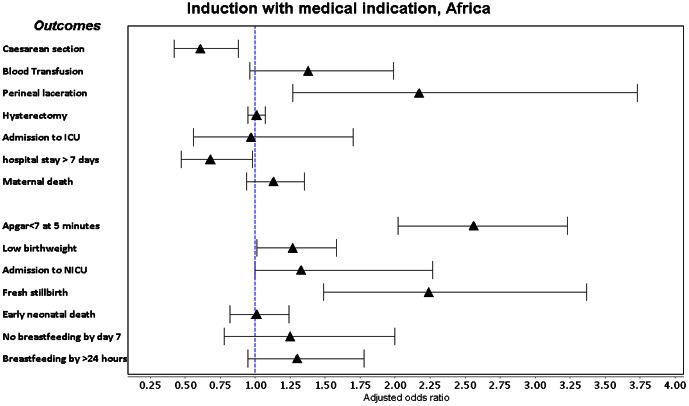
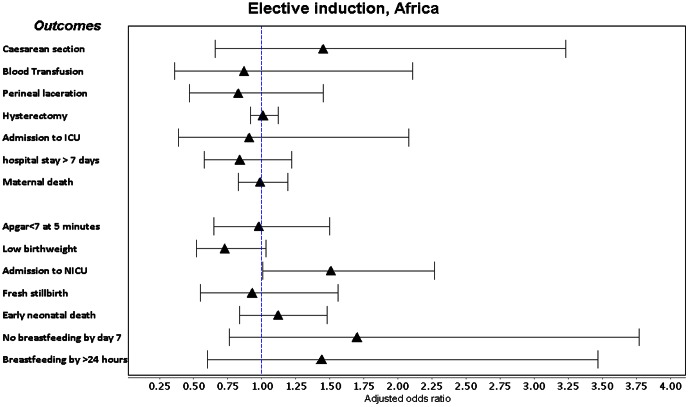
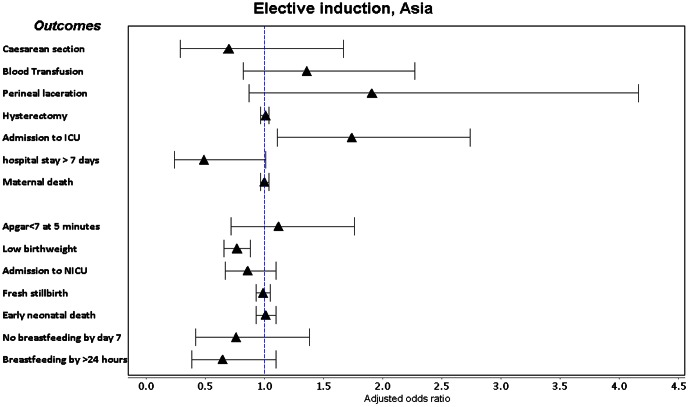
Results: Induction accounted for 4.4% (Africa) and 12.1% (Asia) of deliveries. Oxytocin alone was the most common method (45.9% and 37.5%) and success rates were generally over 80%. Medically indicated inductions were associated with increased adjusted odds of Apgar <7 at 5 minutes, low birthweight, NICU admission and fresh stillbirth in both regions. The odds of caesarean section in Africa were reduced (Adj OR 0.61, 95%CI 0.42-0.88). Elective induction was associated with increased adjusted odds of NICU (Africa) and ICU (Asia) admissions.
Discussion: Induction was generally less common than in higher-income countries. Prostaglandin use was uncommon despite evidence supporting use. Induction for medical indications may be associated with poorer outcomes due to maternal baseline risks. Despite one-third of elective inductions occurring at <39 weeks, the risk of maternal, fetal and neonatal mortality was not elevated following elective inductions.
Conflict of interest statement
Figures

References
-
- Sanchez-Ramos L (2005) Induction of labor. Obstet Gynecol Clin N Am 32: 181–200. - PubMed
-
- Induction of Labour (2008) Induction of Labour. Royal College of Obstetricians and Gynaecologists. Available: http://www.rcog.org.uk. Accessed 2012 Jun 26.
-
- World Health Organization (2011) WHO recommendations for induction of labour. - PubMed
-
- Gülmezoglu A, Crowther C, Middleton P (2012) Induction of labour for improving birth outcomes for women at or beyond term. Cochrane Db Syst Rev - PubMed
-
- Mozurkewich E, Chilimigras J (2009) Indications for induction of labour: a best-evidence review. BJOG: An International Journal of Obstetrics & Gynaecology 626–636. - PubMed
Publication types
MeSH terms
Substances
LinkOut - more resources
Full Text Sources
Other Literature Sources
Medical
