


Identification of cisplatin-binding proteins using agarose conjugates of platinum compounds
- PMID: 23755301
- PMCID: PMC3670892
- DOI: 10.1371/journal.pone.0066220
Identification of cisplatin-binding proteins using agarose conjugates of platinum compounds
Abstract
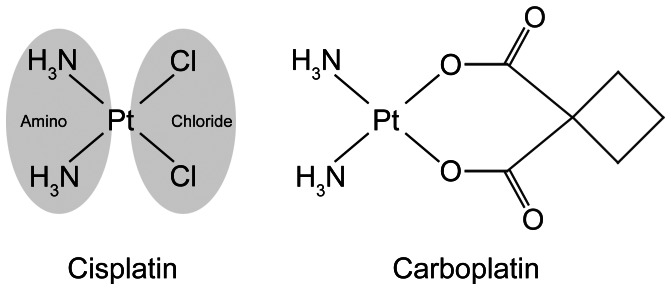
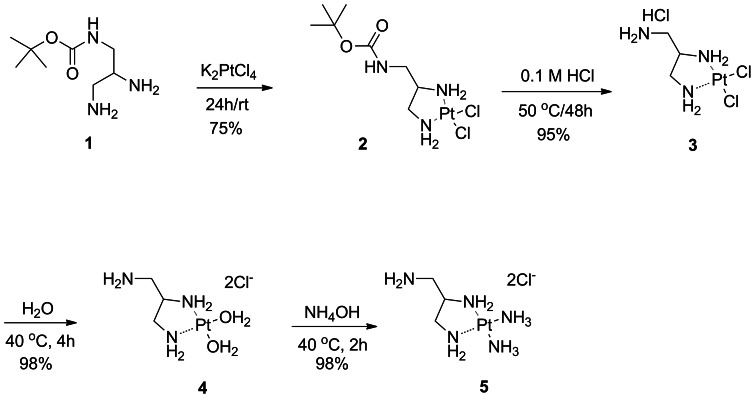
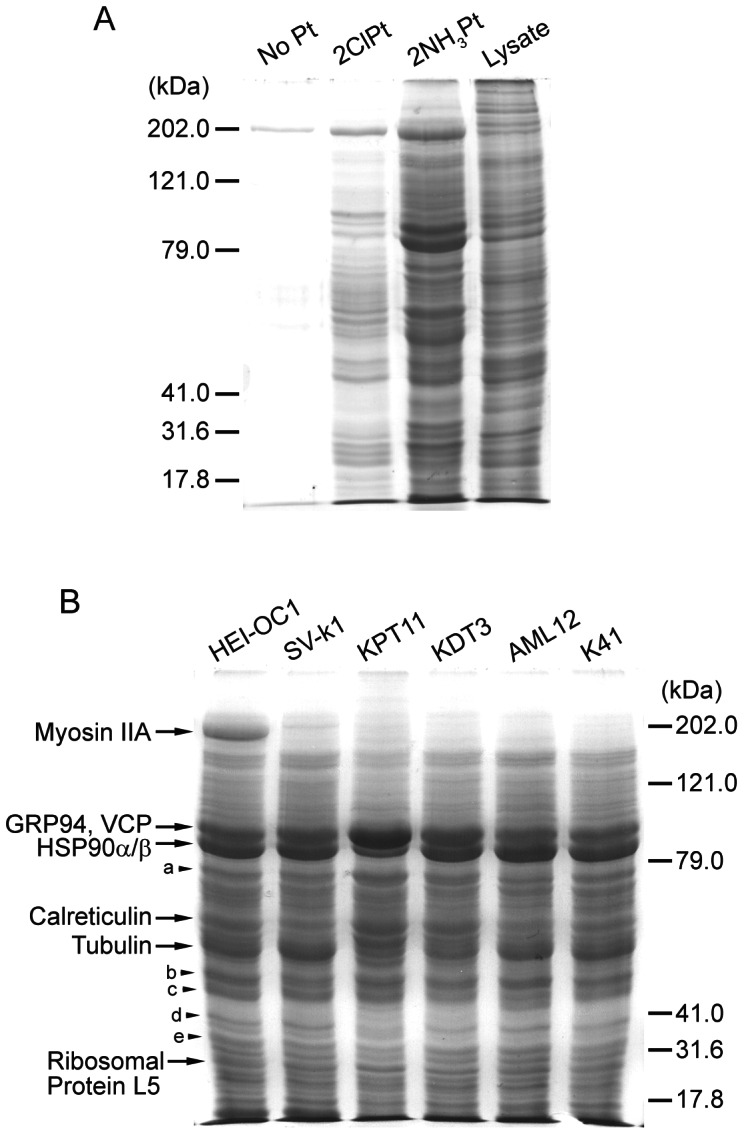
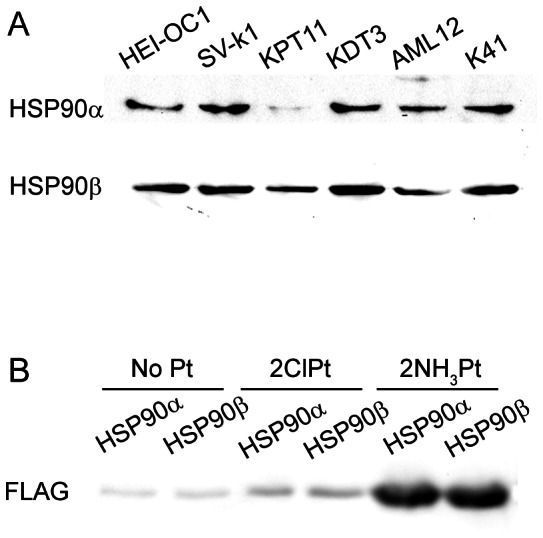
Cisplatin is widely used as an antineoplastic drug, but its ototoxic and nephrotoxic side-effects, as well as the inherent or acquired resistance of some cancers to cisplatin, remain significant clinical problems. Cisplatin's selectivity in killing rapidly proliferating cancer cells is largely dependent on covalent binding to DNA via cisplatin's chloride sites that had been aquated. We hypothesized that cisplatin's toxicity in slowly proliferating or terminally differentiated cells is primarily due to drug-protein interactions, instead of drug-DNA binding. To identify proteins that bind to cisplatin, we synthesized two different platinum-agarose conjugates, one with two amino groups and another with two chlorides attached to platinum that are available for protein binding, and conducted pull-down assays using cochlear and kidney cells. Mass spectrometric analysis on protein bands after gel electrophoresis and Coomassie blue staining identified several proteins, including myosin IIA, glucose-regulated protein 94 (GRP94), heat shock protein 90 (HSP90), calreticulin, valosin containing protein (VCP), and ribosomal protein L5, as cisplatin-binding proteins. Future studies on the interaction of these proteins with cisplatin will elucidate whether these drug-protein interactions are involved in ototoxicity and nephrotoxicity, or contribute to tumor sensitivity or resistance to cisplatin treatment.
Conflict of interest statement
Figures
References
-
- Hill JM, Speer RJ (1982) Organo-platinum complexes as antitumor agents (review). Anticancer Res 2: 173–186. - PubMed
-
- Knight KR, Kraemer DF, Neuwelt EA (2005) Ototoxicity in children receiving platinum chemotherapy: underestimating a commonly occurring toxicity that may influence academic and social development. J Clin Oncol 23: 8588–8596. - PubMed
-
- Knight KR, Kraemer DF, Winter C, Neuwelt EA (2007) Early changes in auditory function as a result of platinum chemotherapy: use of extended high-frequency audiometry and evoked distortion product otoacoustic emissions. J Clin Oncol 25: 1190–1195. - PubMed
Publication types
MeSH terms
Substances
Grants and funding
LinkOut - more resources
Full Text Sources
Other Literature Sources
Research Materials
Miscellaneous
