


A systematic review of the epidemiology of echinococcosis in domestic and wild animals
- PMID: 23755310
- PMCID: PMC3674998
- DOI: 10.1371/journal.pntd.0002249
A systematic review of the epidemiology of echinococcosis in domestic and wild animals
Abstract
Background: Human echinococcosis is a neglected zoonosis caused by parasites of the genus Echinococcus. The most frequent clinical forms of echinococcosis, cystic echinococcosis (CE) and alveolar echinococcosis (AE), are responsible for a substantial health and economic burden, particularly to low-income societies. Quantitative epidemiology can provide important information to improve the understanding of parasite transmission and hence is an important part of efforts to control this disease. The purpose of this review is to give an insight on factors associated with echinococcosis in animal hosts by summarising significant results reported from epidemiological studies identified through a systematic search.
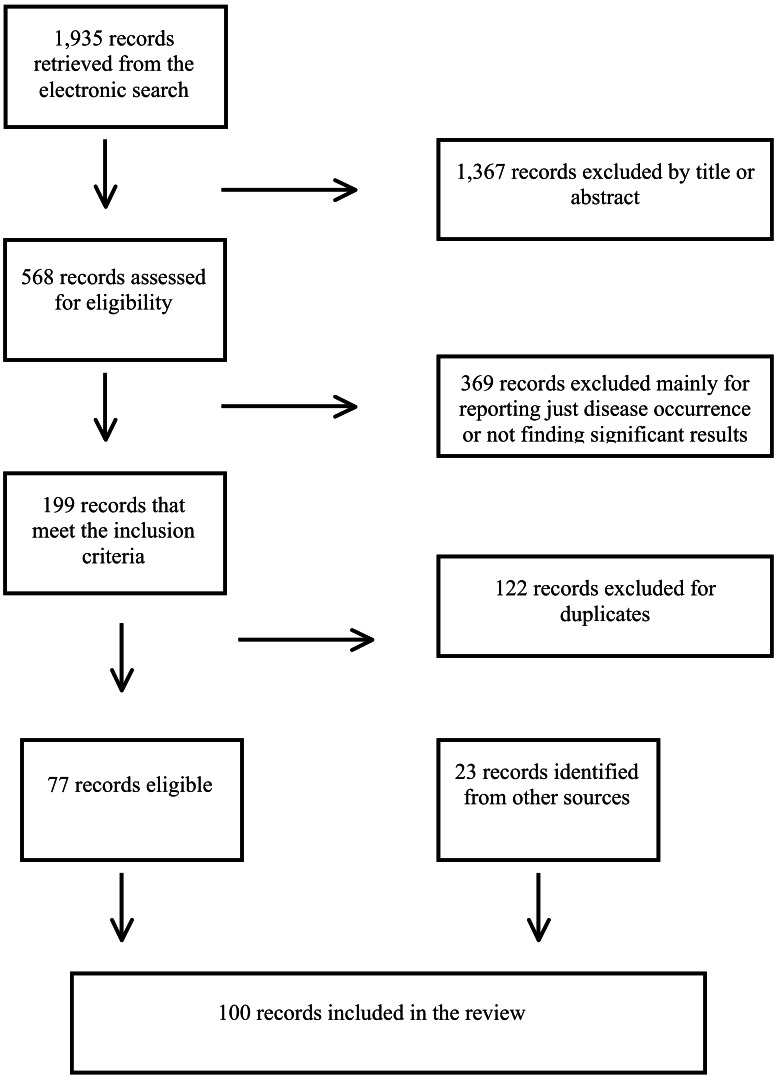
Methodology and principal findings: The systematic search was conducted mainly in electronic databases but a few additional records were obtained from other sources. Retrieved entries were examined in order to identify available peer-reviewed epidemiological studies that found significant risk factors for infection using associative statistical methods. One hundred studies met the eligibility criteria and were suitable for data extraction. Epidemiological factors associated with increased risk of E. granulosus infection in dogs included feeding with raw viscera, possibility of scavenging dead animals, lack of anthelmintic treatment and owners' poor health education and indicators of poverty. Key factors associated with E. granulosus infection in intermediate hosts were related to the hosts' age and the intensity of environmental contamination with parasite eggs. E. multilocularis transmission dynamics in animal hosts depended on the interaction of several ecological factors, such as hosts' population densities, host-prey interactions, landscape characteristics, climate conditions and human-related activities.
Conclusions/significance: Results derived from epidemiological studies provide a better understanding of the behavioural, biological and ecological factors involved in the transmission of this parasite and hence can aid in the design of more effective control strategies.
Conflict of interest statement
The authors have declared that no competing interests exist.
References
-
- Torgerson PR, Oguljahan B, Muminov AE, Karaeva RR, Kuttubaev OT, et al. (2006) Present situation of cystic echinococcosis in Central Asia. Parasitology International 55: 207–212. - PubMed
-
- Davidson R, Romig T, Jenkins E, Tryland M, Robertson LJ (2012) The impact of globalisation on the distribution of Echinococcus multilocularis . Trends Parasitol 28: 239–247. - PubMed
-
- Thompson RCA, McManus DP (2002) Towards a taxonomic revision of the genus Echinococcus . Trends Parasitol 18: 452–457. - PubMed
Publication types
MeSH terms
LinkOut - more resources
Full Text Sources
Other Literature Sources
Miscellaneous
