


Advice about diet and smoking for people with or at risk of age-related macular degeneration: a cross-sectional survey of eye care professionals in the UK
- PMID: 23759079
- PMCID: PMC3695797
- DOI: 10.1186/1471-2458-13-564
Advice about diet and smoking for people with or at risk of age-related macular degeneration: a cross-sectional survey of eye care professionals in the UK
Abstract
Background: In the absence of a cure, there has been considerable interest in attempts to prevent or reduce the progression of age-related macular degeneration (AMD) by targeting particular modifiable risk factors. The aim of this study was to conduct a cross-sectional survey of the current practice of UK eye care professionals in relation to advice given on diet and other lifestyle modifications for patients with or at risk of AMD.
Methods: Optometrists and ophthalmologists on the membership databases of professional organisations for the two professions were invited to participate in an online survey. The survey was open for 12 weeks between July and September 2012.
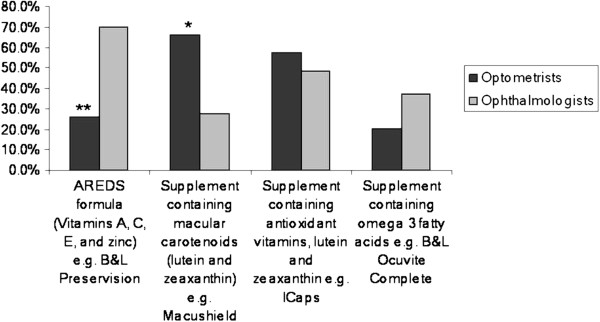
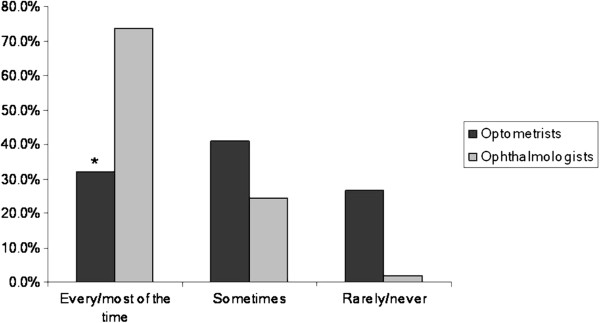
Results: A total of 1,468 responses were received (96.3% from optometrists and 3.7% from ophthalmologists). The response rate of those receiving the invitation was 16.2% (1,414/8735) for optometrists and 6% (54/1460) for ophthalmologists. A majority of respondents reported that they frequently provide dietary advice to patients with established AMD (67.9%) and those at risk of AMD (53.6%). Typical advice consisted of a recommendation to eat plenty of leafy green vegetables and eat more oily fish. The decision to recommend nutritional supplements was based on the risk of progression to advanced AMD, with approximately 93% of respondents recommending supplementation in a patient with advanced AMD in one eye. However for the majority, the type of supplement recommended did not comply with current best research evidence, based on the findings of the Age-related Eye Disease Study (AREDS). Only one in three optometrists regularly assessed smoking status and advised on smoking cessation.
Conclusions: Within a large sample of eye care professionals, consisting predominantly of optometrists, who responded to a cross-sectional survey, there was active engagement in providing nutritional advice to patients with or at risk of AMD. However, the results demonstrate a need to raise awareness of the evidence underpinning the use of nutritional supplements together with an increased involvement in targeted smoking cessation.
Figures
References
-
- Mares JA, Voland RP, Sondel SA, Millen AE, Larowe T, Moeller SM, Klein ML, Blodi BA, Chappell RJ, Tinker L, Ritenbaugh C, Gehrs KM, Sarto GE, Johnson E, Snodderly DM, Wallace RB. Healthy lifestyles related to subsequent prevalence of age-related macular degeneration. Arch Ophthalmol. 2011;129:470–80. doi: 10.1001/archophthalmol.2010.314. - DOI - PMC - PubMed
MeSH terms
LinkOut - more resources
Full Text Sources
Other Literature Sources
Medical
