


The influence of dopaminergic gene variants on decision making in the ultimatum game
- PMID: 23759976
- PMCID: PMC3671187
- DOI: 10.3389/fnhum.2013.00242
The influence of dopaminergic gene variants on decision making in the ultimatum game
Abstract
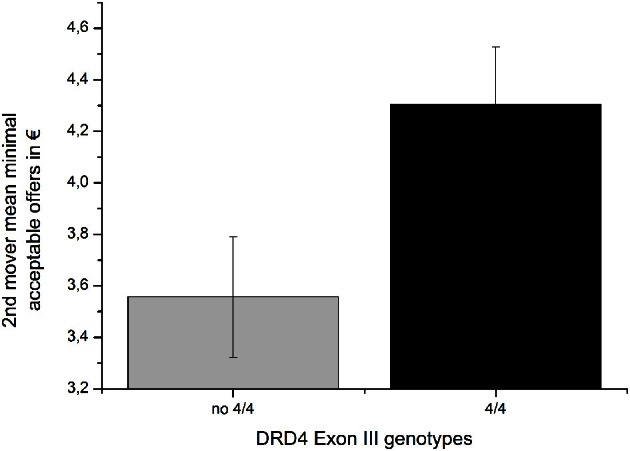
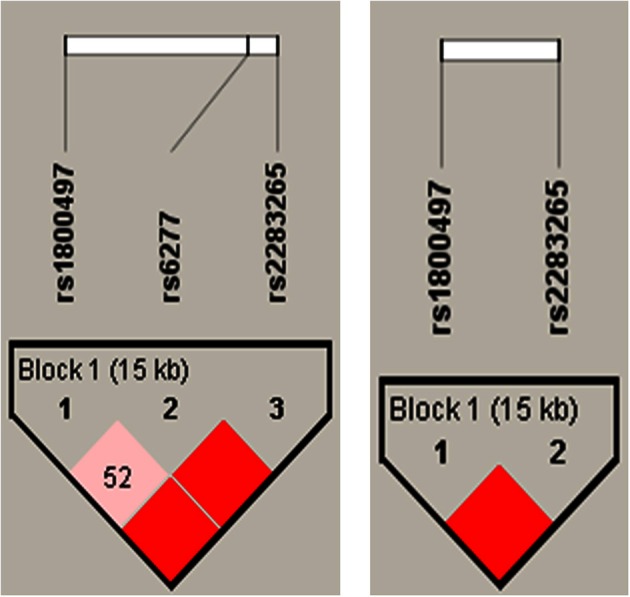
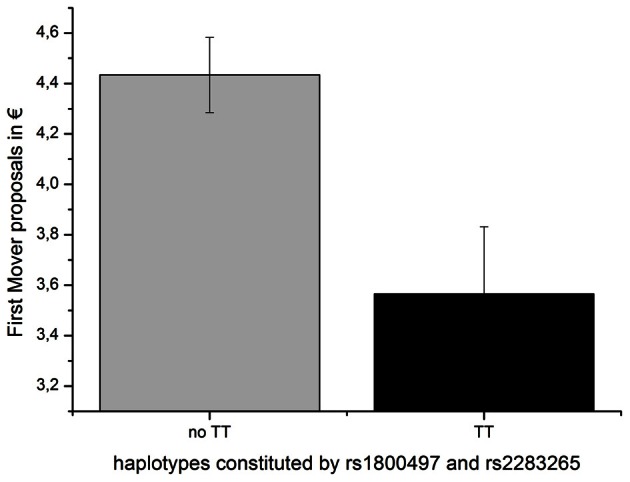
One of the most prominent paradigms in neuroeconomics is the ultimatum game (UG) that provides a framework for the study of pro-social behavior in two players interacting anonymously with each other: Player 1 has to split an endowment with player 2. Player 2 can either accept or reject the offer from player 1. If player 2 accepts the offer then the money is split as proposed by player 1. In case of rejection both players get nothing. Until now only one twin study investigated the heritability of the behavior in the UG. Results indicated a strong heritability for the decision behavior of player 2 whereas no genetic influence on player 1 behavior could be detected. Further studies are mandatory to validate these heritability estimates. However, a first candidate polymorphism, the DRD4 exon III, constituting the biological basis of the heritability in the responder behavior has already been identified in a Chinese sample (Zhong et al., 2010). Until now genetic studies in Caucasians on the UG are lacking. The present study wants to fill this gap by investigating the UG in a healthy German sample. Moreover, we intend to find candidate genes that are associated with the first-mover-behavior. In a sample of N = 130 healthy participants an online version of the UG was conducted and polymorphisms of the dopamine D2 receptor gene (DRD2) and the DRD4 exon III VNTR were genotyped. We could confirm the DRD4 exon III effect on the responder behavior and the absence of an effect on the proposer behavior reported before. In line with Zhong et al. (2010) carriers of the 4/4 genotype showed a significant higher minimal acceptable offer (p = 0.023) than subjects with any other genotype. Furthermore, a DRD2-haplotype-block containing the single nucleotide polymorphisms rs1800497 and rs2283265 was significantly associated with the amount player1 offered (p = 0.005) but not with the decision of player 2. Results support the importance of the dopaminergic system for pro-social behavior.
Keywords: DRD2; DRD4; decision making; dopamine; gene; neuroeconomics; pro-social-behavior; ultimatum game.
Figures
References
-
- Camerer C. F. (1997). Progress in behavioral game theory. J. Econ. Perspect. 11, 167–188 10.1257/jep.11.4.167 - DOI
LinkOut - more resources
Full Text Sources
Other Literature Sources
Miscellaneous
