


Identification of risk factors associated with acute kidney injury in patients admitted to acute medical units
- PMID: 23760694
- PMCID: PMC5922664
- DOI: 10.7861/clinmedicine.13-3-233
Identification of risk factors associated with acute kidney injury in patients admitted to acute medical units
Abstract
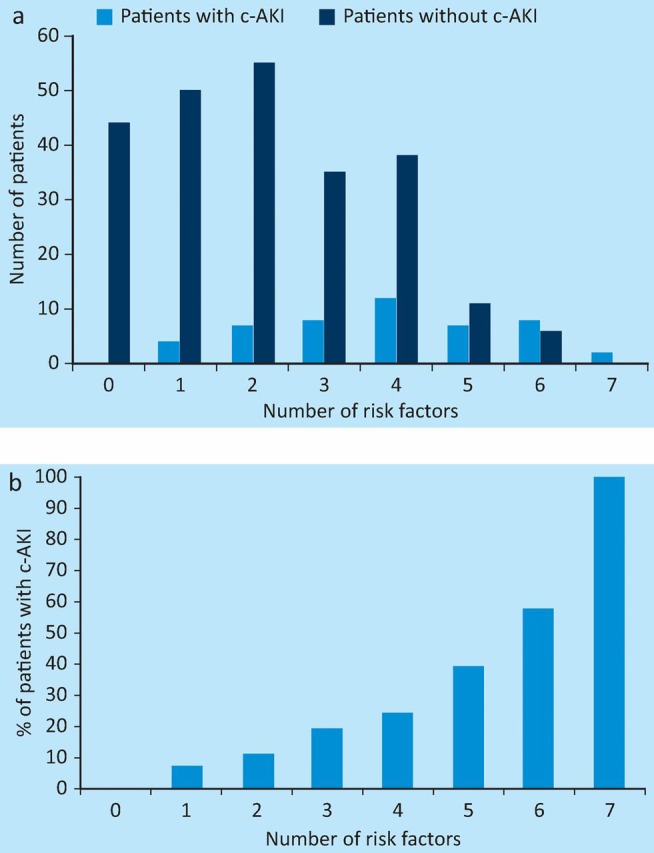
In 2009, the National Confidential Enquiry into Patient Outcome and Death (NCEPOD) report identified significant deficiencies in the management of acute kidney injury (AKI) in hospitals in the UK. Many errors arose from failure to recognise patients with AKI and those at risk of developing AKI. Currently, there is no universally accepted risk factor assessment for identifying such patients on admission to acute medical units (AMUs). A multicentre prospective observational study was performed in the AMUs of 10 hospitals in England and Scotland to define the risk factors associated with AKI and to assess quality of care. Data were collected on consecutive acute medical admissions over two separate 24-h periods. Acute kidney injury was present in 55/316 (17.7%) patients, with sepsis, hypovolaemia, chronic kidney disease (CKD) and diabetes mellitus identified as the major risk factors. Deficiencies in patient care were identified, reinforcing the continuing need to improve the management of AKI.
Keywords: Acute kidney injury (AKI); acute medical units (AMUs); risk factors.
Figures
References
-
- Kidney Disease: Improving Global Outcomes (KDIGO) Acute Kidney Injury Work Group. KDIGO Clinical Practice Guideline for Acute Kidney Injury. Kidney Int Suppl. 2012;2:1–138. doi: 10.1038/kisup.2012.1. www.kdigo.org/clinical_practice_guidelines/AKI.php [Accessed 25 April 2013]. - DOI
-
- Bellomo R, Ronco C, Kellum JA, et al. Acute renal failure – definition, outcome measures, animal models, fluid therapy, and information technology needs. The second international consensus conference of Acute Dialysis Quality Initative (ADQI) Group. Crit Care. 2004;8:R204–2. doi: 10.1186/cc2872. - DOI - PMC - PubMed
Publication types
MeSH terms
LinkOut - more resources
Full Text Sources
Other Literature Sources
