


Functional Dyspepsia in Review: Pathophysiology and Challenges in the Diagnosis and Management due to Coexisting Gastroesophageal Reflux Disease and Irritable Bowel Syndrome
- PMID: 23762034
- PMCID: PMC3670552
- DOI: 10.1155/2013/351086
Functional Dyspepsia in Review: Pathophysiology and Challenges in the Diagnosis and Management due to Coexisting Gastroesophageal Reflux Disease and Irritable Bowel Syndrome
Abstract
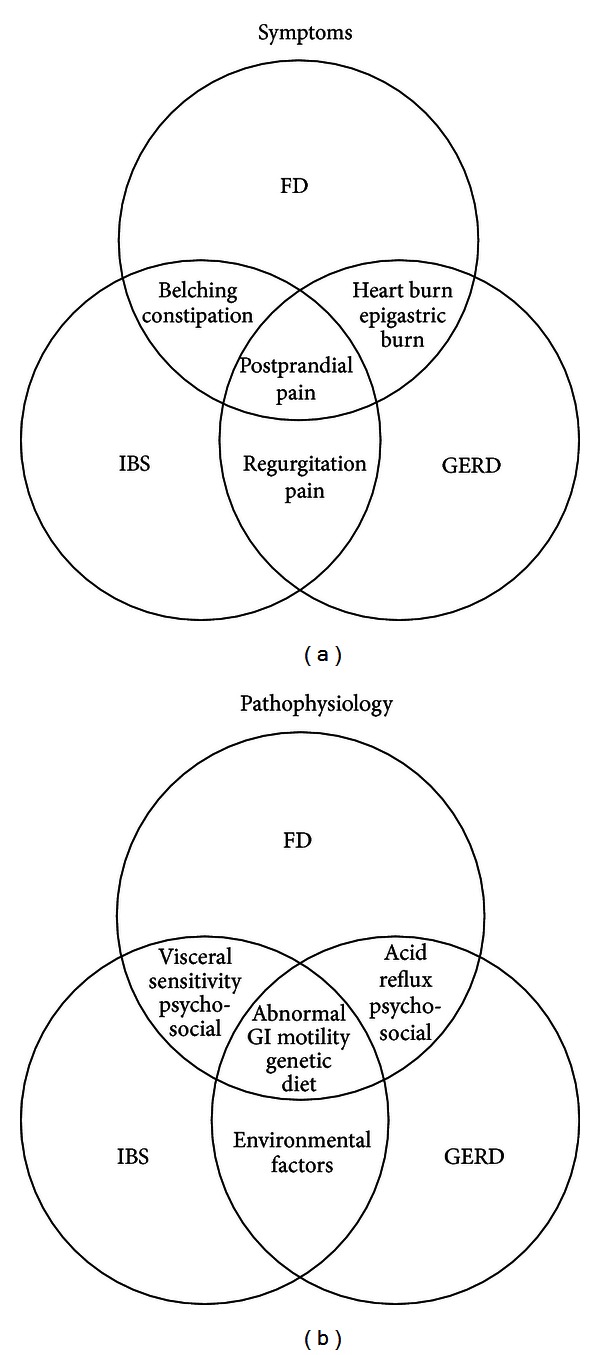
Functional dyspepsia is a common disorder which imposes significant diagnostic and treatment challenges for patients and physicians. The most recent update of the diagnostic criteria subdivides functional dyspepsia into two subcategories based on the main symptom of epigastric pain or postmeal fullness. As we discuss in this review, several studies have shown significant overlap in symptoms and pathophysiology between functional dyspepsia, irritable bowel syndrome, and the spectrum of reflux disorders. This overlap in symptoms can be informative in helping us to understand the underlying pathophysiology, diagnostic approaches, and treatment strategies. The addition of diagnostic testing such as pH impedance manometry of the distal esophagus to the current common diagnostic tests might be helpful in distinguishing between functional dyspepsia and reflux disease. Importantly, various treatment modalities may be more effective than others if the main symptom is burning rather than pain or postmeal fullness rather than early satiation.
Figures
References
-
- Xiao YL, Peng S, Tao J, et al. Prevalence and symptom pattern of pathologic esophageal acid reflux in patients with functional dyspepsia based on the Rome III criteria. American Journal of Gastroenterology. 2010;105(12):2626–2631. - PubMed
-
- Ohara S, Kawano T, Kusano M, Kouzu T. Survey on the prevalence of GERD and FD based on the Montreal definition and the Rome III criteria among patients presenting with epigastric symptoms in Japan. Journal of Gastroenterology. 2011;46(5):603–611. - PubMed
-
- Drossman DA. Introduction. The Rome Foundation and Rome III. Neurogastroenterology & Motility. 2007;19(10):783–786. - PubMed
LinkOut - more resources
Full Text Sources
Other Literature Sources
Research Materials
