Type 2 diabetes: prevalence and relevance of genetic and acquired factors for its prediction
- PMID: 23762204
- PMCID: PMC3673039
- DOI: 10.3238/arztebl.2013.0331
Type 2 diabetes: prevalence and relevance of genetic and acquired factors for its prediction
Abstract
Background: The epidemiology of type 2 diabetes in Germany is of major societal interest, as is the question of the predictive value of genetic and acquired risk factors.
Methods: We present clinically relevant aspects of these topics on the basis of a selective review of pertinent literature retrieved by a PubMed search that centered on population-based studies.
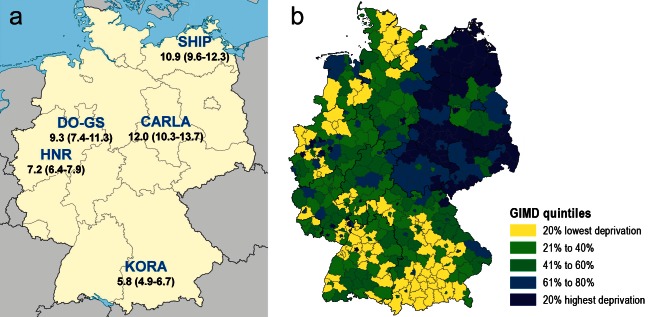
Results: The German Health Interview and Examination Survey for Adults (Studie zur Gesundheit Erwachsener in Deutschland [DEGS1], 2008-2011) revealed that diabetes was diagnosed in 7.2% of the population aged 18 to 79 years (women 7.4%, men 7.0%). These figures are two percentage points higher than those found in the preceding national survey (1998). The percentage of cases that were not captured by these surveys is estimated at 2% to 7% depending on the method. Independently of personal factors (the individual's life style), it seems that living in a disadvantaged region characterized by high unemployment, air pollution, and poor infrastructure raises the risk of diabetes. Moreover, type 2 diabetes has a substantial hereditary component. More than 60 genetic regions have been identified to date that affect the risk of type 2 diabetes, yet all of them together account for only 10% to 15% of the genetic background of the disease.
Conclusion: The prevalence of type 2 diabetes in Germany has risen in recent years. The discovery of new genetic variants that confer a higher risk of developing the disease has improved our understanding of insulin secretion in diabetes pathogenesis rather than the prediction of individual diabetes risk ("personalized medicine").
Figures
Comment in
-
Identifying genetic factors in common diseases: more helpful in relation to etiology than prediction.Dtsch Arztebl Int. 2013 May;110(19):329-30. doi: 10.3238/arztebl.2013.0329. Dtsch Arztebl Int. 2013. PMID: 23762203 Free PMC article. No abstract available.
References
-
- Köster I, Schubert I, Huppertz E. Fortschreibung der KoDiM-Studie: Kosten des Diabetes mellitus 2000-2009. Dtsch Med Wochenschr. 2012;137:1013–1016. - PubMed
-
- Heidemann C, Du Y, Schubert I, Rathmann W, Scheidt-Nave C. Prävalenz und zeitliche Entwicklung des bekannten Diabetes mellitus. Ergebnisse der Studie zur Gesundheit Erwachsener in Deutschland (DEGS1) Bundesgesundheitsbl Gesundheitsforsch Gesundheitsschutz. 2013 (in press) - PubMed
-
- Mensink GBM, Schienkiewitz A, Scheidt-Nave C. Übergewicht und Adipositas in Deutschland: Werden wir immer dicker? Bundesgesundheitsblatt Gesundheitsforschung Gesundheitsschutz. 2013 in press. - PubMed
-
- Hauner H, Hanisch J, Bramlage P, et al. Prevalence of undiagnosed Type-2-diabetes mellitus and impaired fasting glucose in German primary care: data from the German Metabolic and Cardiovascular Risk Project (GEMCAS) Exp Clin Endocrinol Diabetes. 2008;116:18–25. - PubMed
-
- Rathmann W, Strassburger K, Heier M, et al. Incidence of type 2 diabetes in the elderly German population and the effect of clinical and lifestyle risk factors: KORA S4/F4 cohort study. Diabet Med. 2009;26:1212–1219. - PubMed
Publication types
MeSH terms
LinkOut - more resources
Full Text Sources
Other Literature Sources
Medical