


A computational systems biology study for understanding salt tolerance mechanism in rice
- PMID: 23762267
- PMCID: PMC3676415
- DOI: 10.1371/journal.pone.0064929
A computational systems biology study for understanding salt tolerance mechanism in rice
Abstract
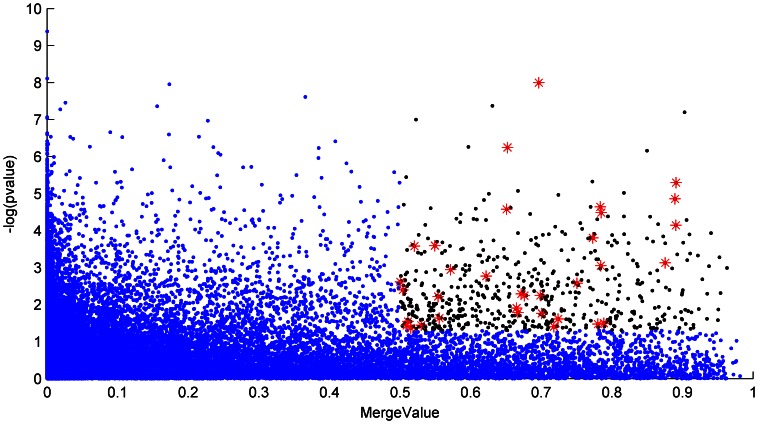
Salinity is one of the most common abiotic stresses in agriculture production. Salt tolerance of rice (Oryza sativa) is an important trait controlled by various genes. The mechanism of rice salt tolerance, currently with limited understanding, is of great interest to molecular breeding in improving grain yield. In this study, a gene regulatory network of rice salt tolerance is constructed using a systems biology approach with a number of novel computational methods. We developed an improved volcano plot method in conjunction with a new machine-learning method for gene selection based on gene expression data and applied the method to choose genes related to salt tolerance in rice. The results were then assessed by quantitative trait loci (QTL), co-expression and regulatory binding motif analysis. The selected genes were constructed into a number of network modules based on predicted protein interactions including modules of phosphorylation activity, ubiquity activity, and several proteinase activities such as peroxidase, aspartic proteinase, glucosyltransferase, and flavonol synthase. All of these discovered modules are related to the salt tolerance mechanism of signal transduction, ion pump, abscisic acid mediation, reactive oxygen species scavenging and ion sequestration. We also predicted the three-dimensional structures of some crucial proteins related to the salt tolerance QTL for understanding the roles of these proteins in the network. Our computational study sheds some new light on the mechanism of salt tolerance and provides a systems biology pipeline for studying plant traits in general.
Conflict of interest statement
Figures


References
-
- Munns R (2002) Comparative physiology of salt and water stress. Plant Cell Environ 25: 239–250. - PubMed
-
- Maas EV, Hoffman GJ (1977) Crop salt tolerance-current assessment. Journal of Irrigation and Drainage Division, Proceedings of the American Society of Civil Engineers 103: 115–134.
-
- Tanji KK (1990) Nature and extent of agricultural salinity. Agricultural salinity assessment and management 71: 1–17.
-
- Wu R, Garg A (2003) Engineering rice plants with trehalose-producing genes improves tolerance to drought, salt and low temperature. ISBN News Report http://www.isb.vt.edu.
Publication types
MeSH terms
Substances
Grants and funding
LinkOut - more resources
Full Text Sources
Other Literature Sources
